




Steel Pipe Fittings
Your Professional Steel Pipe Fittings Supplier
Octal Pipe is a professional and integrated supplier of oilfield products and industrial steel solutions based in China. With extensive experience in supply, distribution, and manufacturing, we specialize in providing a wide range of steel materials for the oil & gas, energy, and industrial sectors.



Why Choose Us

Superior Quality Assurance
Our steel pipes undergo rigorous testing and adhere to international standards, ensuring unmatched durability, corrosion resistance, and performance in extreme conditions.
Certificates
Every product is backed by full material traceability, mill certificates, and compliance with international standards such as API, ASTM, ASME, EN, and ISO.
Competitive Pricing
We deliver premium-grade steel pipes at reasonable costs, optimizing value through efficient manufacturing and supply chain management without compromising on quality.
Fast & Reliable Delivery
Leveraging efficient sea freight logistics and a global network, we ensure timely ocean shipping of steel pipes, minimizing delays and keeping your industrial operations on schedule.
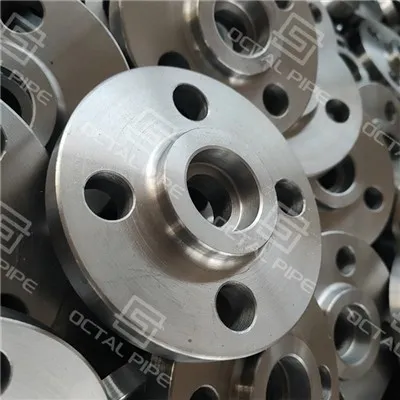
Socket Weld Pipe Fittings
A socket weld fitting is a type of pipe attachment detail where the pipe is inserted into a recessed area of a fitting, valve, or flange. To join the pipes or valves to other sections of the pipe, fillet-type seal welds are applied. Socket weld fittings are a good choice in certain cases due to their advantages of strong structural strength and high leakage integrity.
| Standard | ASME B16.11 |
| Size Range | ½″ – 4″ (up to 6″ on request) |
| Pressure Ratings | 3000#, 6000#, 9000# |
| Wall Thickness / Schedules | SCH 5 – XS (custom available) |
| Types | SW Coupling, SW Reducer, SW Elbow, SW Tee, SW Union, SW Cap, Socket Weld Flange |
| Materials | Carbon Steel (A105, A350 LF2), Alloy Steel (A182 F11/F22), Stainless Steel (A182 F304/316/321), Duplex |
| Connections | Socket weld joint / socket weld connection with fillet weld |
| Inspection | Dimensional check, NDT (UT, MT, PT), Hydro test, MTRs with full traceability |
| Applications | Oil & Gas, Steam & Hydraulic Systems, Chemical & Petrochemical Skids, Instrumentation Piping |
Standards & Material Grades
|
Parameter |
Specification |
|
Applicable Standard |
ASME B16.11 (Forged Steel Fittings – Socket Weld and Threaded) |
|
Material Grades |
Carbon Steel: ASTM A105, A350 LF2; Alloy Steel: ASTM A182 F11, F22, F5; Stainless Steel: ASTM A182 F304/304L, F316/316L, F321; Duplex / Super Duplex available |
|
Pressure Classes |
3000#, 6000#, 9000# |
Key advantages
-
High pressure and integrity
Socket welds are well-suited for high-pressure systems and applications where a leak-proof joint is critical, such as with toxic fluids.
-
Less complex than butt welding
Unlike butt welding, socket welds do not require the pipe ends to be beveled and are easier to align.
-
Faster installation
The process is generally faster than butt welding because it requires less prep work.
-
Good strength
They are a strong and durable connection choice for high-stress applications.
1) The pipeline does not need to be pre beveled.
2) There is no need to calibrate spot welding, as the fittings themselves serve the purpose of calibration.
3) The welding material will not penetrate into the pipeline hole.
4) It can replace threaded fittings, thus reducing the risk of leakage.
5) Corner welds are not suitable for radiographic testing, therefore correct pipe fittings and welding are crucial. Magnetic particle testing and penetration testing are commonly used for surface inspection of corner welds.
6) The construction cost is usually lower than that of welded joints. The reason is that there is no need for groove assembly and groove prefabrication.

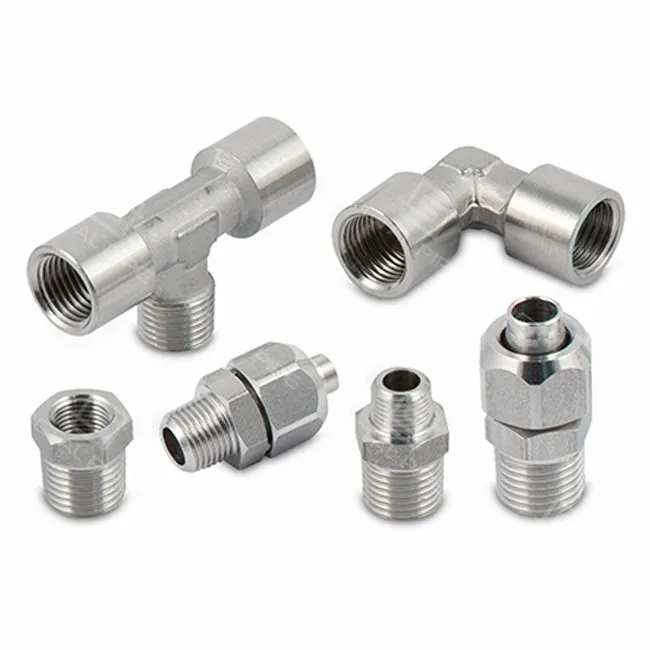
Common types of socket weld fittings
Couplings
Connect two pipes of the same diameter.
01
Reducing couplings
Connect two pipes of different diameters.
02
Tees
Branch a pipeline into two or more directions.
03
Elbows
Change the direction of the pipe, typically at a 90° or 45° angle.
04
Unions
Provide a connection that can be disassembled without cutting the pipe.
05
Types of Socketweld Fittings
Socketweld fittings are used in piping systems to connect pipe sections. They are an alternative to butt welding and provide a mechanical connection. Socketweld fittings come in various sizes, shapes, materials and pressure ratings, including but not limited to 45 degrees elbow, 90 degrees elbow, concentric reducers/eccentric reducers, caps/plugs, etc. In terms of material, they mainly range from stainless steel alloys such as 304L and 316L grade or carbon steel like A105N. Due to their reinforced bevelled end design, socket weld fittings offer a higher pressure rating than regular butt weld or threaded fittings. They can normally withstand up to 10-15000 psi, depending on the grade of material used for fabrication.

Socketweld fittings can be found in different materials, such as stainless steel, carbon steel, alloy steel, and copper-nickel alloy. The choice of material depends on the application requirements, such as temperature, pressure, and fluid type. Stainless steel fittings are ideal for low to medium-pressure applications, while carbon steel and alloy steel fittings are suitable for high-pressure applications. Copper-nickel alloys are used if the fluid is seawater-based.
Company Honor


FAQ