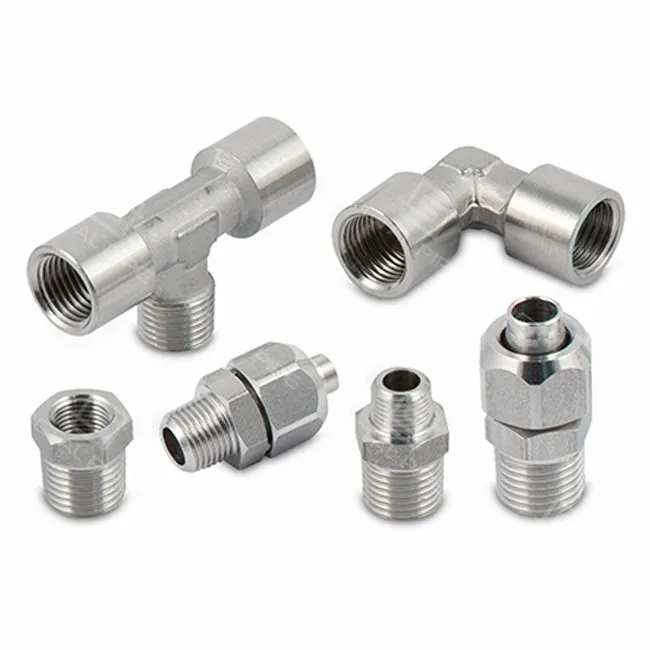
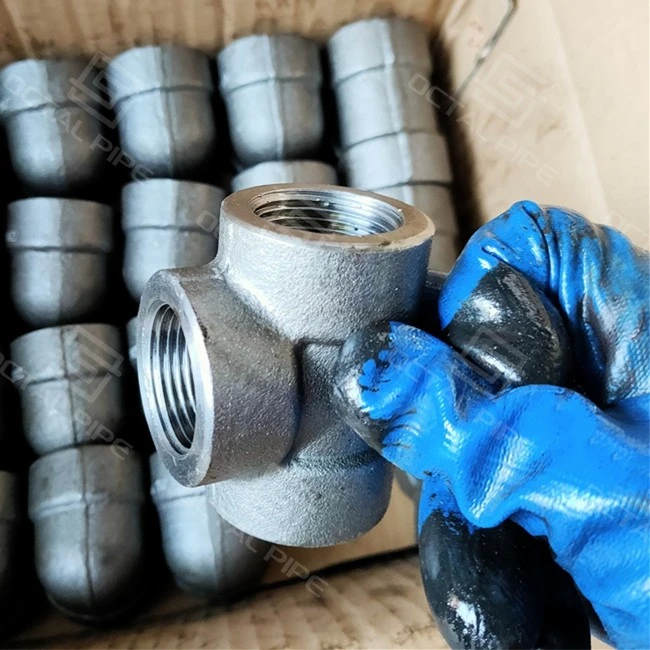
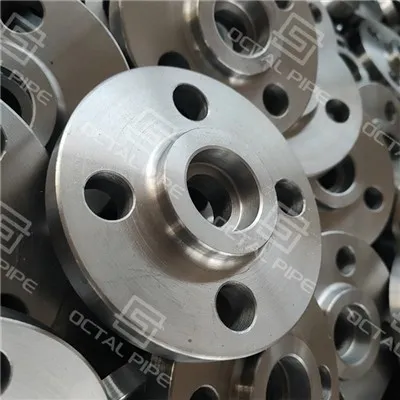
Threaded pipe fittings are used in piping systems where a mechanical threaded connection is preferred over welding, especially in small-bore lines, instrument connections, utility branches, drain and vent points, and maintenance-friendly assemblies. For forged steel fittings, the common specification basis is ASME B16.11, with threaded ends available in NPT, BSPT, or BSPP, typically covering 1/8" to 4" and pressure classes such as Class 2000, 3000, and 6000.
Thread Standards, Pressure Class, and Material Selection
A threaded fitting should never be purchased by shape alone. The three points that control acceptance are thread type, pressure class, and material grade.
Thread type must match the project drawing and receiving market:
NPT is commonly used in North American oil, gas, and general industrial systems.
BSPT is also a tapered thread and is widely used in many export markets.
BSPP is a parallel thread and typically requires a sealing washer, gasket, or O-ring arrangement instead of thread interference alone.
Pressure class should be matched against line design conditions:
Class 2000
Class 3000
Class 6000
Material options are usually selected by service condition:
ASTM A105 for general carbon steel service
ASTM A350 LF2 for low-temperature service
ASTM A182 F304 / F316 for corrosion-resistant service
ASTM A182 F11 / F22 / F91 for elevated-temperature alloy systems
Threaded Pipe Fittings Dimensions Chart
For buyers searching threaded pipe fittings dimensions chart, the most useful page content is not a random catalog-style table with copied numbers. The practical approach is to show the selection range and explain that exact center-to-end and thread geometry are confirmed against ASME B16.11 and the specified thread standard.
For exact dimensions, the quote or drawing review should confirm:
fitting type
nominal size
pressure class
thread standard
material grade
Threaded Pipe Coupling
A threaded pipe coupling is one of the most commonly ordered forged fittings in small-bore piping. It is used to connect two threaded pipe ends in a straight run and is frequently seen in utility systems, instrument branches, skid packages, and maintenance replacement work.
From a procurement point of view, the key checks for a threaded pipe coupling are:
thread standard: NPT, BSPT, or BSPP
pressure class: 3000 or 6000 are common for small-bore service
material grade: A105, LF2, F304, F316, etc.
machining quality: clean thread profile and correct gauge acceptance
traceability: marking and MTR linked to heat number
A threaded pipe coupling sounds simple, but if the thread type is wrong, the part becomes unusable on site. That is why coupling orders should always be written in a complete PO format, such as:
Example:
ASME B16.11, threaded full coupling, 1 in, NPT, Class 3000, ASTM A105, Qty ___
1/2 Inch Threaded Pipe Fittings
1/2 inch threaded pipe fittings are one of the most frequently reordered sizes in small-bore piping because they sit exactly in the range where installation convenience matters, but sealing failure caused by poor thread control is still common. In actual projects, this size is widely used for instrument hook-up lines, pressure gauge manifolds, root valve connections, drain and vent points, sampling lines, seal flush lines, chemical dosing branches, and compact skid utility connections.
For procurement teams, this is not a "small and simple" item. It is often one of the easiest sizes to underestimate and one of the fastest to create field problems if the thread form, machining, or class selection is wrong. A 1/2 inch fitting may look acceptable visually, but if the thread depth, taper, pitch, crest finish, or entrance chamfer is not controlled properly, installation problems show up immediately.
Common 1/2 inch threaded pipe fittings include:
coupling - straight connection between two threaded pipe ends
elbow - direction change in compact piping runs
tee - branch outlet for gauges, valves, and utility take-offs
union - removable connection for maintenance-friendly assemblies
plug - closing off unused openings
cap - end closure for externally threaded connections
nipple - short threaded connection piece between fittings or valves
threadolet - branch outlet from a larger header into a small-bore threaded line
OctalPipe Control Point
What Buyers Actually Care About
Practical Procurement / QA Focus
Typical use
Small-bore connections where easy assembly and replacement matter
ASME B16.11 + fitting type + 1/2 inch + NPT/BSPT/BSPP + Class 3000/6000 + material grade + inspection/document requirement
Receiving inspection priorities
The high-value checks are technical, not cosmetic
Thread gauge verification, thread standard confirmation, marking check, heat number traceability, burr/dent inspection
Why this size matters
Small fittings create disproportionate site delays when control is weak
Better thread control and documentation usually mean faster assembly and fewer rejection issues
1 Inch Threaded Pipe Fittings
1 inch threaded pipe fittings are commonly used in small process lines, chemical skids, compressed air systems, water treatment loops, and removable branch connections where maintenance access matters. This size is often the point where buyers start comparing not just fitting type, but also Class 3000 vs Class 6000, carbon steel vs stainless steel, and NPT vs BSPT/BSPP, because the fitting now has a more direct effect on sealing reliability, branch stability, and long-term serviceability.
From a procurement perspective, 1 inch threaded pipe fittings should not be ordered as a simple stock item description. A stronger PO should define ASME B16.11, fitting type, 1 inch size, thread standard, pressure class, material grade, and inspection/document requirements. In practice, the most common problems at this size are thread mismatch, early binding during assembly, and weak traceability control, which is why buyers usually pay closer attention to thread gauge verification, marking, and MTR alignment before shipment.
Manufacturing Control and Inspection
Threaded fittings for pressure service are normally produced from forged blanks, followed by machining and heat treatment according to the material grade. This process matters because the final fitting performance depends on more than nominal size. It depends on:
thread integrity
concentricity
shoulder thickness
bore continuity
consistent pressure boundary
For inspection, high-value threaded fitting orders should include:
thread gauge verification for NPT/BSP
dimensional checks on critical features
marking check for size, grade, class, and heat number
MTR / mill test report traceability
MT / PT when required
hydrostatic or pneumatic test if specified by PO or project spec
What Is a Threaded Pipe Fitting?
A threaded pipe fitting is a forged or machined fitting with internal or external pipe threads used to connect pipe, valves, instruments, or branch outlets without welding. In forged steel systems, threaded fittings are commonly manufactured to ASME B16.11 and are supplied in connection types such as NPT, BSPT, and BSPP.
They are typically used when the project needs:
faster assembly
easier replacement
less hot work on site
compact small-bore installation
maintenance-friendly piping layouts
In actual projects, threaded fittings are common in instrumentation lines, low-volume branch connections, utilities, drains, vents, and skid-mounted assemblies where quick assembly and removability matter.
What Is the Disadvantage of Threaded Fittings?
The main disadvantage of threaded fittings is that the sealing result depends heavily on the correct thread form, correct assembly practice, and the right sealing method. If the wrong thread standard is ordered, the connection may look correct by size but still fail during fit-up or leak during service.
Typical risks include:
NPT and BSP mismatch
damaged threads during transport or installation
wrong pressure class selection
insufficient sealing method on parallel thread systems
over-tightening that damages the thread
weak QA documentation that delays receiving acceptance
This does not mean threaded fittings are unreliable. It means they require better specification discipline than many buyers assume.
Threaded PVC Pipe Fittings vs Forged Steel Threaded Pipe Fittings
Some buyers also search for threaded PVC pipe fittings, but in real project procurement, PVC threaded fittings and forged steel threaded pipe fittings are not interchangeable choices. The difference is not just material - it is pressure boundary reliability, temperature tolerance, thread strength, and service risk. Threaded PVC pipe fittings are generally selected for light-duty, non-metallic piping systems where corrosion resistance and low cost matter more than mechanical load capacity. In contrast, forged steel threaded fittings are used where the connection must handle higher pressure classes, wider temperature swings, vibration, repeated maintenance assembly, and stronger mechanical loading.
From a purchasing perspective, the real selection logic is simple: if the line involves industrial pressure service, hot or cold process conditions, metal piping systems, or stricter QA traceability, forged steel threaded fittings are usually the correct route. PVC threads are more sensitive to over-tightening, thread deformation, creep under load, and reduced strength at elevated temperature. Forged steel threaded fittings, by comparison, are normally purchased to ASME B16.11, with defined Class 2000 / 3000 / 6000 pressure designations, controlled thread machining, and traceable material certification. That is why buyers do not compare these two products only by price - they compare them by service condition, failure consequence, maintenance frequency, and acceptance requirements.
Comparison Point
Threaded PVC Pipe Fittings
Forged Steel Threaded Pipe Fittings
Typical service
Low-pressure non-metallic utility lines
Industrial pressure piping and small-bore process lines
Mechanical strength
Lower thread and body strength
Higher thread integrity and pressure boundary strength
Temperature capability
Limited, more sensitive to heat
Better suited for broader temperature service
Thread behavior
More sensitive to over-tightening and deformation
Better resistance to installation torque and repeated assembly
Common buyer focus
Cost, corrosion resistance, light-duty use
Pressure class, material grade, traceability, inspection
Typical specification basis
Plastic piping system requirements
ASME B16.11, NPT/BSPT/BSPP, Class 2000/3000/6000
Failure risk if misapplied
Cracking, deformation, sealing instability
Usually linked to thread mismatch, class error, or poor machining
Best fit
Light-duty utility or chemical transfer systems
Oil & gas, skid piping, utilities, instrumentation, and industrial service
For a serious industrial RFQ, this distinction matters. A buyer looking for threaded PVC pipe fittings may be searching for a low-cost threaded connection, but if the actual service requires pressure retention, torque resistance, or long-term maintenance reliability, the correct solution is often a forged steel threaded fitting with the right thread standard, pressure class, and material certification.
Is a Threaded Pipe Base the Same as a Threaded Fitting?
Not exactly. In industrial search behavior, threaded pipe base is a broader and less precise term. It may refer to a mounting base, support component, floor flange-style hardware, lamp/railing hardware, or a structural threaded accessory, while a threaded fitting in piping procurement usually means a pressure-containing component manufactured to a defined piping standard such as ASME B16.11. In other words, a threaded pipe base may be a mechanical support or hardware item, but a threaded pipe fitting is part of the pressure boundary and must be selected with much tighter technical control.
That distinction matters in procurement because the purchase logic is completely different. A true threaded pipe fitting should be ordered by fitting type, nominal size, thread standard (NPT / BSPT / BSPP), pressure class (2000 / 3000 / 6000), material grade, and inspection / document requirements. A vague search term like threaded pipe base does not tell the supplier whether the item is a coupling, elbow, tee, union, plug, cap, or threadolet, and it says nothing about class, sealing method, or traceability. In practice, that kind of vague wording is one of the fastest ways to create quotation errors, thread mismatch, or receiving delays.
For piping systems, the item has to match the service pressure, sealing method, and installation standard, not just the visual shape. A support-style "base" may only need dimensional fit and basic material identification, while a threaded fitting must also satisfy thread accuracy, class rating, machining quality, marking, and MTR traceability. If the actual project requirement is industrial piping, using "threaded pipe base" as the RFQ term is too loose; the safer route is to write the part as a proper threaded fitting description.
How to Write a Better RFQ for Threaded Pipe Fittings
A strong RFQ line should include enough detail to avoid thread or class mismatch. A practical format is:
ASME B16.11 + fitting type/pattern + size + thread standard + pressure class + material grade + inspection/document requirement + quantity
Example 1
ASME B16.11, 90° threaded elbow, 1/2 in, NPT, Class 3000, ASTM A105, MTR required, Qty ___
Example 2
ASME B16.11, threaded full coupling, 1 in, BSPT, Class 6000, ASTM A182 F316, MT + MTR required, Qty ___
Example 3
ASME B16.11, threaded equal tee, 3/4 in, NPT, Class 3000, ASTM A350 LF2 CL1, low-temperature service, Qty ___
For project orders, adding the exact fitting pattern and inspection scope helps reduce quotation revisions, receiving disputes, and installation delays.
01.How should threaded pipe fittings be specified in a purchase order to avoid mismatch?
A complete PO should state ASME B16.11, fitting type, size, thread standard (NPT / BSPT / BSPP), pressure class (2000 / 3000 / 6000), material grade, quantity, and any required inspection or documents. This is the fastest way to avoid thread mismatch and QA rejection.
02.What should be checked in a threaded pipe fittings dimensions chart before ordering?
Buyers should confirm nominal size, pressure class, thread type, and fitting type first. Exact center-to-end dimensions and thread details should then be verified against the applicable ASME B16.11 tables, because dimensions vary by type, size, and class.
03.What is the main difference between NPT, BSPT, and BSPP threaded pipe fittings?
NPT and BSPT are tapered threads, while BSPP is a parallel thread. That means the sealing method is different, and these thread standards are not interchangeable in procurement. A fitting with the correct size but the wrong thread form can still fail during installation.
04.What should be checked when buying a threaded pipe coupling, especially in 1/2 inch and 1 inch sizes?
For a threaded pipe coupling, especially 1/2 inch threaded pipe fittings and 1 inch threaded pipe fittings, the key checks are thread gauge acceptance, pressure class, material grade, machining quality, and traceability. In these common small-bore sizes, thread accuracy directly affects sealing and assembly speed.
05.What inspection documents are most important for threaded pipe fittings before shipment?
The most important pre-shipment checks are go/no-go thread gauge verification, dimensional inspection, marking confirmation, and MTR / heat number traceability. For higher-risk service, buyers may also require MT/PT or hydrostatic / pneumatic testing to reduce receiving disputes and installation delays.
Certifications
CE Certificate
ISO 9001 Certificate
API Q1 Certificate
ABS Certificate
AP-5L Certificate
API-5CT Certificate
Hot Tags: threaded pipe fittings, China threaded pipe fittings manufacturers, suppliers, factory