




Clad Pipe Fittings
Advanced Bonding Methods: Explosion bonding, weld overlay, hot roll bonding, and mechanical lining ensure durable metallurgical adhesion.
Wide Range of Types: Elbows, tees, reducers, caps, and flanges available with CRA cladding or lining. High-Performance Materials: Stainless steel 316L, Inconel 625, Alloy 825, Duplex 2205, and more.
Superior Corrosion Resistance: Excellent performance in H₂S, CO₂, and chloride-rich environments.
What Are Clad Pipe Fittings
Clad pipe fittings are used in piping systems where the line needs two different functions at the same time: mechanical strength from the backing steel and corrosion resistance from an internal CRA layer. In most cases, the outer body carries pressure and structural load, while the inner alloy layer protects the wetted surface from corrosive media such as H₂S, CO₂, chlorides, sour water, or chemically aggressive process fluids.
This is why clad fittings appear more often in projects where corrosion is severe but full solid-alloy construction is not always economically justified. In that sense, the practical clad pipe meaning in fittings is not simply "two metals together." It is a design approach that separates the pressure function from the corrosion-resistance function, then controls how the two are combined during forming, welding, and inspection.

Construction and Bonding Technology
In clad pipe fittings, the CRA layer is not simply added as a surface treatment. It has to remain functionally continuous after forming, bevel preparation, welding, and inspection, so the bonding route directly affects both manufacturing behavior and final service reliability.
The main construction methods used for clad fittings include explosion bonding, weld overlay, hot roll bonding, and mechanical lining. Although all four methods combine a corrosion-resistant alloy with a carbon steel or low-alloy backing material, they do not behave the same way in terms of bond integrity, CRA thickness control, forming suitability, and weld transition handling.
| Process | Technical Characteristics | Typical Use Range |
|---|---|---|
| Explosion Bonding | Creates a strong metallurgical bond between the CRA layer and backing steel. Often used where fittings are formed from clad plate and a robust bonded interface is required. | Large-diameter elbows, tees, reducers, heavy-wall fittings |
| Weld Overlay (Cladding) | Deposits the CRA layer by automatic welding. Offers flexibility in alloy selection and local thickness control, but performance depends on dilution, deposited chemistry, and overlay consistency. | Small- to mid-size fittings, flanges, branch pieces |
| Hot Roll Bonding | Bonds CRA and base material under heat and pressure during rolling, producing clad plate suitable for later forming. | Elbows, formed fittings, vessel-related components |
| Mechanical Lining | Inserts and expands a CRA liner inside the backing steel. More dependent on service condition and project acceptance philosophy than metallurgical clad routes. | Moderate-pressure or selected lined systems |
Each method has different implications for production and inspection. For example, explosion-bonded and hot roll bonded materials are usually judged more by bond integrity and forming quality, while weld overlay systems require closer attention to overlay thickness, dilution, and final deposited alloy chemistry. Mechanical lining may be suitable in some systems, but it is typically reviewed more carefully when the project involves severe cyclic loading, demanding weld transitions, or stricter internal corrosion continuity requirements.
In practical terms, the bonding route should not be treated as a minor manufacturing detail. It influences:
- how the fitting is formed
- how the bevel and cutback are prepared
- how welding is qualified
- what inspection methods are needed
- how the CRA barrier is evaluated before release
That is why the bonding method should stay aligned with the project's service environment, design temperature, pressure level, and fabrication route, rather than being selected only by availability.
Common Types of Clad Pipe Fittings
Clad pipe fittings are selected to keep the internal corrosion-resistant barrier continuous through changes in direction, branch connections, size transitions, and end closures. In practical pipeline and process systems, the most common types are elbows, tees, reducers, caps, and clad flanges. The exact standard basis depends on the fitting type, service class, base material, and CRA construction route.
| Fitting Type | Typical Function | Common Standard Basis | Technical Note |
|---|---|---|---|
| Elbows (45° / 90°, LR / SR) | Change flow direction while maintaining CRA continuity through the bend | Commonly to ASME B16.9 for butt-weld fittings; project-specific material basis may follow ASTM A234 / A403 / B366 depending on base steel and CRA system | Used where direction change must be combined with internal corrosion protection and controlled weld transition |
| Tees | Create a branch outlet from the main line while keeping the wetted surface protected | Commonly to ASME B16.9; for higher-strength pipeline applications, project specs may also reference MSS SP-75 depending on the design basis | Branch areas are often more sensitive to flow disturbance and local corrosion, so CRA continuity is critical |
| Reducers (Concentric / Eccentric) | Connect different pipe sizes while maintaining internal corrosion-resistant flow path | Commonly to ASME B16.9; material references depend on the backing steel and CRA combination | Bore transition and internal profile need closer control to avoid mismatch and local turbulence |
| Caps | Close the end of a corrosive-service line or spool section | Commonly to ASME B16.9 with project-specific material basis | Used where end closure must retain both pressure integrity and internal corrosion resistance |
| Clad Flanges | Provide a bolted connection with CRA protection on the wetted face or bore area | Normally designed to ASME B16.5 or ASME B16.47, with material and cladding requirements defined separately by project specification | Flanges should be reviewed separately from butt-weld fittings because facing type, bore, and CRA surface treatment all affect service performance |
For clad butt-weld fittings, the dimensional standard is usually based on ASME B16.9, while the base material / CRA material may follow different ASTM specifications depending on construction. For high-strength pipeline service, MSS SP-75 may apply where the project design basis requires pipeline-grade fittings. Clad flanges should not be grouped under the same dimensional standard as elbows or tees, because they are normally governed by ASME B16.5 / B16.47 rather than B16.9.


Material Selection
For clad pipe fittings, material selection is usually made as a two-part combination: the backing material carries the pressure and structural load, while the CRA / lining material protects the internal wetted surface against corrosion. The two layers are selected together, not independently, because the final fitting has to satisfy both mechanical duty and corrosion resistance.
| Backing Material (Base Steel) | CRA / Lining Material | Typical Selection Logic |
|---|---|---|
| ASTM A105 / A350 LF2 | 304L / 316L stainless steel | Used where the fitting needs carbon-steel strength and weldability, with moderate internal corrosion resistance for general process or utility service |
| ASTM A694 F52–F65 | Duplex 2205 / Super Duplex 2507 | Common where higher pipeline strength is required together with improved resistance in chloride-bearing or offshore environments |
| ASTM A182 F11 / F22 | Alloy 625 / 825 | Applied where elevated temperature service and more aggressive sour or mixed-corrosion conditions require stronger alloy performance on the process side |
| ASTM A516 Gr. 60 / 70 | Alloy C276 / C22 | More relevant in severe chemical or vessel-related service where the corrosion mechanism is too aggressive for standard stainless grades |
In practical terms, the backing steel should match the project's pressure class, welding route, and structural requirements, while the CRA layer should be selected according to the actual corrosion risk - such as chloride-induced pitting, sour-gas corrosion, CO₂ attack, or chemically aggressive process media. The benefit of this structure is that the fitting keeps the strength and weldability of the base steel while using the more expensive alloy only where corrosion protection is actually needed.
Manufacturing and Quality Assurance
Clad pipe fittings are not only formed to the required geometry; they also have to maintain the integrity of the CRA layer, the bonded interface, and the weld preparation area through the full manufacturing cycle. That means quality control is judged not just by finished dimensions, but by whether the fitting can still meet the project's corrosion and fabrication requirements after forming, welding, and final inspection.
At Octal Pipe, quality assurance for clad fittings is typically focused on the following control points:
- Dimensional inspection to confirm the fitting geometry against the applicable standard, commonly ASME B16.9
- UT / RT where required, to verify bond area or weld-related integrity depending on the construction route
- PT / MT for surface flaw detection on critical areas
- Hydrostatic testing when specified by project requirements or ITP
- CRA thickness inspection to confirm the corrosion-resistant layer remains within the required range after manufacture
- Visual inspection of bevels, internal surface condition, and transition areas that may affect fit-up or welding release
The final release package is usually supported by MTCs, and when required, can also include PMI, NDE records, dimensional reports, and third-party inspection documents. For clad fittings, this document chain matters because acceptance depends not only on the base material, but also on proving the continuity and quality of the corrosion-resistant system.
Advantages of Clad Pipe Fittings

The main advantage of clad pipe fittings is that they combine two functions in one component: the base steel provides structural strength and pressure-bearing capacity, while the internal CRA layer protects the wetted surface against corrosive media. This makes clad fittings a practical choice where the line needs corrosion resistance, but full solid-CRA construction would add unnecessary alloy cost.
Compared with full CRA fittings, clad fittings are often selected for these reasons:
- lower alloy consumption and more controlled project cost
- strong mechanical performance from the backing steel
- internal corrosion protection for sour service, seawater, and other aggressive media
- greater flexibility for custom fitting configurations and larger pipeline packages
- longer service life in corrosive systems with lower replacement frequency
This is why clad fittings are widely used in offshore platforms, refineries, subsea flowlines, and chemical processing systems where both pressure integrity and corrosion control have to be considered together.
Typical Applications
Clad pipe fittings are typically used in lines where the inside of the system is corrosive, but the pipework still needs the strength, weldability, and cost structure of carbon steel or low-alloy steel on the outside. In real projects, they are most common in services where the fluid may contain H₂S, CO₂, chlorides, produced water, or other corrosive media that attack the internal surface over time.
Typical applications include:
- offshore oil and gas pipelines
Used in flowlines and production piping where seawater exposure, sour service, and corrosive well fluids make internal CRA protection necessary.
- subsea flowlines and tie-in spools
Especially at elbows, tees, and reducers, where geometry changes and weld concentration make corrosion control more sensitive.
- onshore refineries and petrochemical units
Applied in process lines carrying corrosive hydrocarbons, sour water, or chloride-containing streams where full solid-alloy fittings would significantly increase project cost.
- gas treatment and produced-water systems
Common in pipelines and branch connections handling wet gas, acid gas, or water injection / reinjection service.
- desalination and high-chloride utility lines
Used where the process side sees chloride-rich fluids, but the system still benefits from the structural base of carbon steel.
- selected power-generation and heat-exchanger piping
Particularly where internal corrosion is the main material challenge, but the overall line does not require full solid-CRA construction.
In practice, clad fittings are most valuable at points such as direction changes, branch outlets, and size transitions, because these are the areas where flow disturbance, welded joints, and corrosion exposure often come together. That is usually where the internal CRA layer makes the biggest technical difference.
Standards and Specifications

Clad pipe fittings are usually reviewed against more than one standard, because the fitting has to satisfy dimensions, material/corrosion requirements, and sometimes project or offshore service rules at the same time. In practice, ASME B16.9 is commonly used for butt-weld fitting dimensions, API 5LD is often referenced for CRA clad or lined systems, and NACE MR0175 / ISO 15156 becomes important in sour service. For offshore duplex applications under cathodic protection, DNV-RP-F112 may also apply.
| Standard / Specification | Main Scope | Why It Matters for Clad Pipe Fittings |
|---|---|---|
| ASME B16.9 | Factory-made butt-welding fittings; covers dimensions, tolerances, markings, and general dimensional control | Common dimensional basis for clad elbows, tees, reducers, and caps in butt-weld form |
| ASME B16.11 | Forged socket-weld and threaded fittings; covers ratings, dimensions, tolerances, marking, and material requirements | Relevant only when the project involves forged SW or threaded clad fitting geometry |
| API 5LD | CRA clad or lined steel pipe for petroleum and natural gas pipeline transportation systems | Important when the clad fitting needs to stay aligned with a CRA clad / lined pipeline system basis |
| ISO 15590-1 | Pipeline transportation systems - butt-welding fittings | Often referenced in pipeline projects where fittings must align with the overall pipeline design basis |
| NACE MR0175 / ISO 15156 | Material requirements for oil and gas service containing H₂S | Critical for sour-service review where sulfide stress cracking resistance must be considered |
| DNV-ST-F101 | Submarine pipeline systems | Relevant in offshore and subsea projects where clad fittings are part of a broader subsea pipeline package |
| DNV-RP-F112 | Duplex stainless steel design against hydrogen-induced stress cracking under cathodic protection | Relevant when the CRA layer uses duplex stainless in subsea cathodically protected service |
Summary
Clad pipe fittings are not ordinary carbon steel fittings with a premium alloy label. They are composite pressure components designed to combine the structural role of the backing steel with the corrosion protection of the internal CRA layer. In real projects, their value depends on how well the fitting matches the service medium, base material, CRA grade, bonding route, and fabrication method of the line. That is why clad fitting review should always go beyond size and schedule. A fitting is only technically suitable when its pressure-bearing body, internal corrosion barrier, and inspection traceability all stay consistent with the design basis of the pipeline system.
FAQ

01.What is the clad pipe meaning in pipeline fittings?
02.How should pipe cladding materials be selected for clad pipe fittings?
03.What should buyers check before approving clad fittings for a CRA pipeline?
04.What changes during pipe cladding installation compared with ordinary carbon steel fittings?
05.When are clad pipe fittings preferred over solid CRA fittings?
Certifications
CE Certificate
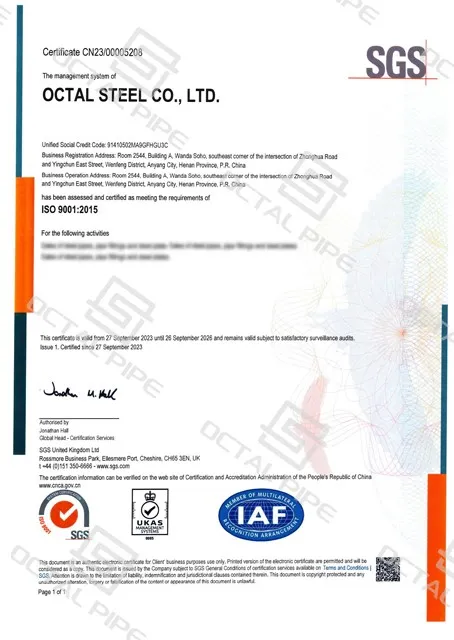
ISO 9001 Certificate
API Q1 Certificate
ABS Certificate
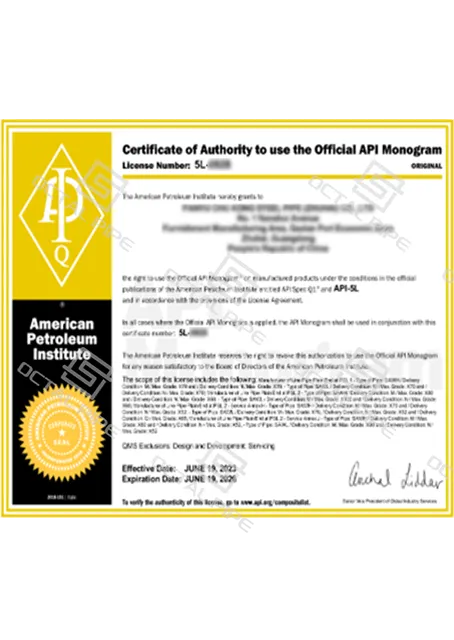
AP-5L Certificate
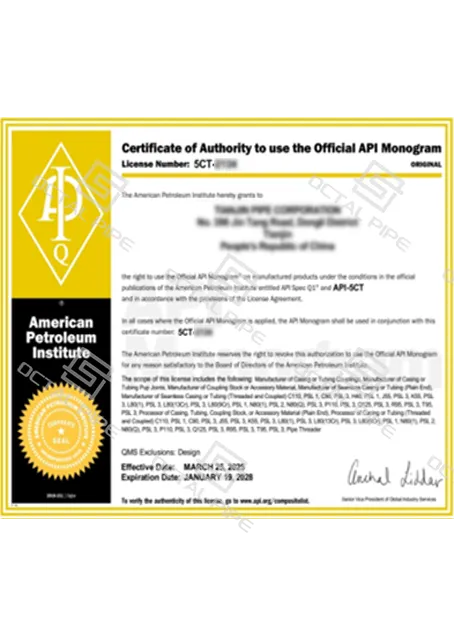
API-5CT Certificate
Hot Tags: clad pipe fittings, China clad pipe fittings manufacturers, suppliers, factory
Previous
Threaded Pipe FittingsNext
No InformationYou Might Also Like


Send Inquiry