




Drill Pipes
Your Professional Drill Pipes Supplier
Octal Pipe is a professional and integrated supplier of oilfield products and industrial steel solutions based in China. With extensive experience in supply, distribution, and manufacturing, we specialize in providing a wide range of steel materials for the oil & gas, energy, and industrial sectors.

Why Choose Us

Superior Quality Assurance
Our steel pipes undergo rigorous testing and adhere to international standards, ensuring unmatched durability, corrosion resistance, and performance in extreme conditions.
Certificates
Every product is backed by full material traceability, mill certificates, and compliance with international standards such as API, ASTM, ASME, EN, and ISO.
Competitive Pricing
We deliver premium-grade steel pipes at reasonable costs, optimizing value through efficient manufacturing and supply chain management without compromising on quality.
Fast & Reliable Delivery
Leveraging efficient sea freight logistics and a global network, we ensure timely ocean shipping of steel pipes, minimizing delays and keeping your industrial operations on schedule.
Drill Pipes
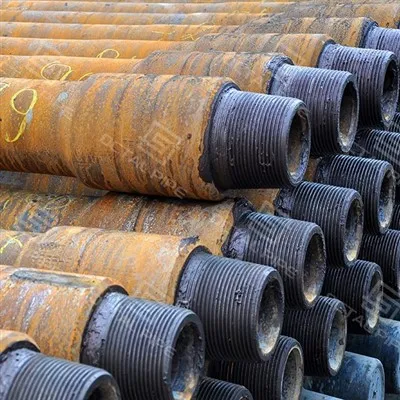
Drill pipe is the primary load-bearing tubular in any rotary drilling system. It not only conveys drilling torque and axial load from the rotary table or top drive to the bit, but also functions as the circulating conduit for drilling fluids.
Octal Pipe's drill pipe is produced in compliance with API Spec 5DP for pipe bodies, API Spec 7-1 for rotary drill stem elements, and API Spec 7-2 for tool joint connections. This ensures mechanical strength, dimensional precision, and interchangeability with international drilling equipment.
Our drill pipe is available in a full range of sizes (2 3/8" – 6 5/8" OD) and grades (E75, X95, G105, S135), suitable for deep wells, extended reach drilling, HPHT (High Pressure, High Temperature) wells, and offshore operations. Advanced friction-welded tool joints, premium hardbanding, and anti-galling coatings extend service life even in harsh downhole environments.
Standards & Specifications
| Standards | API Spec 5DP, API Spec 7-1, API Spec 7-2 |
| Grades | E75, X95, G105, S135 |
| OD Range | 2 3/8" – 6 5/8" |
| Lengths | R1 (18–22 ft), R2 (27–30 ft), R3 (38–45 ft) |
| Upset Types | IU, EU, IEU |
| Connections | API NC, IF, FH, REG; premium double shoulder threads optional |
Drill Pipe Sizes And Weight


The main features of drill pipes are high strength, high toughness and corrosion resistance. In the drilling process, the drill pipe needs to withstand high pressure, high temperature and complex chemical nature of the environment. Therefore, the strength and toughness of the drill pipe is crucial, it must withstand a variety of extreme working conditions under great pressure, but also need to maintain its integrity and stability. In addition, due to the drilling of a large number of acids, alkalis, salts and other corrosive agents, so the corrosion resistance of the drill pipe is also one of the key factors.
Quick Specs – API 7-1 Drill Pipe
| OD Range | 2 3/8" – 6 5/8" |
| Grades | E75, X95, G105, S135 |
| Lengths | R1 / R2 / R3 |
| Upset Types | IU, EU, IEU |
| Connections | NC, IF, REG, FH, premium options |
| Applications | Deep wells, HPHT, offshore, directional drilling |
Drilling pipe classification
After inspection, drill pipes are categorized into one of three classes:
N-Class (New Pipe)
These are the strongest and newest pipes available, typically in excellent or near-pristine condition.
P-Class (Premium Pipe)
Premium pipes are a step down from N-Class. They have experienced some wear but are still highly functional.
C-Class (Used Pipe)
C-Class pipes further subdivide into C-1, C-2, and C-3, depending on their condition. They range from well-worn pipes to those nearing the end of their serviceable life. The specific rating indicates the extent of wear and longevity, making C-Class pipes suitable for less demanding drilling tasks.
What Materials Are Used in Drill Pipes?
A drill pipe is predominantly manufactured from steel, specifically high-strength, low-alloy steel (HSLA). This material is chosen for its exceptional ability to endure the severe conditions encountered during drilling, such as immense stress, corrosive environments, and abrasive wear.
High-Strength, Low-Alloy Steel (HSLA)
This is the primary material due to its robust mechanical properties, allowing it to withstand high tensile, compressive, and torsional stresses inherent in drilling operations. It offers the necessary strength and fatigue resistance to operate effectively in demanding downhole environments.
Aluminum
Occasionally, aluminum drill pipes are utilized, particularly in applications where reducing weight is a critical concern. Its lighter weight can decrease the load on the drilling rig and potentially allow for deeper drilling with less power.
Corrosion-Resistant Coatings
To provide additional protection against corrosion, especially in aggressive drilling fluids or environments, drill pipes may be coated with materials such as nickel or other specialized anti-corrosion coatings. These coatings extend the life of the pipe and reduce the risk of material degradation.
Key Components of Drill Pipes
Tube (Body)
The main body of the drill pipe, made from high-strength steel.
Tool Joint
Heavy-duty connectors welded to both ends of the tube. The tool joints have a pin and box configuration that allows the pipes to be screwed together.
Thread Protectors
Used to protect the threads of the tool joints during transport and handling.
Material of Drill Pipe
Drill pipes are generally made of high-strength alloy steel. This alloy steel consists of various elements such as steel, chromium, molybdenum, manganese and silicon, and is characterized by high strength, high toughness and corrosion resistance. The manufacture of drill pipe must follow API specifications to ensure its quality and performance.
Company Honor


FAQ