




API 5DP Drill Pipe
OD Range: 2 3/8″ – 6 5/8″
Grades: E75, X95, G105, S135
Lengths: R1 (18–22 ft), R2 (27–30 ft), R3 (38–45 ft)
Upset Types: IU, EU, IEU
Connections: NC, IF, REG, FH, premium optional
Features: Q&T alloy steel, friction-welded tool joints, optional hardbanding
Applications: Oil & gas wells, geothermal drilling, HPHT deep wells, offshore rigs
API 5DP drill pipe is the main working tubular in a rotary drilling string, used to transmit rotary torque, carry axial load, and keep drilling fluid circulation moving from surface to bit. Unlike casing or tubing, it works under repeated make-up and break-out cycles, cyclic bending, vibration, and continuous drilling-fluid loading, so the pipe body, tool joints, and connection system all need to perform as one matched package. In actual drilling service, the real concern is not only size or grade, but whether the full drill pipe string can match the rig handling practice, connection system, inspection route, and expected downhole duty.
Octal supplies API 5DP drill pipe in a current range of 2 3/8" to 6 5/8" OD, grades E75, X95, G105, and S135, R1/R2/R3 lengths, IU/EU/IEU upset types, and NC, IF, REG, FH or project-specified premium connections. This range is suitable for oil and gas wells, geothermal drilling, deep wells, extended-reach and horizontal drilling, offshore programs, and other operations where connection reliability and traceable delivery matter. Supply can also be arranged with friction-welded tool joints, Q&T alloy steel, and optional hardbanding where wear resistance, connection life, and service stability need closer control.
Available API 5DP Sizes, Grades, and Connections
| Item | Available Range |
|---|---|
| Standard | API 5DP |
| Technical basis | ISO 11961 |
| OD range | 2 3/8" – 6 5/8" |
| Grades | E75 / X95 / G105 / S135 |
| Length range | R1 (18–22 ft), R2 (27–30 ft), R3 (38–45 ft) |
| Upset types | IU / EU / IEU |
| Connections | NC / IF / REG / FH / project-specified premium |
| Pipe body | Seamless drill pipe |
| Optional features | Hardbanding, phosphating, copper plating, thread protectors, project-defined inspection scope |
This size and grade range covers the common API 5DP drill pipe combinations used in standard drilling strings, replacement orders, and project-based supply. To achieve the right service fit, the final selection should be confirmed as one complete package - OD, grade, range, upset type, and the exact connection designation - so the delivered pipe is ready for the intended drilling program, connection system, and rig operation.


API 5DP Drill Pipe Drift Size Chart
The drift diameter is used as a practical acceptance reference to confirm the minimum internal clear passage of the drill pipe. In field service, this matters because the pipe may meet the required OD, grade, and connection type on paper, but the internal bore still needs to remain open enough for the specified drilling program and receiving inspection. For drill pipe supply, drift size is normally checked together with OD size, nominal weight, upset type, and connection designation, because these details affect the actual internal passage and the final acceptance basis.
In practical use, a drift chart is not only a dimensional table. It is also useful during quotation review, incoming inspection, and string compatibility checks, especially when replacement pipe has to match an existing drilling string without confusion over ID restriction. For example, two joints may share the same OD but still have different internal clearance because the nominal weight and connection package are not the same. That is why drift size should be reviewed as part of the full drill pipe specification rather than as an isolated number.
Reference Drift Size Chart
| OD Size | Common Nominal Weight | Common Upset / Connection | Reference Drift Diameter |
|---|---|---|---|
| 2 3/8" | 6.65 lb/ft | EU / NC26 | 1 5/8" |
| 2 7/8" | 10.40 lb/ft | EU / NC31 | 2" |
| 3 1/2" | 13.30 lb/ft | EU / NC38 | 2 7/16" |
| 4" | 15.70 lb/ft | EU / NC46 | 2 7/8" |
| 4 1/2" | 20.00 lb/ft | EU / NC50 | 3 3/8" |
| 5" | 19.50 lb/ft | IEU / NC50 | 3 5/8" |
| 5 1/2" | 21.90 lb/ft | IEU / FH | 3 5/8" |
| 6 5/8" | 27.70 lb/ft | IEU / FH | 4 7/8" |
The drift diameters shown above represent common API drill pipe combinations and are useful for specification review, incoming inspection, and string compatibility checks. The final accepted drift value should be confirmed against the ordered OD, nominal weight, upset type, connection designation, and the corresponding supplier data sheet.
Standards and Technical Basis
API 5DP is the main manufacturing and acceptance basis for new drill pipe, covering the pipe body, tool-joint assembly, grade, dimensions, marking, and inspection requirements used for delivery. ISO 11961 serves the same delivery-side role for steel drill pipe with upset pipe-body ends and weld-on tool joints, and its scope is built around PSL-1, PSL-2, and PSL-3. In practical supply, these two standards matter because they define what the delivered drill pipe is, how it is identified, and what technical conditions it must meet before shipment.
For connection design and thread control, the exact connection type should be confirmed clearly at the order stage, especially where the string includes NC, IF, REG, FH, or project-specified premium connections. In field use, this is where many avoidable problems begin: a drill pipe may meet the grade requirement, but if the connection designation, thread profile, gauging basis, or shoulder compatibility is unclear, make-up reliability and rig acceptance can still be affected. That is why API 7-2 matters in real supply work - not as a background reference, but as the thread and gauging basis behind connection consistency.
It is also important to separate delivery compliance from drill-string design suitability. A pipe can be compliant with API 5DP or ISO 11961 and still be the wrong fit for the actual drilling program if the selected grade, length range, upset type, and connection system do not match the torque, drag, fatigue, and handling conditions of the well. For that reason, API RP 7G is commonly used alongside the manufacturing standard as a reference for drill-stem design and operating limits, while the delivery standards remain focused on what is supplied and accepted at shipment stage.

Pipe Body, Tool Joints, and Service Fit
For API 5DP drill pipe, field performance is often controlled more by the tool-joint system and the body-to-tool-joint transition than by the pipe body alone. Tool joints carry make-up load, transmit torque, and absorb repeated bending at the upset area during drilling, tripping, and connection cycles. For this reason, friction-weld quality, thread machining accuracy, gauging discipline, and the exact connection designation all have a direct influence on service life, make-up consistency, and rig-floor acceptance. In practical supply, drill pipe should be confirmed as one matched package - grade, OD, length range, upset type, connection type, tool-joint configuration, and inspection scope - rather than as pipe body and connection ordered separately.
Octal can supply drill pipe with Q&T alloy steel, friction-welded tool joints, API 7-2 threading, and optional hardbanding, because these details directly affect how the pipe performs in actual drilling service. For example, in a deep vertical well, the repeated connection cycles and higher axial loading place more stress on the upset transition and the thread shoulder, so connection consistency and weld-zone quality become critical to avoid early rejection during rig-side inspection. In extended-reach or horizontal drilling, torque fluctuation, drag, and sidewall contact usually place more wear on the tool-joint OD, which is where hardbanding can help reduce wear and protect connection performance over longer runs. In abrasive formations, the practical issue is often not whether the pipe meets the grade on paper, but whether the tool-joint wear resistance, thread condition, and weld transition quality remain stable enough for repeated field use.
Performance and Operating Advantages
A properly matched API 5DP drill pipe package helps keep drilling work more stable in the field by combining load capacity, connection reliability, and fluid circulation efficiency in one tubular system. In deep wells and high-cycle drilling, the practical advantage is not only higher strength on paper, but more consistent performance at the upset transition, the tool-joint interface, and the connection zone where repeated make-up, torque transfer, and bending loads are concentrated.
With the correct grade, connection, tool-joint configuration, and optional hardbanding, the drill string is better positioned to handle torque transmission, cyclic loading, and wear around the connection area. This becomes especially important in extended-reach, horizontal, offshore, or abrasive drilling conditions, where the connection system, handling protection, and wear control can affect rig time as much as the pipe body itself. When the specification is confirmed clearly at the beginning, the pipe is easier to inspect, easier to run, and easier to integrate into the planned drilling string without avoidable compatibility questions.
Drill Pipe Applications
A common application for API 5DP drill pipe is a deep onshore vertical well where the string is run and pulled several times during drilling, logging, and casing preparation. In this kind of well, the lower part of the string may stay under high hook load for long intervals, while the upper connections are repeatedly made up and broken out at the rig floor. The practical concern is not only nominal grade, but whether the tool-joint shoulders, thread condition, and weld transition area remain consistent after repeated handling. In this service, drill pipe is usually selected with clear grade and connection matching because a rig crew can tolerate a heavy string, but not uncertain make-up behavior or questionable incoming inspection.
Another typical case is a long horizontal or extended-reach well where the drill string spends much of the run in contact with the wellbore wall. Here the pipe is not simply carrying axial load; it is also working through torque, drag, sidewall contact, and repeated rotation in curved intervals. A realistic example would be a long lateral section where the string slides through doglegs and build sections for extended periods. Under these conditions, the connection system and tool-joint OD wear resistance become just as important as the base grade. This is the type of work where hardbanding, stable thread condition, and consistent tool-joint configuration can make a visible difference in connection life and repeated run performance.
Offshore drilling programs create a different service picture because the issue is often not only downhole duty, but also how the pipe is handled before it reaches the hole. A typical offshore job may use R2 or R3 drill pipe so stand building and deck handling can be kept efficient, but that also means tighter control is needed over connection designation, thread protection, tally records, and replacement planning. On a platform or offshore drilling unit, confusion between similar connections or poorly protected threads can slow down pipe movement from rack to catwalk to rotary table much faster than a simple strength issue. In this environment, traceable supply and connection consistency matter directly to rig efficiency.
Geothermal wells are another realistic application where drill pipe selection should not be based on grade alone. In geothermal drilling, the string can see higher return temperature, repeated thermal cycling, abrasive cuttings, and more aggressive wear around the connection area. For example, after circulation and shutdown cycles, the pipe may move between hotter operating conditions and cooler surface handling conditions in a way that puts extra demand on the connection zone and wear surfaces. In that type of service, wear control, inspection scope, and overall connection condition often deserve closer attention than they would in a routine shallow well.
For HPHT or other severe-duty drilling, the main issue is usually the combined effect of higher torque demand, repeated make-up, cyclic loading, and stricter acceptance requirements. A realistic case would be a well where the drill string is expected to carry more severe downhole load while still maintaining predictable connection performance through repeated trips. In this situation, the final selection should be confirmed as a full package - grade, OD, range, upset type, exact connection designation, and inspection route - because field problems usually come from mismatch at the connection and handling level, not from the pipe body description alone.


Why Octal for API 5DP Drill Pipe Supply
Octal supplies API 5DP drill pipe with a focus on practical drilling requirements rather than only basic product listing. The available scope covers common OD sizes, E75 / X95 / G105 / S135 grades, R1 / R2 / R3 lengths, IU / EU / IEU upset types, and NC / IF / REG / FH or project-specified premium connections. Supply can also include Q&T alloy steel, friction-welded tool joints, API 7-2 threading, optional hardbanding, thread protection, and project-defined inspection scope, so the delivered pipe is matched more closely to the actual drilling program.
The advantage of working with Octal is that the drill pipe is treated as one complete service package rather than just a size-and-grade item. Connection designation, tool-joint configuration, inspection requirements, traceability records, and shipment documents can be aligned before production, which helps reduce receiving issues, connection mismatch, and avoidable rig-side delays. For standard drilling strings, replacement orders, and connection-critical programs, this makes the supply easier to review, easier to inspect, and easier to put into service once it arrives at the yard or rig.
FAQ

01.What should be stated clearly in an API 5DP drill pipe RFQ?
02.Can API 5DP compliance alone guarantee that the pipe will fit the drilling program?
03.Why is the exact connection designation so important?
04.How should drill pipe be specified for H2S-containing service?
05.How should R1, R2, and R3 drill pipe lengths be selected?
Certifications
CE Certificate
ISO 9001 Certificate
API Q1 Certificate
ABS Certificate
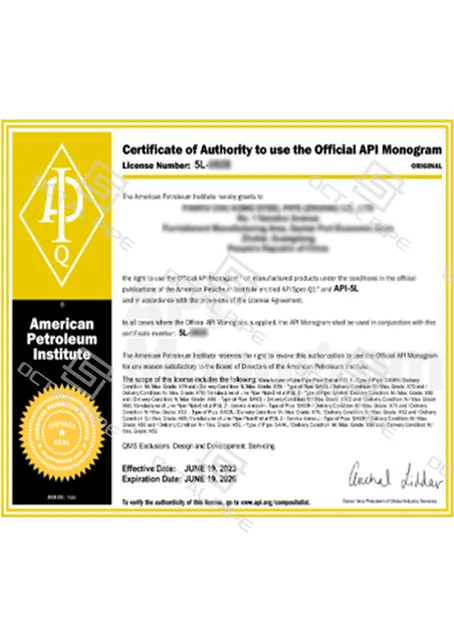
AP-5L Certificate
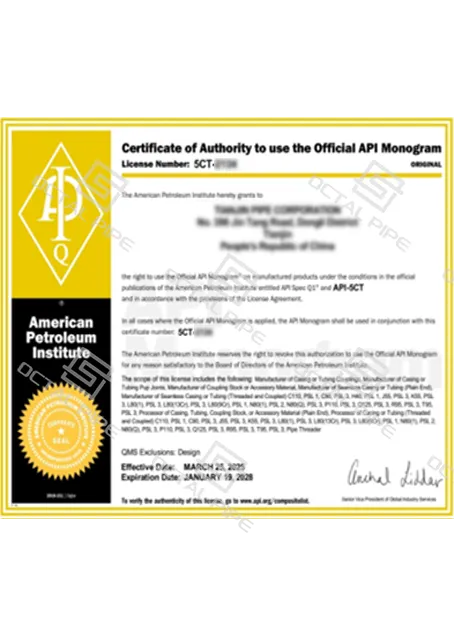
API-5CT Certificate
Hot Tags: api 5dp drill pipe, China api 5dp drill pipe manufacturers, suppliers, factory
Previous
Drill PipeNext
No InformationYou Might Also Like


Send Inquiry