




SSAW Pipe
Steel Grade: API 5L Grade B, X42, X46, X52, X56, X60, X65, X70, X80, X90, X100
Product Specification Levels: PSL1, PSL2
Range of Thickness: 6mm to 25.4mm (customized available)
Ends Type: Beveled ends, Plain ends
Range of Length: 8.0m to 18.5m (26’ to 62’) or customized
Protection Caps: Available in plastic or iron
Surface Appearance: Natural, Varnished, Black painting, 3PE, FBE, etc.
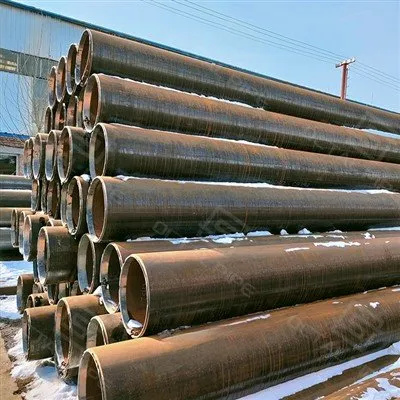
SSAW pipe is a large-diameter pipe formed from steel coil and welded with a spiral (helical) seam using submerged arc welding. SSAW stands for Spiral Submerged Arc Welded, and the term "SSAW pipe meaning" in procurement usually refers to this spiral SAW manufacturing route and its suitability for long-distance transmission and large-OD projects.
Our SSAW pipes are available in large diameters (φ508mm to φ1626mm) and varying wall thicknesses, ensuring reliability in long-distance fluid transmission. Produced in compliance with API 5L, ISO, and ASTM standards, these pipes are built to withstand extreme pressure and harsh environments.
With a commitment to precision manufacturing, Octal Pipe delivers cost-effective solutions without compromising quality, making us a trusted partner for your pipeline needs.
Product Overview
SSAW Welded Steel Pipe, also known as Spiral Submerged Arc Welded Pipe, is produced using high-quality steel coils as raw materials. The steel plate is spirally formed and welded using an automatic double-wire submerged arc welding technique. This unique welding method eliminates tensile stresses during the welding process, ensuring high-quality welds with stable performance. SSAW pipes are widely used in various pipeline projects, such as oil & gas transportation and construction infrastructure.


sSAW pipe Manufacturing Process
SSAW Welding (Double-Sided Submerged Arc Welding)
SSAW welding typically uses submerged arc welding (SAW) to create a spiral seam with stable penetration and repeatable joint quality, and many lines apply double-sided welding (ID/OD) per project specification.
The manufacturing process of SSAW steel pipes follows advanced techniques for high-quality and efficient production. Key steps include:
- Raw Material Inspection: High-quality steel coils, such as Q235, Q345, and API 5L grades, are inspected for compliance with international standards (API, ISO, ASTM, etc.).
- Forming: Steel coils are cold-formed into spiral shapes to ensure optimal structural integrity.
- Welding: Automatic double-wire submerged arc welding ensures excellent weld penetration and joint strength.
- Heat Treatment: The pipes undergo heat treatment processes (annealing or normalizing) to relieve stresses and improve mechanical properties.
- Testing & Inspection: Includes dimensional checks, visual inspection, ultrasonic testing (UT), and hydrostatic testing to ensure product quality and performance.
- Surface Treatment: Anti-corrosion coatings such as 3PE and FBE are applied to enhance the durability of the pipes in harsh environments.

Specifications & Technical Details
- Outer Diameter (OD): φ508–φ1626 mm (20"–64")
- Wall Thickness (WT): 6.4–25.4 mm
- Length: 8.0–18.5 m (26'–62'); custom cut-to-length available
- Material Grades:
- API 5L: Grade A–X90 (PSL1 / PSL2)
- GB/T 9711: L190–L625 (e.g., L245, L290, L320, L360, L415, L450, L485)
- Other grades on request to project specification
- Standards Supported: API 5L, ISO 3183, GB/T 9711, ASTM, EN, BS, DIN, CSA, DNV (offshore pipeline standard)
- Manufacturing: Spiral Submerged Arc Welded (SSAW), double-sided SAW (ID/OD), coil-feed with edge milling, automated seam tracking, on-line NDT, hydrostatic test, beveling, and coating line integration
- End Finish / Coatings: Plain or beveled ends per standard; external 3LPE/FBE/epoxy (internal coatings optional by project); marking and export packing
- Inspection & Documents: 100% hydrotest; UT/RT per standard or ITP; MTC EN 10204 3.1/3.2 and full NDT records available


LSAW vs HSAW (SSAW) Pipes: Key Differences
| Item | LSAW | HSAW (SSAW) |
|---|---|---|
| Weld seam | Longitudinal (straight) | Helical / spiral |
| Typical input | Plate | Coil |
| Best fit | Higher-demand pressure/critical lines (spec-driven) | Large OD, long lengths, cost-efficient transmission lines |
| Naming | Longitudinal SAW | Helical SAW = SSAW in common usage |
How does an SSAW pipe handle pressure?
Pressure capacity is design-based-it depends on OD, wall thickness, steel grade (SMYS/allowable stress), design factor, corrosion allowance, and operating temperature under the applicable code/spec. For SSAW/HSAW line pipe, pressure integrity is secured by controlling the helical seam: buyers typically specify full-length weld seam NDT (UT/RT per the project ITP) and require hydrostatic testing when applicable, so acceptance is based on documented seam integrity and test evidence. A practical rule in procurement is: if the service is higher-risk (higher pressure, sour service, or stricter owner requirements), tighten the order on grade/WT selection and seam NDT scope rather than relying on generic "pressure performance" claims.
SSAW Welding & Seam Quality Control (What Buyers Audit)
On SSAW/HSAW projects, the "pass/fail" is rarely about generic strength claims-it comes down to seam acceptance discipline. Buyers typically lock onto three core items, and this is exactly where Octal Pipe puts control and evidence.
- Seam consistency (forming → weld stability): The helical seam quality starts before welding. If spiral forming is not stable, you see it later as seam wandering, ovality drift, and uneven bead profile, which then triggers extra NDT and repair discussions. Octal Pipe controls the forming set-up and keeps the welding parameters inside a defined window so the seam stays consistent from the first pipe to the last in the lot.
- NDT scope that is audit-proof (not "we did testing"): What buyers actually ask is: Is the helical seam inspected full length? Which method, and what acceptance basis? Octal Pipe aligns UT/RT coverage and the disposition rule (accept/re-test/reject) to the governing standard and the project ITP, and provides the inspection evidence as part of the release pack-this is what prevents site hold points and re-inspection loops.
- Document traceability that survives site reality: Many rejections happen after delivery when pipes are already staged and the client can't reconcile heat/coil → pipe marking → NDT/hydro reports → MTC. Octal Pipe delivers a traceable pack (EN10204 3.1; 3.2 on request) with lot mapping, so QA can release material without chasing missing links.


LSAW vs HSAW (SSAW): Which One Fits Your Project?
When buyers ask the difference between LSAW and HSAW pipes, the real question is not only "plate vs coil" - it is which seam type reduces approvals, field risk, and schedule exposure under the project specification.
Key differences that affect approval and site execution
| Decision Point | LSAW (Longitudinal SAW) | HSAW / SSAW (Helical SAW) | What This Changes in Real Projects |
|---|---|---|---|
| Seam geometry | One straight longitudinal seam | One continuous helical seam (spiral) | Spiral seam increases total seam length per pipe, so clients often focus on seam NDT coverage and seam stability. |
| Forming route | Plate forming (e.g., JCOE / press bending) | Coil spiral forming | Coil-based forming supports long continuous production, often improving delivery efficiency for large OD packages. |
| Typical OD/WT window | Commonly used where spec is tight on WT and criticality | Often used for large OD transmission and long-length supply | For the same OD, the choice is frequently driven by spec acceptance history and owner preference. |
| NDT discussion focus | Buyers often ask for full-body UT + weld UT/RT based on spec/ITP | Buyers often emphasize helical seam UT/RT scope, calibration, and disposition rules | The difference is not "more testing" but where the inspection argument happens (body vs helical seam). |
| Dimensional & fit-up behavior | Strong on roundness control for certain packages; depends on forming route | Good consistency in volume runs; spiral angle/forming stability matter | If the workfront is sensitive to ovality/straightness, you lock tolerances in PO regardless of route. |
Is SSAW pipe cost-effective?
For large diameters, SSAW is often cost-effective because coil-based spiral forming supports continuous production and stable throughput, which typically improves the cost–lead time balance on big-OD packages. The real value is usually in total installed cost, not a claimed % saving: when deliveries are batched by lot/size to match the workfront, contractors reduce sorting time, crane moves, and "missing size" stoppages.
In most tenders, SSAW becomes "cost-effective" when it lowers total project friction-fewer logistics interruptions, smoother QA release, and less site rework-rather than relying on a lower unit price alone.
SSAW Pipe in Real-World Worksite Environment
SSAW (HSAW) pipe is often specified when the worksite challenges are about handling, coating integrity, fit-up speed, and release paperwork, not just "pipe strength." From Octal Pipe's procurement view, the right SSAW package is the one that survives site conditions with fewer hold points and less rework, backed by auditable inspection evidence.
- Restricted access (mountain routes / narrow ROW / limited lifting):
- The jobsite problem is not welding itself-it's alignment time: uneven ground and short lifting moves amplify issues like ovality, straightness drift, and inconsistent end condition, which slows fit-up and increases forced correction. Octal Pipe typically supports these sites by locking dimensional controls (OD/ovality/straightness) and end prep (PE/BE) up front, and shipping with clear bundle identification so crews don't waste time sorting sizes at the workfront.
- Wet ground (river crossings / wetlands / high groundwater):
- In muddy handling and lowering-in, the common pain is coating damage and holiday repair workload, which can delay backfill and trigger repeated inspections. Octal Pipe can align the order with a practical coating package (when specified) and provide the supporting release documents-so the site team is not stuck proving acceptance after the pipe is already staged.
- High-output spreads (open-field construction / long-haul logistics):
- Productivity is often lost to release speed, not production speed-projects get held by mixed bundles, missing traceability links, or inspection packs that don't map cleanly to pipe markings. This is where Octal Pipe focuses on shipment discipline: lot separation, clear marking, and a document pack that connects heat/coil → pipe marking → inspection evidence → MTC, reducing QA hold points during installation.
- Short work windows (urban corridors / night shifts / permit-limited work):
- When crews only have a few hours, any mismatch becomes expensive: bevel inconsistency, dimensional variation, or unclear inspection scope quickly turns into grinding/rework and missed windows. Buyers typically specify tighter fit-up needs (tolerances, end finish, length strategy), and Octal Pipe can package the supply accordingly with the inspection records that help site QA release without delays.


sSAW pipes Advantages
| Advantage | What It Solves on Site (Real Workfront Pain) | How Octal Pipe Delivers It (Auditable Controls) | Proof You Can Ask For |
|---|---|---|---|
| Seam Integrity You Can Release | Projects get delayed when the helical seam becomes a hold point-extra NDT, unclear acceptance, repeated review. | Double-sided SAW (ID/OD) available when specified; controlled welding parameters and seam profile management to keep the spiral seam stable lot-to-lot. | Weld seam UT/RT report (per PO/ITP), seam acceptance criteria, repair/disposition record (if any). |
| Cost Efficiency at Large OD | For large diameter lines, buyers need cost-per-meter control without trading away schedule reliability. | Coil-based spiral forming supports continuous production and stable output for large OD packages; batch rolling + shipment planning to match construction sequence. | Rolling plan / batch shipment schedule; packing list by size/lot; MTO matching list. |
| Large OD/WT Window + Long-Length Supply | Site productivity suffers when lengths are inconsistent or when OD/WT doesn't match welding procedures and fit-up jigs. | Wide OD/WT capability with SRL/DRL and cut-to-length options; end finish (PE/BE) aligned with field welding method and tie-in plan. | Dimensional inspection record (OD/WT/ovality/straightness), length list, end-prep confirmation. |
| Coating & Handling Readiness | In real yards, pipes get dragged, lifted, and staged; coating holidays and touch-up can become the hidden cost. | Coating options (FBE/2LPE/3LPE/3LPP) supplied to project requirement; seam-area surface prep control and end protection for transport and staging. | Coating inspection report, holiday testing criteria/results (if required), packing photos/end-cap list. |
| Quality System That Reduces Hold Points | Many rejections happen after delivery because documents don't map to pipe markings or inspection scope is unclear. | Traceability from heat/coil → pipe marking → inspection evidence → MTC; EN10204 3.1 standard, 3.2 and third-party witnessing optional for EPC/operator specs. | EN10204 3.1/3.2 MTC, traceability mapping sheet, ITP checkpoints, third-party stamped reports (if applicable). |
| Standards Compatibility for EPC Specs | EPCs often need one supplier to match multiple specs across lots-standard mismatch causes rework and resubmittals. | Supply aligned to API/ISO/EN/GB project requirements with order-by-order scope clarity (test, coating, ends, docs). | PO compliance checklist; inspection plan; standardized document index for submittals. |
Why Choose Octal's SSAW Welded Steel Pipe?
- Advanced Manufacturing (Equipment-Level Control): Octal Pipe runs SSAW/HSAW production on a dedicated spiral forming line with tandem multi-wire submerged arc welding (SAW) for the helical seam (ID/OD welding available when specified). Seam stability is supported by online weld-seam UT/RT capability, followed by hydrostatic testing equipment, CNC end beveling/facing, and automatic marking-so what you receive is not just pipe, but a process-backed lot with measurable controls.
- China-Based Standards & Local Documentation (EPC-Friendly): As a China-based SSAW pipe supplier, Octal Pipe supports both export and domestic project requirements with a localized document set-commonly covering GB/T 9711 (line pipe) and SY/T 5037 (spiral welded pipe for fluid service) where applicable, plus project-specified inspection records. We provide bilingual MTC/document packs, clear lot traceability (heat/coil → pipe marking), and can coordinate third-party witnessing (e.g., SGS/BV) when required-making submittals faster for EPC review and smoother for on-site material release.
- Seam Quality Release Pack: The spiral seam is supported by weld seam NDT (UT/RT per PO/spec) and hydrostatic testing when required, with reports packaged by lot to reduce QA hold points after delivery.
- Delivery Built for Workfront Flow: Batch shipments can be organized by size/lot and construction sequence, with clear marking and packing lists to reduce site sorting time and minimize "missing piece" stoppages.
FAQ

Q: What is the SSAW pipe meaning in steel pipe procurement?
Q: What is SSAW welding?
Q: What is the difference between LSAW and HSAW pipes?
Q: What is the full form of SSAW pipe?
Certifications
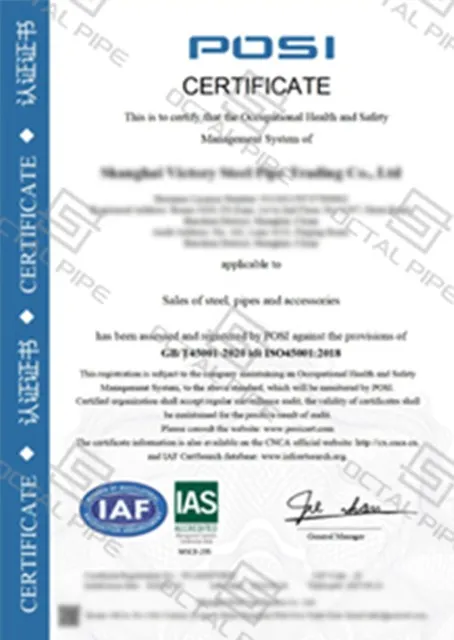
CE Certificate
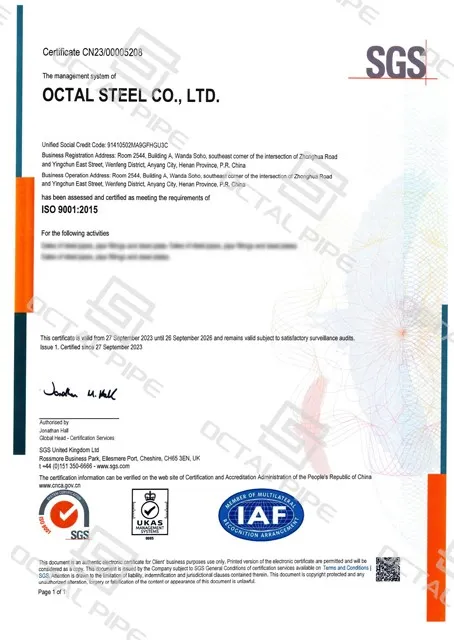
ISO 9001 Certificate
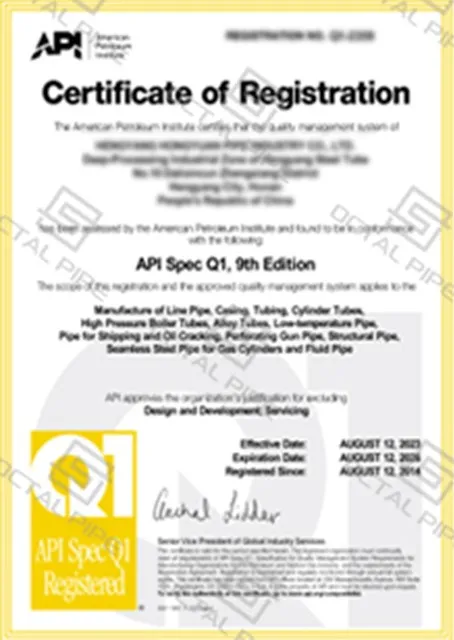
API Q1 Certificate
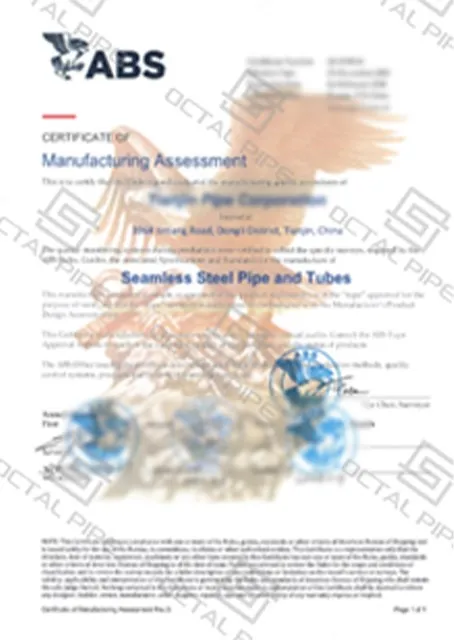
ABS Certificate
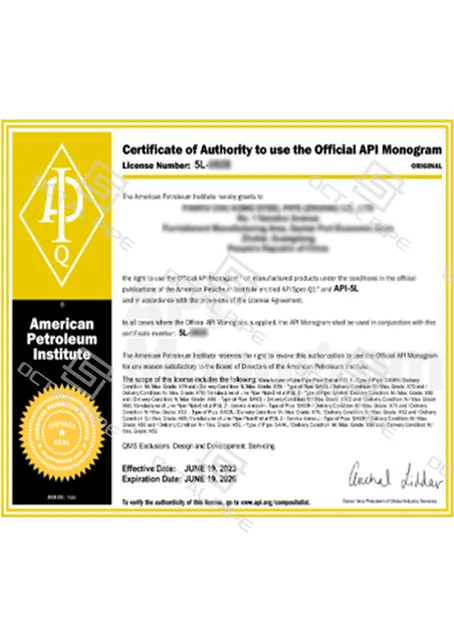
AP-5L Certificate
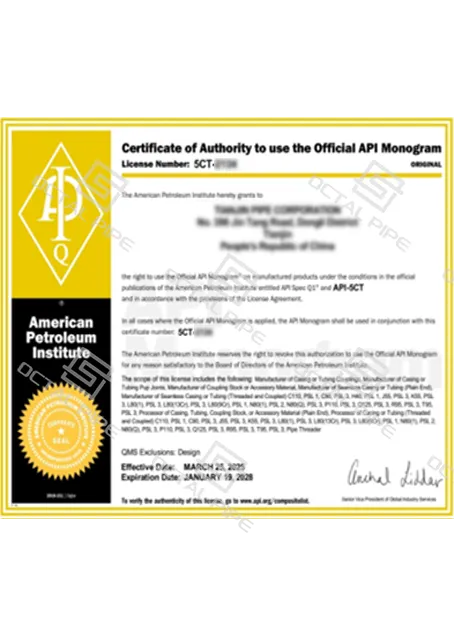
API-5CT Certificate
| Parameter | Specification |
|---|---|
| OD Range | 406.4–2540 mm (16"–100") |
| Wall Thickness | 6.0–25.4 mm (OD-dependent) |
| Length | 8–18 m (SRL/DRL), cut-to-length available |
| Standards | API 5L (PSL1/PSL2), GB/T 9711, SY/T 5037, ASTM A252 (as required) |
| Grades | API 5L Gr.B / X42–X70; GB/T grades per order |
| Ends | PE / BE (T&C on request) |
| Coating (Optional) | FBE / 2LPE / 3LPE / 3LPP |
| Inspection & Tests | Weld seam UT/RT (per PO/ITP), hydrostatic test (as required), dimensional & visual inspection, EN10204 3.1 (3.2 optional) |
Hot Tags: SSAW Pipe, China SSAW Pipe manufacturers, suppliers, factory, stainless steel hose pipe, galvanized electrical conduit, steel conduit pipe, welded elbow, flex steel hose, metric stainless steel tubing
Previous
ERW PipeYou Might Also Like


Send Inquiry