




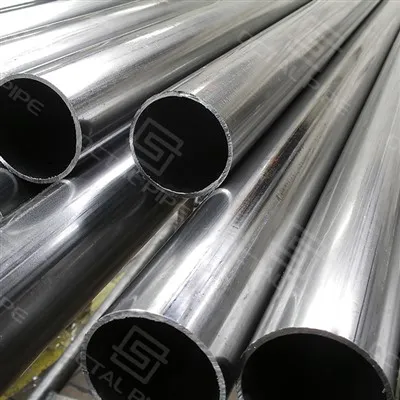
ERW Pipe
Outer Diameter Range: 3/4" - 24"
Wall Thickness: 4 - 20mm (customized)
Length: 6m, 12m, 20FT, 40FT or customized
Steel Grades:API 5L Gr. B, X42-X90
Product Levels: PSL1, PSL2
Ends Type:Beveled, Plain, Threaded & Coupled
Surface Treatment:Black painting, Varnished, 3PE, FBE, Galvanized, Epoxy
Testing:Hydrostatic Test, UT, ECT
API 5L, ISO, EN standards
Protection:Plastic/Iron End Caps
Applications:Oil & Gas, Construction, Power, Marine, Agriculture
ERW welded steel pipe is a straight-seam welded pipe made from steel coil, where the strip edges are heated by electrical resistance and forged together to form a solid longitudinal weld. ERW stands for Electric Resistance Welded, and it is commonly selected for line pipe, water transmission, and structural service where consistent OD, fast delivery, and cost efficiency matter. The weld runs longitudinally along the pipe, resulting in compact structure, high strength, and excellent dimensional accuracy. With high production efficiency and relatively low cost, ERW pipes have become an important choice in industries such as oil and gas transportation, infrastructure construction, agricultural irrigation, and machinery manufacturing.


ERW Pipe Specification (OD, WT, Grades & Standards)
| Item | Realistic Range / Options | Practical Notes for Buyers |
|---|---|---|
| Outside Diameter (OD) | 21.3–660.4 mm (NPS 1/2–26, DN 15–650) | This covers the mainstream ERW size band used for utility lines, structural work, and many onshore pipeline packages. |
| Wall Thickness (WT) | ~2.0–25.4 mm (OD-dependent) | Commonly ordered by ASME B36.10M schedules: SCH 10 / 20 / 30 / 40 / 60 / 80 / 120 / 160; also STD / XS / XXS where applicable. |
| Standards | API 5L (PSL1/PSL2), ASTM A53, ASTM A500, ASTM A252, EN 10219, EN 10217 | Choose by service: API 5L for line pipe; A53 for general conveyance/galvanizing; A500/EN10219 for structural; A252 for piling. |
| Common Grades | API 5L: Gr.B, X42–X70 | ASTM A53: Gr.A/Gr.B | ASTM A500: Gr.B/Gr.C | EN10219: S235JRH / S275J0H / S355J2H | Keep the grade list "deal-real": only show grades you actually supply, because buyers will ask for MTC and ITP evidence. |
| Length | 5.8/6.0 m (SRL); 11.8/12.0 m (DRL); cut-to-length available (often up to 18 m by arrangement) | State SRL/DRL as default; treat longer CTL as project option (depends on transport & straightness tolerance). |
| End Finish | Plain End (PE) / Bevel End (BE) / Threaded & Coupled (T&C) | API 5L packages often specify PE/BE; T&C is common for some low-pressure utility use. |
| Surface / Coating | Black / varnish / galvanized; FBE / 2LPE / 3LPE / 3LPP (optional) | Coating selection should follow the line spec (soil, temperature, installation method). |
| Inspection & Documents | Weld seam UT / Eddy Current; hydrostatic test; dimensional & visual; EN10204 3.1 / 3.2 MTC (as required) | Put your "auditable proof" here: NDT scope, hydrotest, traceability, third-party witnessing options. |
ERW Pipe Manufacturing Process
Octal Pipe strictly follows international standards in producing ERW pipes, using automated and intelligent equipment to ensure stable and reliable product performance. The complete process includes:

1. Raw Material Inspection & Preparation
- Steel plates that meet API, ISO, and other international standards are selected.
- Chemical composition, mechanical properties, and surface defects are tested to ensure consistency.
2. Cutting & Forming
- High-precision cutting equipment ensures dimensional accuracy.
- Steel plates are gradually bent by forming machines into round pipe billets.
3. High-Frequency Resistance Welding
- Edges are heated to a plastic state and welded together with squeeze rollers.
- Current, voltage, and welding speed are automatically adjusted to guarantee dense and continuous welds.
4. Heat Treatment (Annealing/Normalizing)
- Stress relief for welds and heat-affected zones.
- Improves microstructure, toughness, and crack resistance.
5. Nondestructive Testing & Inspection
- Ultrasonic testing (UT): detects internal weld defects.
- Eddy current testing (ECT): identifies surface cracks and inclusions.
- Hydrostatic testing: verifies pressure resistance.
- Dimensional inspection: wall thickness, ovality, length tolerances.
6. Sizing, Cutting & Finishing
- Spray cooling and sizing ensure roundness and straightness.
- Pipes are cut to length as per customer requirements, with chamfering and deburring.
7. Surface Treatment & Coating
- Pickling, shot blasting, or anti-corrosion coatings (3PE, epoxy powder) improve corrosion resistance.


ERW Pipe Seam Quality Control
The longitudinal ERW pipe seam is the single most audited area in ERW/HFW production. For project procurement, seam control is not a slogan-it's a chain of in-process controls, full-length inspection, and traceable records that prove the seam is consistently fused, trimmed, and tested.
- In-process seam control: coil/heat traceability, edge preparation, and a fixed welding parameter window (power/speed/squeeze) to keep seam forging stable. ID/OD scarfing is controlled to meet bead profile requirements for flow service and coating integrity.
- Full-length seam NDT: the longitudinal seam is inspected by UT and/or Eddy Current per the governing standard and project ITP, with calibrated settings and documented acceptance criteria.
- Pressure integrity: hydrostatic test is performed as required; dimensional checks (OD/ovality/straightness) are verified with seam area stability in mind.
- Repair & disposition: seam indications follow a clear disposition rule (accept / re-inspect / reject) aligned with the specification; any permitted repair is recorded and re-verified.
- Auditable deliverables: heat No. mapping, NDT report, hydrotest report, and EN10204 3.1 / 3.2 MTC (when requested).


ERW Pipe vs Seamless Pipe: How to Choose
For most projects, the decision is simple: ERW is a cost-effective choice when welded pipe is permitted and service is within standard design margins; Seamless is preferred when the specification requires it or when the duty is severe. Octal Pipe can supply both routes and help you select the right option based on code and risk level.
- Choose ERW when you need predictable OD/WT, shorter lead time, and stable volume supply for utilities, structural work, and many onshore line packages. Key control point: the longitudinal ERW seam-Octal Pipe controls seam consistency through edge preparation + stable welding parameter window, and verifies integrity with full-length seam NDT (UT/Eddy Current as specified) + hydrostatic test. For documentation, we provide heat/coil traceability and EN10204 3.1 MTC (3.2 and third-party witnessing available upon request).
- Choose Seamless when the service is high pressure/high temperature, severe cyclic loading, or when the client/spec states "seamless only." Seamless reduces weld-seam review concerns in critical procurement, and is often selected when buyers want a simpler audit path for design-driven services (pressure/temperature margins, fatigue sensitivity, or strict owner requirements). To avoid scope gaps, Octal Pipe recommends stating code/standard, OD×WT, grade, testing scope, and document level clearly in the RFQ/PO.
Octal Pipe buyer tip: In your RFQ/PO, state standard + grade + OD×WT + PSL (if API 5L) + seam NDT scope + hydrotest + EN10204 3.1/3.2. This locks the inspection boundary and avoids rework during document review.
- Manufacturing: Coil + welded seam vs solid billet (no seam)
- OD range: ERW often economical up to mid-OD vs seamless better at small-OD/high-pressure
- Typical use: onshore lines / utilities / structures vs critical process / high-pressure
- Risk control: weld seam NDT vs full body integrity + NDT
- Cost/Lead time: ERW lower & faster vs seamless higher & longer


REW Pipes Applications & Case Studies
Oil & Gas Transportation (Onshore ROW construction):
In right-of-way work, the pace is set by stringing → fit-up → welding → NDT release → coating repair → lowering-in. ERW/HFW pipe is often chosen when the package needs fast mill throughput and stable OD/WT for fit-up efficiency. This is where a supplier's discipline shows up: with Octal Pipe, the jobsite team typically receives a traceable document pack (heat/coil mapping + MTC) aligned with the project ITP, so tie-ins aren't held up waiting for paperwork. Field audits usually focus on weld seam NDT coverage (full-length UT/EC as required) and hydrotest status-because any hold there stops welding release and delays lowering-in.
Construction & Infrastructure (high-throughput fabrication & installation):
For guardrails, frames, sleeves, and general structural members, crews are continuously cutting to length, coping, drilling, slotting, and welding brackets-usually with repetitive jigs. What matters in practice is repeatable geometry (OD, ovality, straightness) so parts don't "fight" the jig and crews don't burn hours on forced alignment or rework. A practical way Octal Pipe supports this is by keeping specs table-driven (OD×WT, tolerance, length strategy) and supplying inspection records that match how site QC checks materials: dimensional results, marking/traceability, and seam inspection scope where attachments concentrate.
Power & Industrial Sites (shutdown windows & permit constraints):
During outages/turnarounds, you often get a fixed work window, restricted hot-work permits, and limited laydown space-so material must arrive ready-to-fabricate. ERW pipe is commonly used for racks, supports, sleeves, and auxiliary lines, where the job risk is not "can we buy pipe," but "can we close QA fast." Here, Octal Pipe's value is less about marketing and more about release speed: hydro/NDT evidence, clear lot traceability, and an ITP-friendly document set so spools can be signed off without extra hold points or re-testing.
Procurement Value & Customer Benefits
| Buyer Priority | What It Means on Site | Octal Pipe Deliverables | Why It Matters |
|---|---|---|---|
| Lead Time & Batch Delivery | Projects fail when pipe arrives late or arrives in the wrong sequence for welding/installation. | Rolling + stock planning for common sizes; batch shipment schedule aligned to your construction sequence; packing list by lot/size. | Keeps ROW/workfront moving and reduces laydown congestion and "missing size" stoppages. |
| Weld Seam Risk Control (ERW seam) | Inspectors focus on seam integrity before release for tie-ins and lowering-in. | Full-length seam NDT (UT and/or Eddy Current as specified) + hydrotest as required; documented acceptance/disposition per standard/ITP. | Prevents hold points caused by unclear NDT scope or seam quality disputes. |
| Dimensional Consistency for Fit-up | Poor OD/ovality/straightness slows fit-up, increases grinding, mismatch, and rework. | Controlled OD/WT; dimensional inspection records; length strategy (SRL/DRL/CTL) agreed in PO. | Improves fit-up speed and reduces field rework and schedule slippage. |
| Compliance & Traceable Documentation | Materials can be rejected on paperwork even if the pipe is physically fine. | EN10204 3.1 MTC (3.2 on request), lot/heat traceability, inspection reports packaged per project. | Shortens document review cycles and avoids "delivered but not released" situations. |
| Project Options (Ends & Coating) | Wrong ends/coating create immediate site rework (re-beveling, coating repair, delays). | PE/BE/T&C options; coating options such as FBE / 2LPE / 3LPE / 3LPP when required; end protection and marking per PO. | Reduces on-site modification and coating touch-up workload. |
Your Optimal Procurement Choice
With advanced manufacturing processes, strict quality control, and wide application fields, Octal Pipe's ERW welded pipes have become the preferred solution for global oil & gas, construction, and engineering clients. Through continuous innovation and efficient supply chain management, we deliver products and services that ensure higher cost efficiency, reliability, and long-term performance.
FAQ

Q: What is the difference between ERW and HFW pipe?
Q: How do you determine ERW pipe pressure rating?
Q: ERW pipe vs seamless pipe - which one should I choose?
Q: What does ERW mean in steel pipe?
Certifications
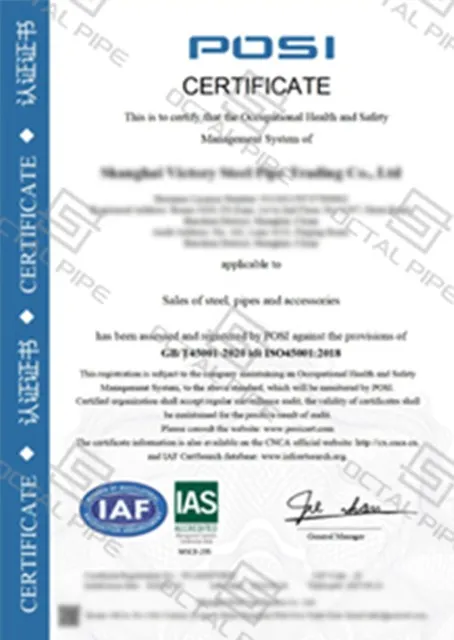
CE Certificate
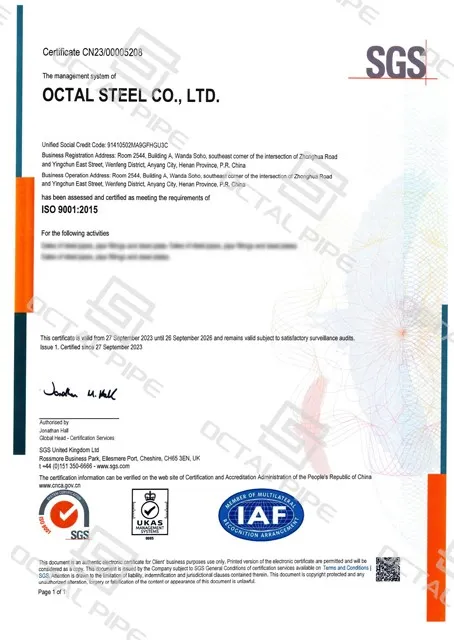
ISO 9001 Certificate
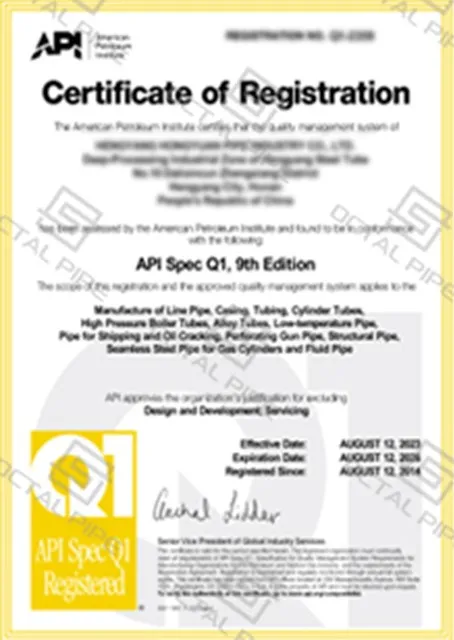
API Q1 Certificate
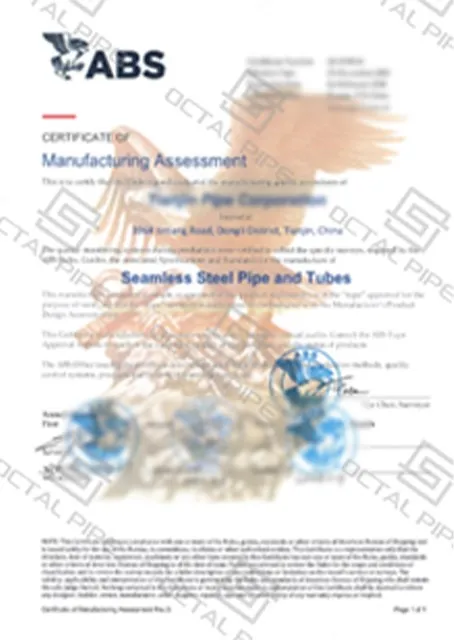
ABS Certificate
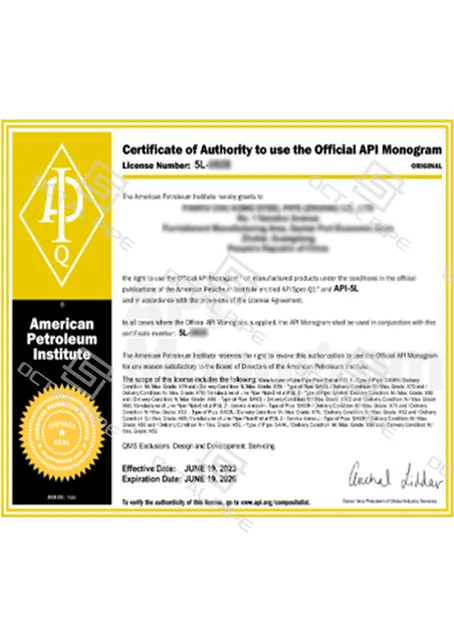
AP-5L Certificate
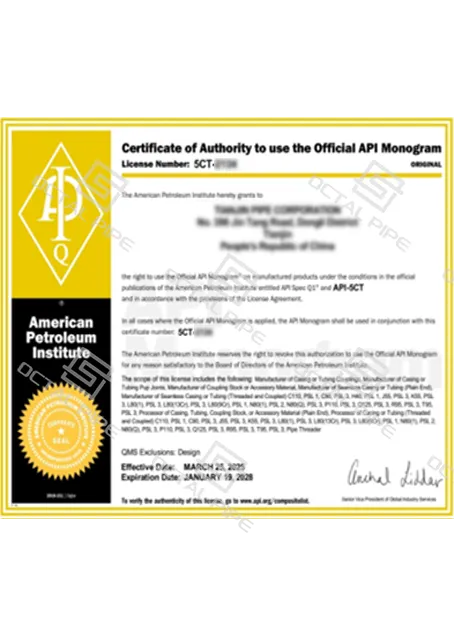
API-5CT Certificate
| Parameter | Specification |
|---|---|
| OD Range | 21.3–660.4 mm (NPS 1/2–26) |
| Wall Thickness | ~2.0–25.4 mm (OD-dependent), SCH 10–SCH 160 / STD / XS |
| Length | 5.8/6.0 m (SRL), 11.8/12.0 m (DRL), cut-to-length available |
| Standards | API 5L (PSL1/PSL2), ASTM A53, ASTM A500, ASTM A252, EN 10219, EN 10217 |
| Grades | API 5L Gr.B / X42–X70; ASTM A53 Gr.A/Gr.B; EN 10219 S235JRH/S275J0H/S355J2H |
| Ends | PE / BE / Threaded & Coupled (as required) |
| Surface / Coating | Bare/black, varnish, galvanized; FBE / 2LPE / 3LPE / 3LPP optional |
| Inspection & Tests | Weld seam UT and/or Eddy Current (per spec), hydrostatic test (as required), dimensional & visual inspection, EN10204 3.1 (3.2 optional) |
Hot Tags: ERW Pipe, China ERW Pipe manufacturers, suppliers, factory, stainless steel hose pipe, galvanized electrical conduit, steel conduit pipe, welded elbow, flex steel hose, metric stainless steel tubing
Previous
API 5L Seamless PipeNext
SSAW PipeYou Might Also Like



Send Inquiry