




Boiler Pipe
Range of Thickness: ≤150 mm (customized available)
Range of Length: 6m, 12m, 20FT, 40FT, or up to 18m customized
Steel Grades (Alloyed): ASTM A335 / ASME SA335 Grades P1, P2, P5, P9, P11, P12, P22, P91, P92, P122
Standards: ASTM A335 / A213, ASME SA335 / SA213, EN10216-2, DIN, GB/T8162
Ends Type: Beveled ends, Plain ends, Threaded with couplings
Key Features: High-temperature strength, creep resistance, oxidation and corrosion resistance, suitable for boiler, superheater, reheater and pressure piping service
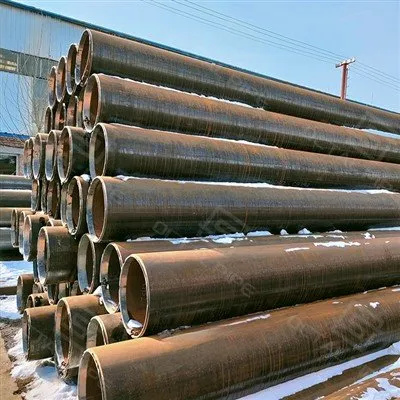
Boiler Pipe is a seamless steel pipe designed specifically for high-temperature and high-pressure service.Boiler pipe also known as Chrome-Moly Pipe (Chromium-Molybdenum Alloy Steel Pipe) material is typically Cr–Mo low-alloy steel engineered for high-temperature/high-pressure service, where creep strength and oxidation resistance control lifecycle reliability. In practice, "boiler pipe" procurement is grade-driven (e.g., P11/P22/P91), because alloy design + heat treatment determine long-term performance under steam and hot fluid duty .
By adding chromium (Cr) and molybdenum (Mo) to the steel, these pipes offer outstanding high-temperature strength, creep resistance, oxidation resistance, and corrosion resistance. They are widely used in critical equipment handling steam, hot fluids, and corrosive media, such as power plant boilers, petrochemical heaters, heat exchangers, and pressure pipelines.
With years of global project supply experience, Octal Pipe manufactures and delivers boiler pipes in full compliance with ASTM, ASME, DIN, EN standards. Grades cover P1–P92 and P122, ensuring solutions for everything from conventional boilers to advanced ultra-supercritical units.


International Standards & Grades
- ASTM A335 / ASME SA335: Ferritic alloy steel seamless pipes for high-temperature service
- ASTM A213 / ASME SA213: Seamless alloy steel pipes for boiler and superheater applications
- DIN EN 10216-2: Seamless steel tubes for pressure purposes
Common Grades & Applications:
- P1, P2 – Low-alloy grades for medium temperature service
- P11, P12, P22 – Widely used in power & petrochemical high-temperature steam lines
- P5, P9, P21 – Enhanced corrosion resistance for demanding chemical environments
- P91, P92, P122 – Advanced high-performance grades for ultra-supercritical boilers with long service life and superior strength
Boiler Pipe Specifications (Size, Schedule, Ends & Tests)
| Specification Item | Typical Range / Options |
|---|---|
| Definition Basis | OD × wall thickness × length × grade × governing standard |
| OD Range | 10.3–1422 mm |
| Wall Thickness | Up to 150 mm (custom available) |
| Length Options | 6 m / 12 m / 20FT / 40FT, up to 18 m on request |
| End Preparation | BE, PE, Threaded & Couplings (as required) |
| What to lock in the PO (spec completeness) | Grade selection (P/T grade), heat treatment condition (if applicable), NDT scope, and document pack required for release |
Boiler Tube Material Grade / Boiler Tube Steel Grade (P-Grades vs T-Grades)
In project documents, "boiler tube steel grade" often refers to ASTM A213 tube grades, while "boiler pipe" commonly references ASTM A335 pipe grades. A213 covers seamless alloy boiler/superheater/heat-exchanger tubes, and A335 covers seamless ferritic alloy-steel pipe for high-temperature service-related material families, but specified differently in BOMs and inspection packages.
To avoid grade confusion at procurement and material release, use these practical rules:
Rule 1 - Align the grade name to the item type: write T-grades for A213 tube items and P-grades for A335 piping items. This prevents "correct material, wrong certificate" rejections during EPC review.
Rule 2 - Use cross-references only as a guidance, not a substitute: projects commonly see P11 ↔ T11 and P22 ↔ T22 as the same service family (pipe vs tube designation), but the PO must still call out the correct standard and product form.
Rule 3 - Don't mix seamless tube vs seamless pipe requirements: A213 tube items are often tied to heater/boiler coil fabrication rules and tighter surface/ID requirements, while A335 piping items typically focus on pressure boundary and piping code compliance.
Rule 4 - Grade selection is about long-term high-temperature strength: higher-creep grades such as P91/P92 are usually specified when the design requires better long-term strength at elevated temperature, not just "higher yield." Confirm the exact grade and heat treatment condition required by the code/spec.
Rule 5 - Quote the inspection/heat treatment package, not only the grade: for boiler pipe material packages, buyers often need clarity on heat treatment condition and NDT scope (per project ITP) because these directly impact acceptance in high-temperature service.
Rule 6 - If the equipment list says "tube," don't substitute with "pipe" (and vice versa): even if dimensions look similar, the standard/certification route is different and can trigger nonconformance at receiving.
Procurement tip: When sending RFQs, include the line item wording exactly as it appears in the equipment list (e.g., "ASTM A213 T22 boiler tube" or "ASTM A335 P22 boiler pipe"), then add OD×WT, length, and required documents-this is the fastest way to avoid mismatched certification at material release.


Key Advantages (Enhanced)
- Exceptional High-Temperature Strength Thanks to Cr-Mo alloy reinforcement, Boiler Pipes can maintain stable strength and rigidity at 600°C and above, resisting thermal degradation. This ensures long-term, safe, and stable operation under high-pressure steam and hot fluid service.
- Creep Resistance & Extended Service Life Plastic deformation (creep) under prolonged high-temperature and high-pressure conditions is a common failure mode. Chrome-Moly pipes, with optimized Cr-Mo ratios and heat treatment, exhibit excellent creep resistance, enabling tens of thousands of hours of continuous service without dimensional instability. This reduces unscheduled shutdowns and maintenance costs.
- Superior Oxidation & Corrosion Resistance Chromium (Cr) forms a dense protective oxide layer, minimizing oxidation in steam and hot gas; Molybdenum (Mo) enhances resistance against sulfur- and chlorine-containing media. This allows the pipes to achieve a longer service life in harsh environments such as power boilers, refinery heaters, and chemical reactors.
- Excellent Weldability & Fabrication Compatible with automated welding, on-site welding, and multiple filler methods, ensuring strong and defect-free joints. With good machinability (bending, cutting, beveling), these pipes are highly adaptable to complex system layouts and custom-engineered equipment.
- Wide Grade Range & International Standards From P1/P2 economical solutions to P91/P92 advanced long-life options, grades can be selected based on temperature, pressure, and medium type, balancing performance and cost. Fully certified to ASTM, ASME, EN, DIN, these products are readily accepted in global projects.
- Optimized Lifecycle Cost Although the initial investment is higher than carbon steel, Chrome-Moly Boiler Pipes deliver longer service life, fewer maintenance cycles, and improved equipment efficiency, resulting in significantly lower total cost of ownership (TCO). They are especially suitable for power generation, refining, and energy industries where uptime and reliability are critical.


Boiler pipes Chemical Composition
The superior performance of Chrome-Moly Boiler Pipes comes from alloy design.
- Chromium (Cr) provides oxidation and corrosion resistance
- Molybdenum (Mo) improves high-temperature strength and creep resistance
- Carbon (C), Manganese (Mn), and Silicon (Si) are strictly controlled
- Trace elements (V, Nb, N, etc.) in higher grades (P91, P92) enhance toughness and long-term strength
Detailed chemical composition values are available in the table below.

Boiler pipes Mechanical Properties
Mechanical performance is critical in high-temperature and high-pressure environments.
- Tensile Strength ensures pipes resist breaking under stress at elevated temperatures
- Yield Strength provides adequate safety margins under sustained pressure
- High-performance grades such as P91/P92 offer significantly higher strength and endurance than conventional P11/P22, extending inspection intervals and improving system availability
Refer to the table below for detailed mechanical property data.

Boiler Pipe Insulation & Boxing (What to Specify to Avoid CUI)
Boiler pipe insulation is typically installed for heat-loss control and personnel protection, but it can also introduce a major reliability risk if moisture is allowed to enter and remain trapped. In many plants, boiler pipe boxing refers to boxing/lagging the pipe with insulation plus metal jacketing (cladding) to protect the insulation system during operation and maintenance. The procurement "make-or-break" detail is not just insulation thickness-it is water ingress control + drainage/venting, because trapped moisture can drive corrosion under insulation (CUI) on the external pipe surface, often undetected until an outage.
To make this section more actionable, here are the key points usually specified on real projects:
- Define the insulation purpose and temperature envelope: thickness and material are selected from operating temperature and heat-loss targets, but also from whether the line sees cycling (start/stop) that pumps moisture through joints.
- Specify the jacketing system, not only "insulation": material (aluminum/stainless/galvanized), thickness, and how seams/overlaps are formed; poor overlaps become water entry points.
- Water ingress control details (most missed): require sealed longitudinal seams, closed ends where appropriate, and clear rules around penetrations (supports, instrument taps, brackets).
- Drain/vent philosophy: specify where water can escape-low-point drains, weep holes, or vent gaps-because a "perfectly sealed" system in real life often becomes a water trap after damage.
- Critical zones to call out explicitly: pipe supports and clamps, elbows/tees, low points, and termination points-these are frequent CUI hotspots because they hold moisture and concentrate stress.
- CUI risk temperature band awareness: lines that operate in common CUI risk ranges (often warm enough to stay wet but not hot enough to dry quickly) typically need tighter jacketing discipline and planned inspection access.
- Inspection-friendly boxing: require removable sections or inspection windows at high-risk locations so the owner can verify external condition without full strip-off during every outage.
- Surface preparation and coating under insulation: if the project uses a coating under insulation, specify the coating type and surface prep basis; insulation does not replace corrosion protection.
- Maintenance reality clause: include acceptance criteria for jacketing damage repair, because field dents/tears are common and become long-term leak initiators if not repaired quickly.
Boiler Pipe Leaking Outside (Common Causes & Prevention)
| What you see on site | Typical root cause | What to specify / do (prevention) |
|---|---|---|
| Wet stains or dripping under insulation | CUI from water ingress through damaged jacketing, poor overlaps, or unsealed penetrations | Specify insulation/boxing details for water control + drain/vent, and plan removable sections/inspection points at high-risk areas |
| Leak points near supports, clamps, shoes | Moisture traps + crevice conditions; coating damage from vibration/handling | Require support-area detailing and inspection focus (coating repair rules, contact-point protection, periodic checks) |
| Recurring "outside leaks" after shutdown/startup | Thermal cycling opens gaps in jacketing/coating; wet–dry cycles accelerate external corrosion | Tighten jacketing overlap/termination rules; treat cycling lines as higher-risk with targeted inspection access |
| Leaks concentrated at elbows/low points | Condensation pooling and poor drainage; localized corrosion hotspots | Add drainage/vent philosophy, call out elbows/low points as "CUI hotspots" for inspection access and earlier checks |
| Delay in material release during repair | Missing/unclear evidence for acceptance (traceability, HT/NDT scope) | Lock PO requirements: MTC + heat treatment records + NDT scope aligned to the ITP so repair materials release faster |
Boiler Pipe Applications (Real Operating Scenarios)
- Boiler/HRSG high-temperature headers and connection spools:
In HRSG and boiler islands, headers and spool connections operate with sustained high temperature, plus vibration and thermal gradients. Field work often involves tight outage windows where fit-up accuracy and weld procedure discipline decide whether the schedule holds. Consistent OD/WT and correct heat-treatment condition are key procurement controls.
- Superheater / reheater outlet piping near the furnace (radiant zone exposure):
Piping close to the furnace experiences elevated metal temperature, oxidation scaling, and uneven heating. The jobsite reality is that insulation and jacketing are frequently removed and reinstalled during maintenance, so controlling external oxidation and CUI risk is part of the lifecycle, not just the initial material choice.
- Refinery fired heater outlet piping and hot oil transfer loops:
These systems run at high temperature for long periods, with temperature transients during turnaround and process upsets. Common worksite issues include flange/fit-up stress from thermal growth and insulation damage that leads to external corrosion. Alloy boiler pipe materials are used to keep strength at temperature and reduce unplanned repairs.
- High-pressure process piping and connected pressure systems (valve stations / reactor tie-ins):
In high-pressure units, piping around reactors, compressors, and valve stations sees mechanical loads from supports, vibration, and frequent maintenance access. Procurement typically emphasizes documented test evidence, traceability, and weldability controls because any missing record can delay commissioning.
FAQ

Q: What are boiler pipe specifications?
Q: What is boiler pipe material?
Q: Boiler tube material grade / boiler tube steel grade - how is it different from boiler pipe grade?
Q: Boiler pipe leaking outside - what's the most common cause and how to prevent it?
Certifications
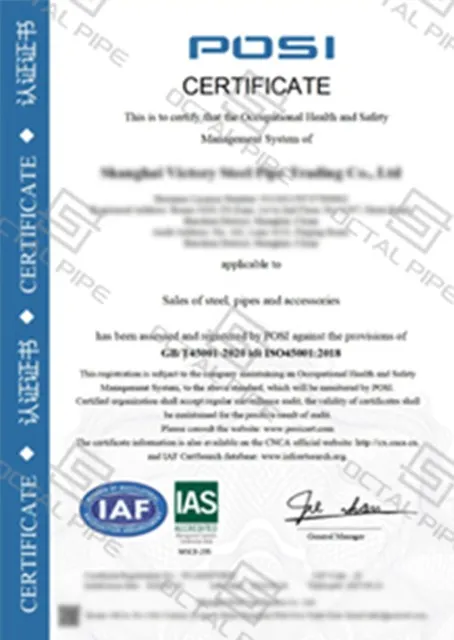
CE Certificate
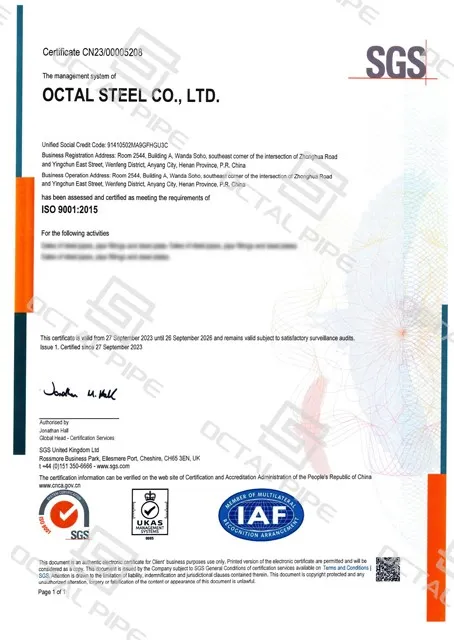
ISO 9001 Certificate
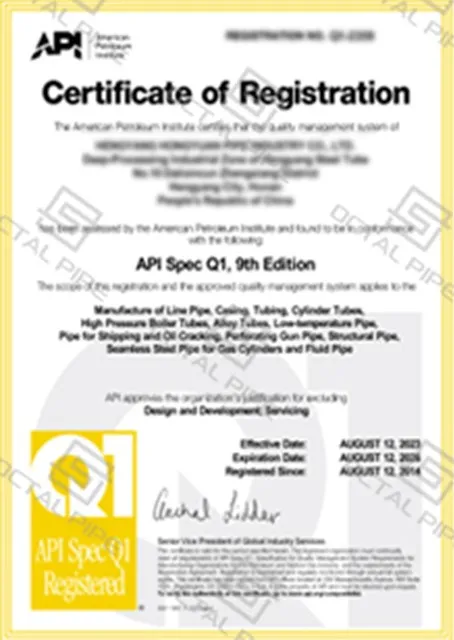
API Q1 Certificate
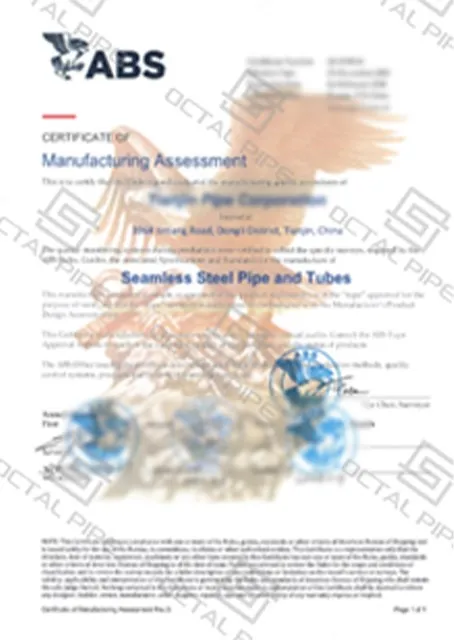
ABS Certificate
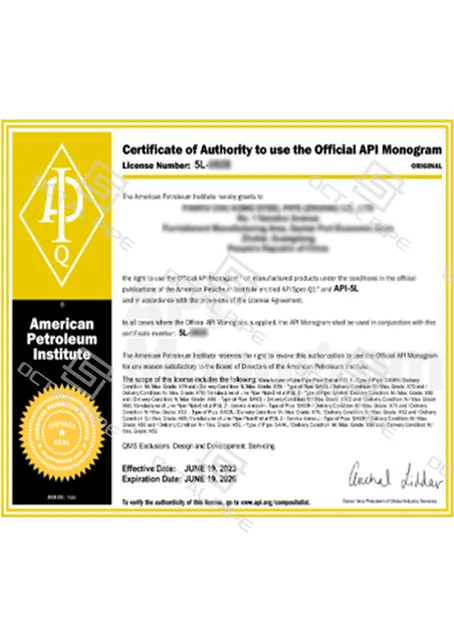
AP-5L Certificate
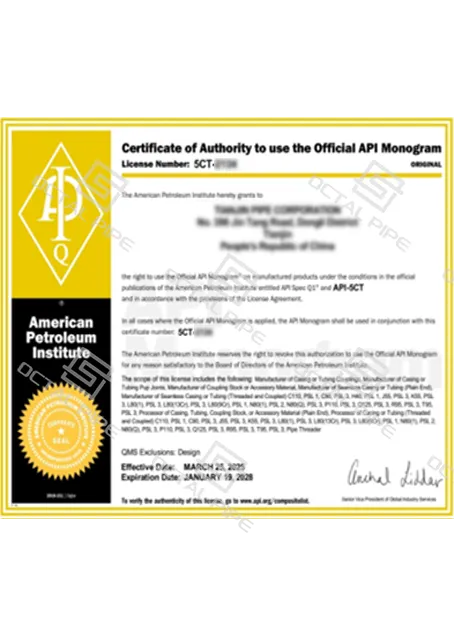
API-5CT Certificate
| Item | Specification |
|---|---|
| Product Type | Seamless Chrome-Moly (Cr-Mo) alloy steel boiler pipe for high-temperature / high-pressure service (Octal Pipe Co., Ltd.) |
| OD Range | 10.3–1422 mm (Octal Pipe Co., Ltd.) |
| Wall Thickness | ≤150 mm (custom available) (Octal Pipe Co., Ltd.) |
| Length | 6 m / 12 m / 20FT / 40FT, up to 18 m on request (Octal Pipe Co., Ltd.) |
| Grades (A335/SA335) | P1, P2, P5, P9, P11, P12, P22, P91, P92, P122 (Octal Pipe Co., Ltd.) |
| Standards | ASTM A335 / A213; ASME SA335 / SA213; EN 10216-2; DIN; GB/T 8162 (Octal Pipe Co., Ltd.) |
| Ends | BE / PE / Threaded with couplings (Octal Pipe Co., Ltd.) |
| Key Performance | High-temperature strength, creep resistance, oxidation & corrosion resistance; used for boiler / superheater / reheater / pressure piping (Octal Pipe Co., Ltd.) |
Hot Tags: boiler pipe, China boiler pipe manufacturers, suppliers, factory, stainless steel hose pipe, galvanized electrical conduit, steel conduit pipe, welded elbow, flex steel hose, metric stainless steel tubing
Previous
Carbon Steel PipeYou Might Also Like


Send Inquiry