




Socket Weld Pipe Fittings
Size Range: ½″ – 4″ (up to 6″ on request)
Pressure Ratings: 3000#, 6000#, 9000#
Wall Thickness / Schedules: SCH 5 – XS (custom available)
Types: SW Coupling, SW Reducer, SW Elbow, SW Tee, SW Union, SW Cap, Socket Weld Flange
Materials: Carbon Steel (A105, A350 LF2), Alloy Steel (A182 F11/F22), Stainless Steel (A182 F304/316/321), Duplex
Connections: Socket weld joint / socket weld connection with fillet weld
Inspection: Dimensional check, NDT (UT, MT, PT), Hydro test, MTRs with full traceability
Applications: Oil & Gas, Steam & Hydraulic Systems, Chemical & Petrochemical Skids, Instrumentation Piping
Socket Weld Pipe Fittings are forged fittings designed for small-bore pressure piping where a compact welded connection is required. The pipe end is inserted into the machined socket of the fitting, and the joint is completed with an external fillet weld. This structure is commonly used when the line needs better joint strength than threaded fittings, but does not require the full-penetration welding of butt weld fittings.
They are mainly used in high-pressure small-diameter piping, refinery units, chemical process lines, steam and condensate systems, instrument connections, oil and gas skids, and utility piping. For these service conditions, the key concerns are not only the fitting shape, but also pressure class, material grade, socket dimension, bore alignment, and traceable inspection documents.
Socket Weld Pipe Fittings Specifications
| Item | Supply Scope / Project Control |
|---|---|
| Product Name | Socket Weld Pipe Fittings, socket weld fittings, forged socket weld fittings, SW fittings |
| Main Standard | ASME B16.11 forged fittings, socket-welding and threaded |
| Size Range | Commonly NPS 1/8″ to NPS 4″, depending on fitting type and pressure class |
| Pressure Class | Class 3000, Class 6000, Class 9000 for socket weld end fittings |
| Product Types | Socket weld elbow, tee, coupling, half coupling, cross, cap, union, boss, outlet and custom forged fittings |
| Material Grades | ASTM A105 / A105N, ASTM A350 LF2, ASTM A182 F304/F304L/F316/F316L/F11/F22/F51/F53/F55, nickel alloy grades as required |
| Connection Type | Socket weld end with recessed socket and external fillet weld |
| Manufacturing Route | Forging, heat treatment when required, CNC machining, socket boring, dimensional inspection, marking and packing |
| Surface Finish | Black, machined, anti-rust oil, galvanized, pickled/passivated stainless surface or project requirement |
| Inspection Items | Material check, socket dimension, bore size, visual inspection, PMI, hardness, MPI/PT when required |
| Documents | MTC, dimensional report, PMI report, NDT record when required, packing list, marking photos |
A complete order should clearly state the NPS size, pressure class, material grade, fitting type, surface treatment, and inspection requirement, so the supplied fittings can match the project piping class and receiving inspection records.
Product Standards and Material Grades
ASME B16.11 socket weld fittings are forged pressure fittings. The standard controls dimensional requirements, tolerance, class designation, marking, and material requirements for socket-welding and threaded forged fittings. For socket weld ends, the common pressure classes are Class 3000, Class 6000, and Class 9000.
| Standard / Material | What It Controls |
|---|---|
| ASME B16.11 | Dimensions, tolerances, pressure class designation, marking and material requirements for forged socket weld and threaded fittings. |
| ASTM A105 / A105N | Carbon steel forged piping components for ambient and higher-temperature pressure systems. |
| ASTM A350 LF2 | Low-temperature carbon steel forged fittings where impact toughness may be required. |
| ASTM A182 F304 / F316 | Stainless steel forged fittings for corrosion-resistant or higher-temperature service. |
| ASTM A182 F11 / F22 | Alloy steel forged fittings for higher-temperature pressure piping. |
| ASTM A182 F51 / F53 / F55 | Duplex and super duplex forged fittings for chloride-bearing or corrosion-sensitive service. |
| Project Specification | Additional PMI, hardness, impact test, NDT, coating, marking, packing or third-party inspection requirements. |
For stainless steel socket weld fittings, PMI verification is often requested before shipment, especially when 304/316, duplex, super duplex, or nickel alloy fittings are supplied together. For low-temperature service, impact test requirements should be confirmed before production because they affect material selection and heat treatment route.


Common Types of Socket Weld Fittings
Socket weld fittings are mainly used in small-bore lines where the project needs a compact welded connection. The fitting type should be selected according to line function, branch layout, maintenance access, and pressure class.
| Fitting Type | Practical Use in Piping |
|---|---|
| Socket Weld Elbow | Changes flow direction in 90° or 45° small-bore pressure lines. |
| Socket Weld Tee | Creates branch connections in process piping, utility lines and instrument lines. |
| Socket Weld Coupling | Connects two pipe sections of the same nominal size. |
| Socket Weld Half Coupling | Commonly welded to a header, vessel, tank nozzle or larger pipe for small-bore branch connection. |
| Socket Weld Cross | Used for four-way flow distribution in compact piping layouts. |
| Socket Weld Cap | Closes the end of a pipe line or branch connection. |
| Socket Weld Union | Allows disassembly where maintenance access is required in small-bore piping. |
| Socket Weld Boss / Outlet | Used for reinforced branch connections according to project design. |
The selection should follow the piping class, not only the fitting name. For example, Class 3000 socket weld fittings may be suitable for many small-bore pressure lines, while Class 6000 socket weld fittings or Class 9000 socket weld fittings may be required for higher-pressure service. The final choice should match the piping specification, design pressure, material grade, and pipe schedule.
Socket Weld Fit-up and Welding Control
Socket weld joints are often used in small-bore pressure piping, but the joint quality still depends on fit-up discipline. In refinery instrument lines, steam drain points, chemical dosing lines, skid-mounted piping and small branch connections, most site issues do not come from the fitting name itself. They usually come from wrong insertion depth, poor bore alignment, no expansion gap, undersized fillet welds or material mix-up before installation.
The pipe end should enter the socket evenly, and the fitting bore should stay aligned with the pipe bore. In many project procedures, an approximate 1/16″ / 1.6 mm expansion gap is kept before welding to reduce stress caused by pipe-end thermal expansion during welding. The final gap and welding details should follow the project WPS and piping specification.
• Socket depth and pipe insertion
The pipe should be inserted to the required socket depth without being forced hard against the bottom when an expansion gap is required. In small-bore steam or condensate lines, poor insertion can increase local stress during thermal cycling and may lead to weld cracking or leakage after repeated start-stop operation.
• Bore alignment in instrument and utility lines
The fitting bore and pipe bore should be aligned to reduce internal step, turbulence and local stress concentration. This is especially important for instrument air lines, chemical injection lines, sampling points and small utility piping, where vibration and frequent valve operation can affect the welded joint.
• Fillet weld size and profile
The external fillet weld should follow the approved WPS. Undersized welds, poor fusion, undercut or irregular weld profile can reduce joint strength and delay inspection acceptance. For high-pressure small-bore lines, the weld should not be treated as a "small detail" just because the fitting size is small.
• Material and heat control for stainless and alloy grades
For stainless steel socket weld fittings, duplex fittings or alloy steel fittings, welding heat input, cleaning and surface protection should be controlled carefully. In chemical or petrochemical service, poor post-weld cleaning can leave contamination on stainless surfaces and increase corrosion risk around the weld area.
• Branch connections on headers and skids
Socket weld half couplings, bosses and outlets are often used for small-bore branches on larger headers, vessels or skid packages. In these cases, fitting orientation, branch position, weld access and marking should be checked before welding. A wrong class or wrong material fitting may look similar but can stop installation once the line class is reviewed.
• Service limitation review
Socket weld joints have an internal crevice at the pipe end. For severe cyclic service, hygienic systems, ultra-clean lines or crevice-corrosion-sensitive media, the project should review whether butt weld fittings or another joint type is more suitable.
A socket weld fitting should not be accepted only by surface appearance. Socket bore, socket depth, wall thickness, pressure class, material traceability, fit-up gap and weld profile all affect whether the joint can pass site installation and long-term service.
Manufacturing and Quality Control
Forged socket weld fittings are small parts, but they are still pressure-retaining components. Quality control should focus on material traceability, forging quality, machining accuracy, class marking, and shipment separation.
• Forged material preparation
Raw material is checked by heat number, material grade, and applicable ASTM specification before forging or machining. Mixed material at this stage can create serious traceability problems later.
• Forging and heat treatment
Carbon steel, low-temperature steel, alloy steel, stainless steel, and duplex fittings should follow the required forging and heat treatment route according to material grade and order requirement.
• CNC machining and socket boring
Socket depth, bore size, end face, wall thickness, and fitting geometry are machined according to ASME B16.11 or project drawing. Socket dimension control is more important than it looks, because poor fit-up can directly affect field welding.
• Dimensional inspection
Critical dimensions such as socket bore, socket depth, center-to-end dimension, wall thickness, and overall length are checked before packing.
• Material verification
MTC review, PMI for alloy/stainless grades, hardness test, and impact test can be arranged when required by project specification.
• Surface and NDT inspection
Visual inspection is normally performed. MPI or PT can be added for forged surface or machined areas according to project ITP.
• Marking and packing
Fittings are marked with size, class, material grade, heat number or manufacturer marking according to the order requirement. Packing should separate fittings by size, class and material grade to avoid mixed delivery.
Inspection Points Before Shipment
Socket weld fittings are often ordered in many sizes, classes, and materials in one shipment. The most common delivery risk is not only a defective fitting; it is wrong class, wrong material, unclear marking, or mixed packing.
| Inspection Item | What Should Be Verified |
|---|---|
| Material Traceability | Heat number, material grade, MTC and product marking should match. |
| Pressure Class | Class 3000, 6000 or 9000 should match the purchase order and piping class. |
| Socket Dimensions | Socket bore, socket depth and internal shoulder should be checked according to ASME B16.11 or drawing. |
| Fitting Geometry | Center-to-end dimension, overall length, wall thickness and end face condition should be verified. |
| Surface Condition | No harmful cracks, folds, sharp defects, heavy rust or machining damage. |
| PMI Test | Required for stainless steel, duplex, alloy steel or nickel alloy fittings when specified. |
| Hardness / Impact Test | Applied when required for alloy steel, low-temperature service or project specification. |
| NDT | MPI or PT can be arranged according to project ITP. |
| Marking | Size, class, material grade, heat number and standard marking should be readable. |
| Packing List | Quantity, size, class, material and heat number should match packing and shipment records. |
For export orders, packing separation is very important. Class 3000 and Class 6000 fittings of the same size can look similar at first glance. If different pressure classes or material grades are packed together without clear labels, the receiving team may need to isolate the whole carton before installation.


Applications of Socket Weld Pipe Fittings
High-pressure small-bore process piping
Socket weld fittings are commonly used in small-diameter pressure lines where threaded leakage risk is not acceptable and butt welding is not practical. In refinery, chemical and oilfield process lines, they are often used for instrument take-offs, drain lines, vent lines and small-bore branch piping. The key site concern is usually not the fitting shape, but whether the class rating, material grade and socket dimensions match the line class.
Steam, condensate and utility lines
In compact steam or condensate piping, socket weld elbows, tees and couplings provide welded joints for small-bore layouts. The installer should control the expansion gap, fillet weld profile and material grade because temperature change and vibration can increase stress around the socket weld joint.
Oil and gas skid-mounted piping
Skid packages often contain many small-bore connections for pressure instruments, sampling points, drains, vents and auxiliary systems. Forged socket weld fittings help keep the layout compact, but material marking and PMI are important because one skid may include carbon steel, stainless steel and alloy steel fittings together.
Chemical and petrochemical units
For corrosive or high-temperature chemical service, stainless steel socket weld fittings or alloy steel fittings may be specified. PMI, surface condition, material grade and post-weld cleaning requirements should be confirmed before delivery, especially when different stainless grades are used in the same project.
Branch connections on headers or vessels
Socket weld half couplings, bosses or outlets are often used for small-bore branches on larger piping or equipment. The branch design should match project piping rules, wall thickness, reinforcement requirement and welding procedure. For pressure service, the fitting should not be selected by connection type alone; material, class and reinforcement details matter.
Why Choose Octal Pipe Fittings for Socket Weld Pipe Fittings
Socket weld fittings are small components, but a wrong pressure class, wrong material or unclear marking can stop installation just like a missing pipe spool. Octal Pipe focuses on material traceability, pressure class consistency, socket dimension control, and clear shipment separation.
Before shipment, fitting type, size, class, material grade, heat number, marking and packing list can be checked together. For stainless steel, duplex, alloy steel or nickel alloy orders, PMI, hardness, NDT or third-party inspection can be arranged according to project requirement.
The advantage is practical supply control. Multiple fitting types, materials and pressure classes can be supplied in one package with readable marking, MTC support, packing separation and export documents. This helps buyers reduce mixed-material risk and speed up receiving inspection at the project site.
FAQ

01.When should socket weld pipe fittings be used instead of threaded fittings?
02.Are socket weld fittings suitable for all small-bore piping systems?
03.What causes socket weld fitting installation problems on site?
04.How can buyers avoid mixed delivery of socket weld fittings?
05.What information is needed to quote socket weld fittings accurately?
Certifications
CE Certificate
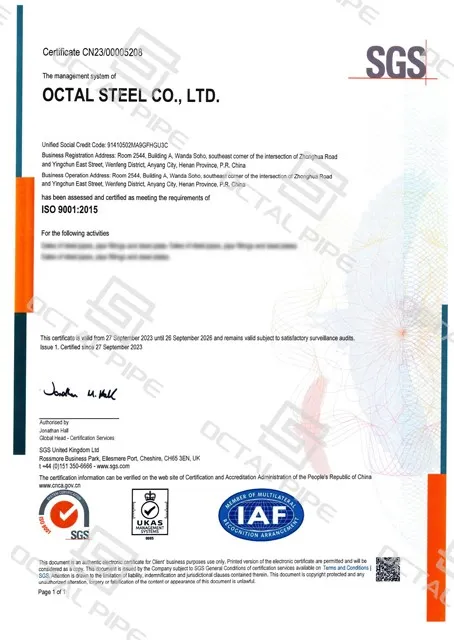
ISO 9001 Certificate
API Q1 Certificate
ABS Certificate
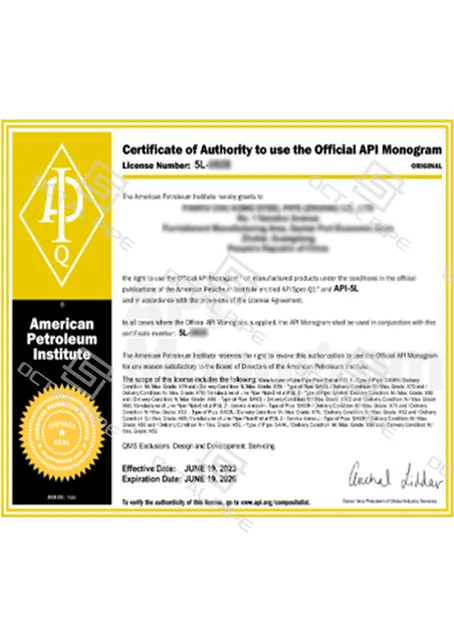
AP-5L Certificate
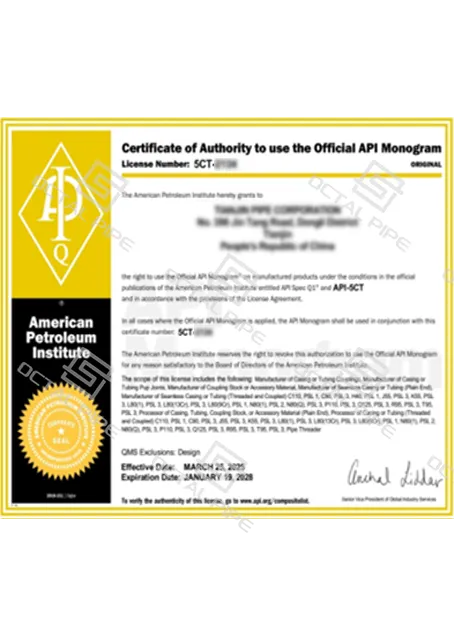
API-5CT Certificate
Hot Tags: socket weld pipe fittings, China socket weld pipe fittings manufacturers, suppliers, factory
Previous
Butt Weld FittingsYou Might Also Like



Send Inquiry