




Round Bar
Size (OD): 5–360 mm
Grade: Micro-alloyed special steel (V–Ti–B)
Mechanical level: TS ≈ 950 MPa, YS ≈ 910 MPa, KV –20°C ≥ 100 J
Application: Mining / oil & gas / machining
Round bar (round steel bar) is a solid cylindrical steel product supplied in straight lengths, defined mainly by its diameter (e.g., Ø12 mm) and delivery condition (hot-rolled, normalized, or quenched & tempered). Unlike pipe or tube, it has no hollow bore-it's used as raw stock for machining, forging, and fabrication to make shafts, pins, bolts, couplings, and structural/mechanical components.
Octal Pipe supplies alloy and special steel round bars produced by large Chinese special-steel mills, in diameters from 5 mm up to 360 mm, delivered in hot-rolled, normalized, or quenched-and-tempered condition. These bars are designed for customers who do machining, forging, and part manufacturing in sectors such as energy, mining, offshore, transportation and general machinery.
Example (MTC-backed): The mill certificate below (Ø27 mm × 6 m, 35.916 t total) illustrates a typical micro-alloyed round bar steel chemistry and mechanical level used for demanding parts. chemistry: about 0.33–0.34% C, low P (≤0.017%) and low S (≤0.004%), plus micro-alloying elements V, Ti and B. That combination tells us this is not a basic construction steel, but a high-strength, fine-grain, micro-alloyed bar intended for parts that need both strength (≈950 MPa tensile) and impact toughness at –20°C. Bars like this are ideal as raw stock for bolts, shafts, pins, drivetrain parts, drilling and mining components.
All bars can be supplied with full traceability (heat number, chemical composition, tensile test, impact test, bend/rebend and hardness) according to EN 10204 3.1/3.2.


Round Bar Size
| Product type | Size range | |
|---|---|---|
| Hot-rolled round bar | 5 – 360 mm | |
| Flat bar | Width 50 – 810 mm, thickness 6 – 160 mm | |
| Square bar | 150 mm, 200 mm, 250 mm, 280 mm |
For procurement shorthand, round bar 12mm is a common workshop size for small shafts, pins, and brackets, while round bar R6 is often used on site lists to mean Ø6 mm round bar (some drawings use "R" as radius-so confirm whether R6 means Ø6 or radius 6).
Common round bar sizes (mm) used in machining & site fabrication:
| Round bar size (mm) | Typical use on site (real work) |
|---|---|
| 6 (R6) / 8 / 10 | Small pins, anchor accessories, light brackets, jig parts |
| 12 (round bar 12mm) / 16 / 20 | General shafts, sleeves, adapters, repair parts |
| 25 / 30 / 40 | Couplings, drive components, machined hubs |
| 50 / 60 / 80 | Heavy-duty pins, mining wear parts, forged blanks |
| 100+ | Large machining stock, custom forged components |

Chemical Composition – Example from Mill Certificate
From the MTC you sent (Heat No. 0242306413 / 0242306412, dia. 27 mm × 6 m), the chemistry is reported like this:
| Element | Test 1 | Test 2 | Unit / remark |
|---|---|---|---|
| C | 0.33 | 0.34 | % (x100 → 33 / 34) |
| Si | 0.28 | 0.26 | % |
| Mn | 0.68 | 0.57 | % |
| P | 0.015 | 0.017 | % (very low P, good toughness) |
| S | 0.003 | 0.004 | % (very low S, good cleanliness) |
| Cr | 0.018 | 0.021 | % (micro Cr) |
| Cu | 0.009 | 0.005 | % |
| V | 0.063 | 0.066 | % (micro-alloying for strengthening) |
| Ti | 0.042 | 0.043 | % (grain refinement) |
| B | 0.0030 | 0.0030 | % (hardenability improvement) |
What this tells us
Carbon around 0.33–0.34% gives a good balance of strength and toughness after QT.
P and S are very low (≤0.017% and ≤0.004%), which is typical of special-steel bars for mechanical parts.
V, Ti and B are clearly present - this is not a basic mild steel, but a micro-alloyed or HS (high-strength) bar aimed at high mechanical properties and good hardenability.
The note on the MTC shows the CEV formula:
CEV = C + Mn/6 + (Cr+V+Mo)/5 + (Cu+Ni)/15
which is the usual way to control weldability and cold-cracking risk. This is good information to keep on the page because it signals to engineers and to Google that this is real mill data.

Round Bar vs Rod (What Buyers Mean by Each Term)
In day-to-day procurement, round bar vs rod is usually a supply-form and acceptance distinction rather than a chemistry difference. Round bar typically means straight-length, solid bar stock supplied for machining and forging, where diameter tolerance, straightness, and surface condition directly affect cycle time and scrap rate. "Rod" is often used more loosely for smaller diameters and, depending on the industry, may refer to coil-fed wire-rod forms (intended for drawing, bending, or fastener wire routes) rather than cut-length bar.
A practical way to separate them is to look at what matters at receiving:
- If you need cut-to-length blanks for turning/boring, you are usually buying round bar-you'll care about straightness, decarb, surface defects, and consistent diameter so the part machines cleanly.
- If your next step is drawing/forming (wire products, springs, fastener wire, coil-fed processing), "rod" is often the term used, and the focus shifts to coil form, surface scale control, and drawability.
Typical buyer language (helps avoid PO ambiguity):
- Use "round bar" when your BOM expects Ø size + length (e.g., Ø20 × 6 m) and your downstream process is machining/forging.
- Use "rod / wire rod" when your BOM expects coil/weight-based supply and the downstream process is drawing or forming.
Practical buying tip: order round bar when you need predictable machining stock and stable straightness; use "rod" wording only when your process is coil-fed drawing, bending, or wire-based forming.
Manufacturing and Heat Treatment Route
To make the page look authoritative, it helps to show the actual process. A typical route for these high-strength round bars is as follows:
a) Steelmaking and secondary refining
Steel is melted in BOF or EAF, then treated in LF/VD to remove sulfur and phosphorus and to adjust alloy content precisely. This is where micro-alloying elements such as V, Ti and B are added. Low P and S in your MTC (0.015–0.017% P, 0.003–0.004% S) are exactly the result of this step - they improve toughness and weldability.
b) Casting and billet preparation
The refined steel is cast into billets suitable for rolling round bar. Clean billets with low inclusion content are essential to pass the bend/rebend and impact tests that appear on your certificate.
c) Hot rolling of round bar
Billets are reheated and rolled on bar mills to the final diameter (for example, 27 mm). Rolling is controlled to obtain good surface quality, straightness and dimensional tolerance. Bars are cut to commercial lengths, typically 6 m.
d) Heat treatment (normalizing or quenching + tempering)
To reach the mechanical properties shown on the certificate - tensile 950–960 MPa, yield about 905–915 MPa, impact energy at –20°C around 100–110 J - the bars are not left "as hot rolled". They are normalized or, more often for this strength level, quenched and tempered (Q&T).
Quenching gives a hard martensitic/bainitic structure.
Tempering at the right temperature restores ductility, raises impact toughness, and stabilizes the microstructure.
This step is what makes the strength high but still keeps elongation at about 13–14% and reduction of area above 50%.
e) Straightening, cutting and marking
After heat treatment the bars are straightened, cut to 6 m (or other ordered lengths), bundled and marked with heat numbers.
f) Testing and certification
The producer carries out chemical analysis, tensile test, impact test at –20°C, bend/rebend test, forging test and hardness check - all the columns you see on the MTC. Only when all of them are "qualified" are the bars released. This gives buyers confidence that every bundle meets the agreed mechanical level.

From Round Bar Steel to Finished Parts (Machining & Heat-Treat Risk Controls)
Most round bar steel problems don't show up on the quotation sheet-they show up on the lathe, after heat treatment, or during assembly. For projects using high-strength / micro-alloyed bar, Octal Pipe focuses on the practical quality points that decide whether the bar becomes a stable part or an expensive rework item:
| What usually goes wrong on site | What to specify (buyer language) | What Octal Pipe controls at the mill |
|---|---|---|
| Unexpected tool wear / tearing finish | Delivery condition + surface requirement (hot-rolled / peeled / drawn) | Surface preparation route (e.g., peeling where required) + straightening to reduce machining variation |
| Dimensional drift after machining | Diameter tolerance + straightness requirement | OD/ovality + straightness checks to keep turning allowance predictable |
| Cracking during cold start / impact events | Impact energy at a stated temperature (e.g., "CVN @ -20°C") | Impact testing tied to heat/lot; release based on test evidence, not assumptions |
| Heat-treat mismatch (too hard / too soft) | Heat treatment state (normalized / Q&T) + hardness window | Heat-treatment discipline + hardness verification against the specified window |
| Hidden defects found late | NDT scope if critical (UT by agreement) | UT option for critical parts + traceable repair/re-test records where applicable |
In practice, this turns "round bar size + grade" into a workable production input: the bar arrives with a defined condition, predictable machining behavior, and a release basis that matches how parts are actually accepted. Octal Pipe can support lot-based traceability (heat number → test results) so receiving inspection and downstream machining qualification move faster without extra sampling cycles.
Main Application Scenarios
Because this material combines high strength (≈950 MPa), reasonable ductility (A ≈ 13–14%) and very good low-temperature impact energy (around 100–110 J at –20°C), it can be used in a wide range of demanding parts:
Mining, tunneling and ground-support components
Rock bolts, anchor rods, drill rods and other parts that must work in cold or impact-loaded conditions. The high yield (≈910 MPa) and good impact value make the bar safe under shock loads.
Oil & gas and offshore equipment
Connecting parts, flanges, hubs, shafts and brackets where low-temperature toughness is mandatory (–20°C or lower). The low P/S levels and documented tests make it easier to accept in offshore and marine projects.
Mechanical and power-equipment parts
Shafts, axles, pins, gears (after further machining or surface hardening), machine frames and transmission components that need higher strength than ordinary carbon steel.
Railway and heavy-vehicle components
Where consistent chemistry, traceability and weldability (controlled CEV) are required.
Forging stock and machining bar
Because the chemistry is clean and the structure is refined, the bar is a good base for closed-die forgings or machined parts. Customers can forge to shape and still keep the mechanical level after re-tempering.
Projects in cold regions
The proven impact energy at –20°C on the MTC shows these bars can be used in northern / low-temperature environments without brittle failure.
Stainless Steel Round Bar
For corrosion-exposed components, projects may specify stainless steel round bar instead of carbon/alloy round bar steel-typically when washdown chemicals, coastal humidity, or chloride-bearing media make coating-based protection unreliable. Octal Pipe can quote stainless round bar items alongside alloy bar packages so buyers can keep one document set and one shipment plan. Common stainless choices include 304/304L for general corrosion resistance and 316/316L where chloride pitting margin is required.
FAQ

What is the difference between hot-rolled, peeled, and cold-drawn round bar?
Should I order round bar in normalized or quenched & tempered (Q&T) condition?
What tolerance should I specify for round bar used for machining?
Do I need ultrasonic testing (UT) for round bar steel?
Certifications
CE Certificate
ISO 9001 Certificate
API Q1 Certificate
ABS Certificate
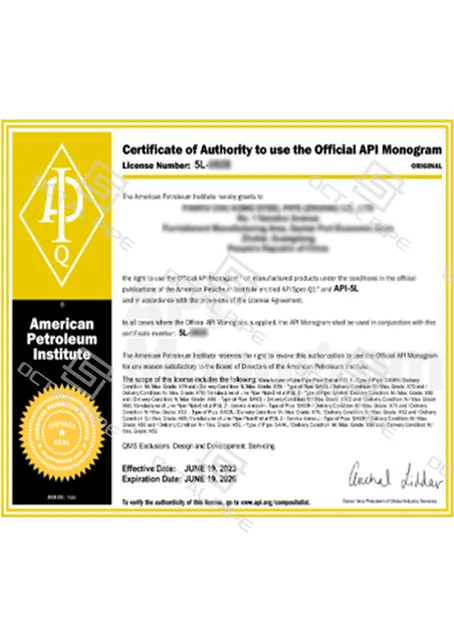
AP-5L Certificate
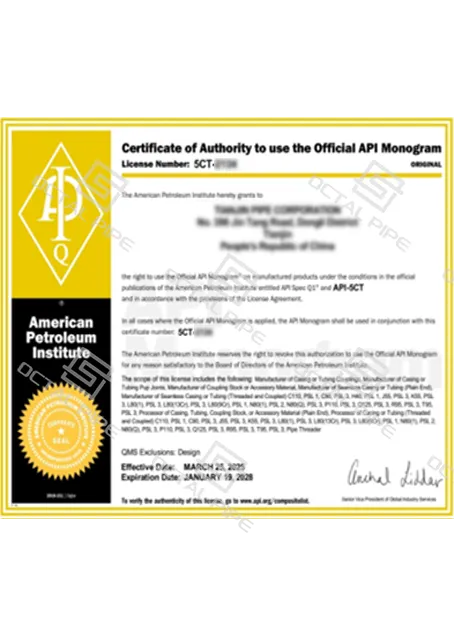
API-5CT Certificate
Typical Supply Scope from Octal Pipe
| Item | Description |
|---|---|
| Diameter | 5 – 360 mm (hot-rolled); forged or peeled sizes on request |
| Length | 6 m typical, 3–12 m can be arranged |
| Delivery condition | As rolled, normalized, Q&T |
| Standards we can match | GB/T, ASTM/AISI, EN, shipbuilding or customer drawing |
| Documents | Mill test certificate (chemistry + mechanicals + impact), packing list, origin |
| Inspection | Third-party (SGS / BV) can be arranged before shipment |
Hot Tags: round bar, China round bar manufacturers, suppliers, factory, diamond metal sheet, structural plates, square steel plate, sa516 70, 3 16 aluminum diamond plate, stainless metal sheet
Previous
4100mm Heavy and Wide PlateNext
Steel PlateYou Might Also Like



Send Inquiry