




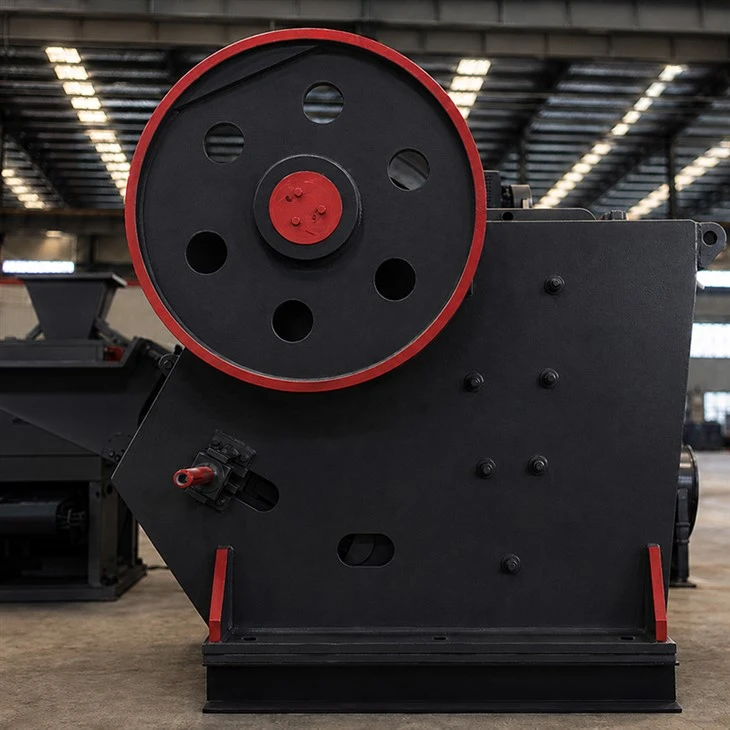
Jaw Crusher
Max Feeding Size: 120 mm to 1200 mm
Discharge Size Range: 10 ~ 350 mm
Capacity Range: 1 ~ 1000 t/h
Crushing Stage: Primary crushing, Secondary crushing
Main Models: PE Series, PEX Series
Applicable Materials: Granite, limestone, basalt, river stone, ore, concrete waste
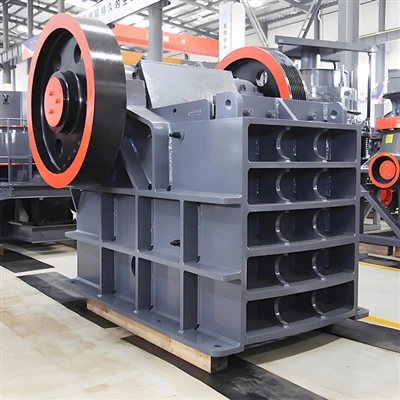
Main Components: Frame, jaw plates, eccentric shaft, toggle plate, flywheel
Application Fields: Quarry, mining, aggregate plant, construction waste recycling
Octal Pipe supplies PE and PEX jaw crusher machines for quarry crushing, mining ore preparation, aggregate production, construction waste recycling, and small-capacity rock crushing projects. The PE jaw crusher series is mainly used for coarse and primary crushing, while the PEX jaw crusher series is selected where a narrower discharge size or secondary fine crushing stage is required.
What Is a Jaw Crusher Machine?
A jaw crusher machine crushes material by pressing it between two jaw plates. The fixed jaw plate stays in position, while the moving jaw plate is driven by the eccentric shaft to create repeated compression. Large feed enters from the top of the crushing chamber, is crushed under pressure, and leaves through the bottom discharge opening after reaching the selected size range.
This machine is commonly used as a jaw rock crusher because it can handle hard and abrasive materials such as granite, basalt, limestone, river stone, iron ore, copper ore, construction concrete, and recycled aggregate. The final output depends on material hardness, feed gradation, moisture content, jaw plate profile, chamber condition, and discharge setting.

The following diagram shows how material enters the crushing chamber, is compressed between the fixed and moving jaw plates, and is discharged from the bottom after reaching the required size.

Construction of Jaw Crusher
The construction of jaw crusher directly affects crushing force, operating stability, maintenance cost, and service life. A reliable jaw crusher is not only judged by capacity. The frame, eccentric shaft, bearings, toggle plate, jaw plates, and adjustment system must work together under repeated impact and compression load.
| Main Component | Function | Why It Matters |
|---|---|---|
| Fixed jaw plate | Provides the stationary crushing surface | Controls crushing contact and wear pattern |
| Moving jaw plate | Compresses material against the fixed jaw | Determines crushing stroke and reduction effect |
| Eccentric shaft | Drives the movement of the movable jaw | Affects crushing force, bearing load, and machine rhythm |
| Flywheel | Stores rotational energy | Helps stabilize the crushing cycle under uneven feed |
| Toggle plate | Transfers force and provides overload protection | Protects the main structure during abnormal load |
| Frame | Supports crushing chamber and moving assembly | Must resist vibration, impact, and long-term fatigue |
| Bearing system | Supports eccentric shaft rotation | Affects service life and operating temperature |
| Discharge adjustment | Controls the outlet opening | Determines output size and capacity |
| Jaw plate liner | Direct wear surface inside the chamber | Must match stone hardness and abrasiveness |
For heavy-duty quarry or jaw crusher mining service, frame rigidity, bearing protection, jaw plate material, and adjustment access are especially important. A crusher may have the right feed opening, but if the frame is weak or the jaw plates wear unevenly, actual production stability will still be poor.

Jaw Crusher Specifications
The following PE and PEX models cover small, medium, and large crushing lines. Capacity is affected by rock hardness, feed shape, moisture, clay content, CSS setting, and feeding continuity, so the final model should be selected according to site material and required output size.
| Model | Feed Opening Size (mm) | Max Feed Size (mm) | Discharge Size (mm) | Capacity (t/h) | Eccentric Shaft Speed (r/min) | Power (kW) | Weight (t) | Overall Dimension L×W×H (mm) |
|---|---|---|---|---|---|---|---|---|
| PE-150×250 | 150×250 | 125 | 10–40 | 1–3 | 250 | 5.5 | 0.8 | 720×660×850 |
| PE-200×300 | 200×300 | 180 | 15–50 | 2–6 | 260 | 7.5 | 1.2 | 910×750×990 |
| PE-200×350 | 200×350 | 180 | 18–70 | 3–10 | 260 | 11 | 1.5 | 1000×870×990 |
| PE-250×400 | 250×400 | 210 | 20–60 | 5–20 | 300 | 18.5 | 2.8 | 1300×1090×1270 |
| PE-400×600 | 400×600 | 340 | 40–100 | 16–60 | 275 | 30 | 7 | 1730×1730×1630 |
| PE-500×750 | 500×750 | 425 | 50–100 | 40–110 | 275 | 55 | 12 | 1980×2080×1870 |
| PE-600×900 | 600×900 | 500 | 65–160 | 50–180 | 250 | 75 | 17 | 2190×2206×2300 |
| PE-750×1060 | 750×1060 | 630 | 80–140 | 110–320 | 250 | 90 | 29 | 2660×2430×2800 |
| PE-900×1200 | 900×1200 | 750 | 95–165 | 220–450 | 200 | 110 | 52 | 3380×2870×3330 |
| PE-1000×1200 | 1000×1200 | 850 | 195–265 | 315–500 | 200 | 110 | 55 | 3480×2876×3330 |
| PE-1200×1300 | 1200×1300 | 1000 | 180–330 | 400–650 | 220 | 200 | 62 | 4538×2984×3959 |
| PE-1200×1500 | 1200×1500 | 1020 | 150–350 | 400–800 | 180 | 250 | 80 | 4200×3300×3500 |
| PE-1500×1800 | 1500×1800 | 1200 | 220–350 | 450–1000 | 180 | 280 | 122 | 5160×3660×4248 |
| PEX-150×750 | 150×750 | 120 | 18–48 | 8–25 | 320 | 15 | 3.8 | 1200×1530×1060 |
| PEX-250×750 | 250×750 | 210 | 25–60 | 13–35 | 330 | 30 | 5.5 | 1380×1750×1540 |
| PEX-250×1000 | 250×1000 | 210 | 25–60 | 16–52 | 330 | 30 | 7 | 1560×1950×1390 |
| PEX-250×1200 | 250×1200 | 210 | 25–60 | 20–61 | 330 | 37 | 9.7 | 2140×1660×1500 |
| PEX-300×1300 | 300×1300 | 250 | 20–90 | 16–105 | 300 | 55 | 15.6 | 2720×1950×1600 |
| PEX-300×1500 | 300×1500 | 250 | 25–120 | 60–140 | 300 | 75 | 16.5 | 2920×1950×1600 |
| PEX-500×1500 | 500×1500 | 350 | 25–120 | 50–160 | 300 | 90 | 20 | 2360×2660×2105 |
PE and PEX Jaw Crusher Selection
PE and PEX models are selected according to the crushing stage. A PE jaw crusher machine is normally used when the project needs to break large stone or ore at the first crushing stage. A PEX model is selected where the inlet is narrower, the feed is already reduced, and the discharge size needs closer control.
| Crusher Type | Typical Role | Suitable Condition |
|---|---|---|
| PE jaw crusher | Primary coarse crushing | Large feed size, quarry stone, mine ore, hard rock |
| PEX jaw crusher | Secondary or fine crushing | Smaller feed size, tighter discharge size, aggregate preparation |
| Small PE / PEX models | Mini crushing line or sample preparation | Low capacity, compact space, smaller feed material |
| Large PE models | Heavy-duty primary crushing | High feed volume, large blasted stone, mining or quarry line |
A mini jaw crusher such as PE-150×250, PE-200×300, or PEX-150×750 is more suitable for small production, sample crushing, laboratory reduction, and low-volume stone processing. Large PE models such as PE-900×1200, PE-1200×1500, and PE-1500×1800 are more suitable for fixed crushing plants that need higher hourly throughput.
Jaw Crusher for Rock, Stone and Aggregate Crushing
A jaw crusherrock crusheris used where large and uneven feed material must be reduced before screening, cone crushing, or impact crushing. It is suitable for compression crushing, especially when the feed contains hard lumps that cannot be sent directly into a secondary crusher.
| Working Condition | Crushing Requirement | Recommended Selection Logic |
|---|---|---|
| Quarry primary crushing | Break blasted stone before cone crusher or screen | Select PE model by maximum lump size and required capacity |
| Mining ore preparation | Reduce hard ore before grinding or secondary crushing | Check feed hardness, jaw plate wear, and motor reserve |
| Aggregate production | Prepare stone for road base, concrete aggregate, or screening | Match discharge size with downstream screen opening |
| Construction waste recycling | Crush concrete, brick, and demolition material | Consider tramp metal control, chamber cleaning, and wear parts |
| Small contractor crushing | Process small batches of stone or concrete | Use mini jaw crusher or compact PEX model |
For quarry and mining service, real production capacity depends on stable feeding. If the feeder sends oversize lumps, clay-heavy material, or irregular blocks into the chamber, bridging and uneven crushing may occur. The recommended feed size should remain below the full feed opening to keep the machine running smoothly.

Stationary and Mobile Jaw Crusher Options
The PE and PEX models above are stationary jaw crusher machines. For temporary worksites, demolition recycling, road construction, and short-period aggregate production, the selected crusher can also be configured into a mobile jaw crusher plant with feeder, conveyor, motor control, and track or wheel chassis.
| Configuration | Best Fit | Key Buying Point |
|---|---|---|
| Stationary jaw crusher | Long-term quarry or mining plant | Strong foundation, stable feeding, continuous production |
| Mobile jaw crusher | Temporary site or recycling project | Faster relocation, integrated feeder and conveyor |
| Mini jaw crusher | Small output or sample crushing | Compact footprint, lower power, easier installation |
| Fixed crushing line | Large aggregate or ore project | Easier integration with cone crusher, screen, and conveyor |
A mobile option is not selected only for convenience. The frame design, feeder length, discharge conveyor height, transport dimension, local road limits, and site relocation frequency should be checked before choosing a mobile plant.
How to Choose the Right Jaw Crusher
The correct jaw crusher for sale should not be selected only by price or model name. The feed opening and maximum feed size must match the actual material, while the discharge size and capacity must match the downstream equipment.
Key selection points include:
- maximum feed lump size and feed gradation;
- required discharge size and CSS range;
- hourly capacity target;
- rock hardness and abrasiveness;
- moisture, clay content, and dust condition;
- primary or secondary crushing duty;
- stationary or mobile plant layout;
- motor power and site electrical supply;
- installation space and foundation load;
- jaw plate, toggle plate, bearing, and spare-part supply.
For example, if the site needs to process blasted stone with a maximum feed size around 500 mm, PE-600×900 can be reviewed as a reference model because its maximum feed size is 500 mm and its capacity range is 50–180 t/h. If the required feed size is smaller but the discharge must be controlled between 25–60 mm, PEX-250×1000 or PEX-250×1200 may be more suitable depending on capacity.
Jaw_Crusher_Model_Selection_Checklist.pdf
Manufacturing and Quality Control
A reliable jaw crusher must be controlled from structural fabrication to final assembly. Octal Pipe focuses on the parts that directly affect crushing load, machine life, output stability, and maintenance reliability.
| Quality Control Area | Inspection Focus | Practical Value |
|---|---|---|
| Frame fabrication | Weld quality, machining surface, assembly alignment | Reduces vibration and structural stress |
| Eccentric shaft | Machining accuracy, fit with bearing seat | Supports stable movable jaw motion |
| Bearing installation | Fit, lubrication path, sealing condition | Controls heat and extends bearing life |
| Jaw plate | Material, profile, bolt fit, surface condition | Affects crushing efficiency and wear life |
| Toggle plate and seat | Contact condition and protection function | Helps prevent abnormal overload damage |
| Discharge adjustment | Range, locking condition, operation access | Controls final output size |
| No-load running test | Rotation, noise, vibration, temperature trend | Confirms assembly before shipment |
Before delivery, the crusher can be checked for model marking, motor configuration, lubrication points, jaw plate installation, fastener condition, guard position, packing requirement, and shipment documentation. For export orders, spare wear parts can be supplied with the main machine to reduce downtime after commissioning.
Jaw_Crusher_Manufacturing_and_Pre_Shipment_QC_Checklist_Image.pdf
Why Choose Octal Pipe Jaw Crusher
Octal Pipe supports jaw crusher selection according to feed size, required capacity, discharge size, material condition, and plant layout. Instead of recommending only the largest model, we help match the crusher with the actual feed material and downstream process.
Project support can include:
- PE and PEX model selection;
- stationary or mobile plant configuration;
- feeder, conveyor, screen, and crusher matching;
- jaw plate and wear-part recommendation;
- layout drawing support;
- motor and power confirmation;
- packing and export documentation;
- spare parts list for site maintenance.
For a complete crushing line, the jaw crusher should be considered together with the vibrating feeder, belt conveyor, secondary crusher, vibrating screen, and final aggregate requirement. This reduces mismatch between crusher capacity and downstream screening or conveying capacity.
Ordering Information
To confirm a suitable jaw crusher model, provide the following information before quotation:
| Required Information | Example |
|---|---|
| Material type | Granite, limestone, basalt, ore, concrete |
| Maximum feed size | 210 mm, 500 mm, 750 mm, etc. |
| Required capacity | 20 t/h, 100 t/h, 450 t/h, etc. |
| Required discharge size | 20–60 mm, 65–160 mm, etc. |
| Crushing stage | Primary crushing or secondary crushing |
| Plant type | Stationary, mobile, or mini jaw crusher |
| Power supply | Voltage, frequency, motor requirement |
| Site condition | Quarry, mine, recycling yard, road project |
| Spare parts | Jaw plates, toggle plates, bearings, liners |
Jaw_Crusher_RFQ_Information_Sheet.pdf
FAQ

01.What is a jaw crusher used for?
A: A jaw crusher is used for primary or secondary crushing of rock, ore, concrete, and construction materials. It reduces large feed material by compression between a fixed jaw and a moving jaw.
02.What is the construction of jaw crusher?
A: The main construction includes the frame, fixed jaw plate, moving jaw plate, eccentric shaft, flywheel, bearings, toggle plate, discharge adjustment system, and wear-resistant jaw plates.
03.What is the difference between PE and PEX jaw crusher?
A: PE jaw crusher is mainly used for coarse and primary crushing with larger feed openings. PEX jaw crusher is commonly used for finer crushing where the feed is smaller and the discharge size needs closer control.
04.Is a mobile jaw crusher better than a stationary jaw crusher?
05.How do I choose a jaw crusher machine?
Certifications
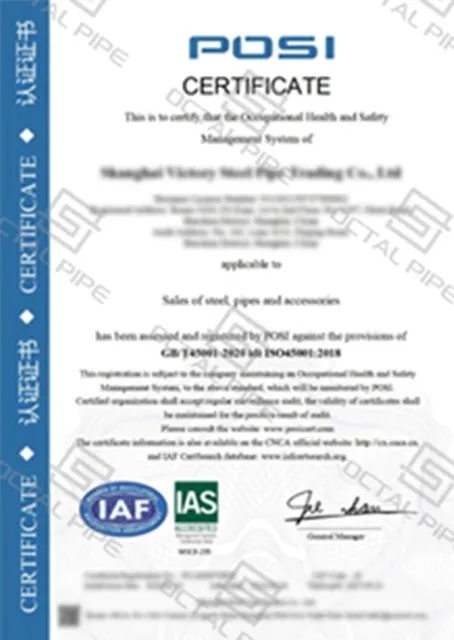
CE Certificate

ISO 9001 Certificate

API Q1 Certificate
ABS Certificate
AP-5L Certificate

API-5CT Certificate
Hot Tags: jaw crusher, China jaw crusher manufacturers, suppliers, factory
Previous
Impact CrusherNext
Rock CrusherYou Might Also Like


Send Inquiry