




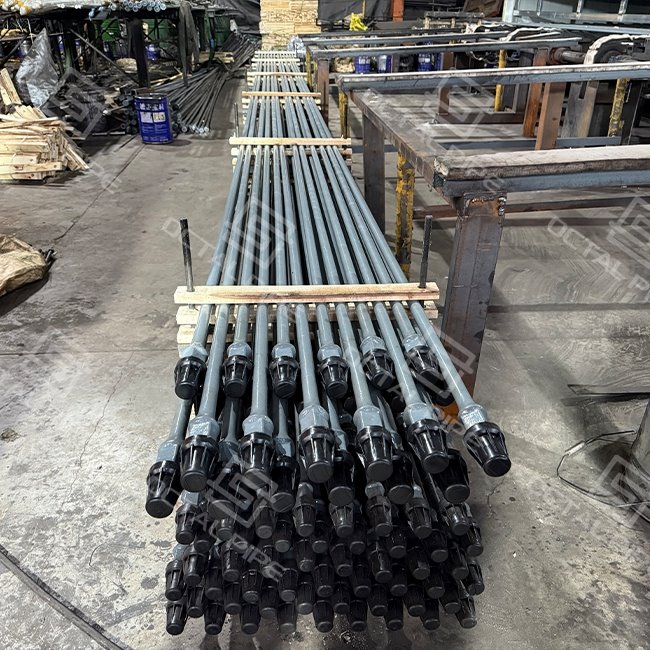

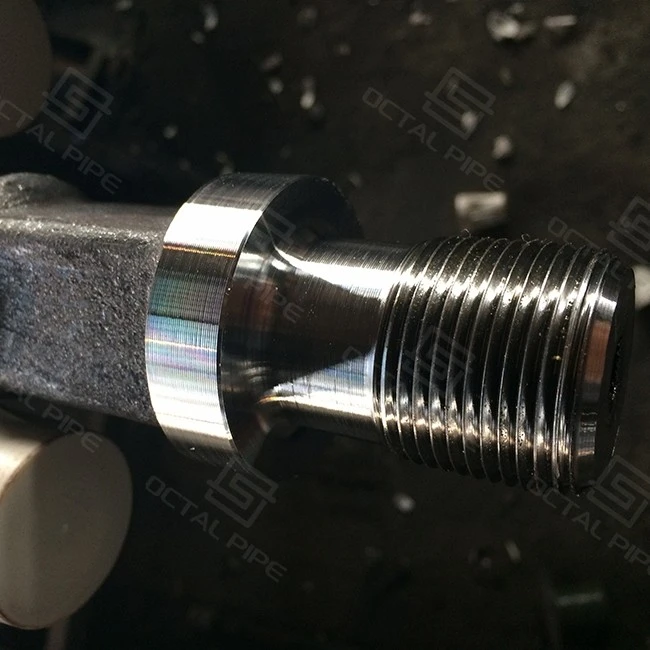
High Strength Sucker Rod
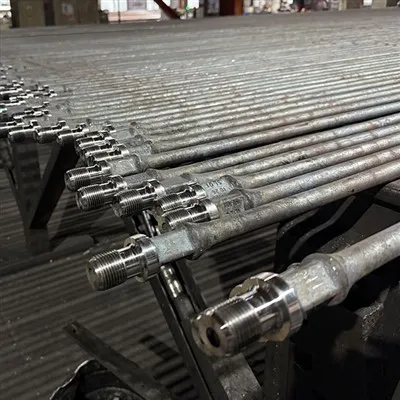
Size Range: 5/8″ – 1-1/8″ OD; standard 25 ft length, pony rods 2–12 ft.
High Strength Grades: H, HY, and special alloy grades for heavy-load and corrosive wells.
Superior Strength: Tensile strength up to ≥150,000 psi for deep wells and heavy pumping.
Enhanced Fatigue Resistance: Designed for cyclic loads, reducing rod failures in demanding wells.
Corrosion Protection: Alloy steel + optional coatings for CO₂/H₂S sour environments.
High strength sucker rod is used in rod-lift strings when standard grades no longer provide enough margin for rod load, fatigue, deviation, or torque. It is commonly selected for deeper pumping conditions, heavier polished loads, and operating programs where stable connection performance and longer runtime matter more than a basic strength upgrade. Current API-based product routes are still built around API 11B compliance, with steel grade selection tied to load level and corrosion level in the well.
In field service, performance depends on more than the rod body alone. The rod diameter, upset section, thread form, coupling route, pumping mode, and release traceability all need to stay aligned with the well design. This is why a high strength sucker rod is typically used where the string must tolerate higher cyclic stress without losing connection reliability or service life.
Typical Supply Range
Common sucker rod specifications in API-based supply include the sizes below. Standard sucker rod lengths are commonly 25 ft and 30 ft, while pony rods are commonly supplied in 2 ft, 4 ft, 6 ft, 8 ft, 10 ft, and 12 ft lengths for string spacing and wellhead adjustment. Octal's current sucker-rod supply scope also covers Class T / Class SM couplings and related rod-string products.
| Item | Common Range |
|---|---|
| Rod sizes | 5/8 in, 3/4 in, 7/8 in, 1 in, 1-1/8 in |
| Standard rod lengths | 25 ft, 30 ft |
| Pony rod lengths | 2 ft, 4 ft, 6 ft, 8 ft, 10 ft, 12 ft |
| Coupling options | Class T / Class SM |
| Typical product family | Steel sucker rods, pony rods, couplings |
Different grade routes are selected according to well depth, rod load, corrosion level, and pumping mode. That is why the correct supply decision is based on the operating condition of the well, not on one headline strength claim by itself.


When High Strength Sucker Rod Becomes Necessary
A high strength sucker rod becomes more relevant once the well moves beyond routine service and enters deeper or heavier-duty lifting conditions. Published rod-selection guidance classifies deep wells as more than 10,000 ft and heavy rod loads as more than 41,071 psi. In this range, the rod string sees more severe cyclic loading and less fatigue margin, so a higher-performance route becomes a practical engineering choice. A typical example is a reciprocating rod-lift well at around 12,000 ft with a long stroke and a heavy fluid column. In that condition, a standard rod grade may no longer leave enough margin at the upset and thread areas over long cyclic service, making a high strength sucker rod the more suitable option for maintaining connection reliability and run life.
The same need appears in deviated wells and PCP systems. In deviated service, the rod string is exposed to bending and side loading in addition to axial load. In PCP service, torque is added to the load picture, so stress control is evaluated as effective stress, not only as pure axial tension. This is also why high-strength rod routes are commonly associated with more demanding PCP applications and matched coupling selection.
Service Conditions
In a deep reciprocating rod-lift well with a long stroke and a heavy fluid column, the upper part of the string is loaded every cycle. In this condition, the real concern is not only sucker rod tensile strength on paper, but whether the upset section, thread root, and coupling area can maintain service life over time. That is why high-strength grades are used in wells where longer runtime and fewer workovers matter.
In deviated wells or high-rate wells, local bending and repeated cycling increase fatigue risk near threaded and upset zones. This is where sucker rod fatigue resistance becomes more important than a single headline tensile number. For PCP strings, torque adds another stress component, so rod grade and coupling selection need to be matched as one system.
Representative premium high-strength product literature currently shows minimum yield strength around 115 ksi and ultimate tensile strength around 140–155 ksi for specific HA/UHS routes, but the usable performance still depends on size, service factor, corrosion condition, and the actual stress range in operation.

Corrosion Exposure and Grade Selection
Sucker rod corrosion resistance should be judged against actual well chemistry rather than by strength level alone. A high-strength rod can still fail early if the corrosion route does not match the fluid condition in the well. In practical service, this usually means checking whether the well is operating in a low to mildly corrosive, effectively inhibited environment before selecting a high-strength grade for long-cycle rod-lift duty.
For field screening, corrosion risk is commonly reviewed against CO2 partial pressure, H2S level, produced water chemistry, and inhibitor effectiveness. A practical reference range often treats pCO2 from 3 psi to 30 psi as a meaningful sweet-corrosion window, while H2S ≥ 5 ppm and pH2S ≥ 0.5 psi indicate that sour-corrosion risk must be taken seriously. In these conditions, grade selection should not stop at tensile strength. The more useful question is whether the rod string can maintain run life at the upset area, thread root, and coupling zone under the actual fluid and stress combination in the well.
For high-strength sucker rod service, corrosion-related selection is usually tied to five checks: fluid severity, inhibitor reliability, water chemistry stability, offset-well failure history, and the actual operating stress range of the string. This is especially important in deeper wells and PCP applications, where cyclic stress and torque can accelerate damage if the corrosion margin is too small.
| Check Item | Practical Screening Point | Why It Matters |
|---|---|---|
| CO2 partial pressure | 3-30 psi sweet-corrosion window | Higher CO2 can increase corrosion activity in produced fluids |
| H2S content | ≥ 5 ppm | Indicates sour-corrosion risk and stricter material review |
| pH2S | ≥ 0.5 psi | Useful screening value for corrosive sour conditions |
| Inhibitor effectiveness | Stable and verifiable in operation | Poor inhibitor control can shorten rod life even with higher-strength grades |
| Produced water chemistry | Check chlorides, pH, and water stability | Water chemistry affects corrosion rate and localized attack tendency |
| Offset-well failure history | Review rod, coupling, and thread failures nearby | Previous field failures often show whether the risk is corrosion, fatigue, or both |
Manufacturing and Quality Control
High-strength sucker rod is typically produced from alloy-steel bar through upset forming, heat treatment, straightness control, precision thread machining, and final inspection. For API-based supply, API Spec 11B is the core standard covering rod and pony rod dimensions, thread form, couplings, gauges, and mechanical-property testing.
Quality control should stay focused on the release points that directly affect rod-string reliability. In practice, this means checking body and pin dimensions to API 11B, verifying thread profile and gauge fit, confirming straightness after heat treatment, and reviewing mechanical-property records for the ordered grade. Common verification items include yield strength, tensile strength, elongation, reduction of area, and hardness.
When rods and couplings are supplied together, the coupling dimensions and fit should be checked against the rod grade and pin size as one system. For shipment release, heat / lot traceability, inspection records, marking, and MTC should remain consistent from production through packing.
| Control Point | Typical Basis | Why It Matters |
|---|---|---|
| Rod dimensions | API Spec 11B | Keeps rod size, pin dimensions, and interchangeability under control |
| Nominal lengths | 25 ft / 30 ft rods; 2–12 ft pony rods | Avoids string-spacing and tally mismatch during assembly |
| Thread form and gauge fit | API Spec 11B thread requirements and gauges | Reduces connection damage and makeup inconsistency |
| Mechanical properties | Yield strength, UTS, elongation, reduction of area, hardness | Confirms the ordered grade is actually achieved |
| Straightness | Mill inspection after heat treatment and machining | Helps reduce running and service issues in the string |
| Coupling inspection | API-based dimensions + raw-material inspection | Keeps rod/coupling fit-up more stable in service |
| Marking and traceability | Heat / lot identification, labeling, release records | Supports MTC matching and field receiving control |


Why Choose Octal Pipe
For high strength sucker rod supply, the real value is not only the product itself, but how the order is controlled from specification review to shipment release. Octal Pipe can support the supply of sucker rods, pony rods, and couplings within the same API 11B-based product family, which helps keep the rod string aligned on size, length, connection type, and release documents before the order goes to production.
This is especially useful when the project does not require only one rod size or one standard item. In actual orders, the difficulty often lies in keeping the full string package clear: standard rod lengths, pony rod completion lengths, coupling matching, tally accuracy, heat / lot traceability, and document consistency. A more coordinated supply route helps reduce avoidable issues such as incomplete string combinations, mismatched couplings, unclear packing details, or extra checking work at receiving.
Octal Pipe can also support the order with the release documents normally expected for export supply, such as MTC, inspection records, packing list, marking, and heat / lot identification. For buyers, this makes the order easier to review before shipment and easier to check after arrival, especially when rods and couplings are released together as one package.
FAQ

01.When should a standard rod string be upgraded to a high strength sucker rod?
02.Is a high strength sucker rod automatically suitable for corrosive or sour wells?
03.What should be confirmed on the purchase order before buying high strength sucker rod?
04.What inspection and release points should a buyer ask for?
05.Is a headline tensile number enough to judge whether the rod is safe for service?
Certifications
CE Certificate
ISO 9001 Certificate
API Q1 Certificate
ABS Certificate
AP-5L Certificate
API-5CT Certificate
Hot Tags: high strength sucker rod, China high strength sucker rod manufacturers, suppliers, factory
Previous
AISI 4130 Sucker RodNext
No InformationYou Might Also Like



Send Inquiry