




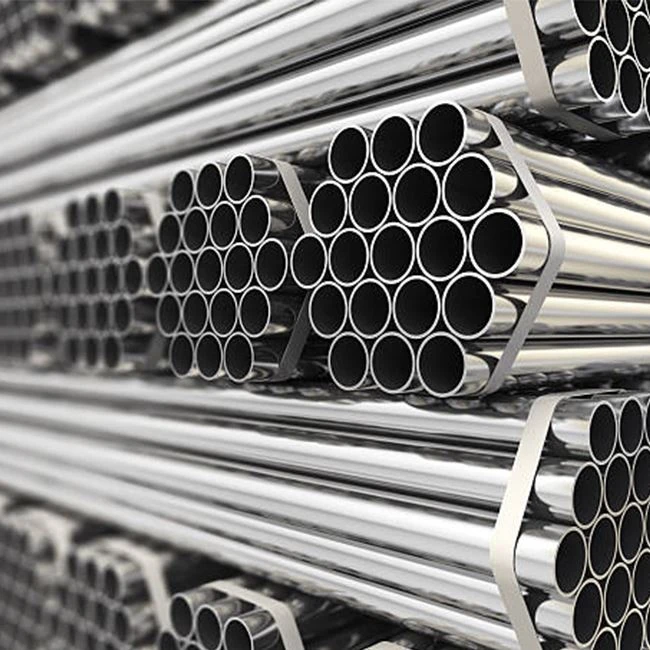
Sanitary Pipe
Grades: 304L/316L standard; duplex 2205 for tough media.
Sizes: OD 0.5-12 in, tight tolerances for fit.
QA: MTC 3.1, NDT, PMI for full traceability.
Supply: Stock/custom sizes, coatings, TPI via Octal Pipe.
sanitary pipe (often specified as sanitary tube) is stainless tubing made for hygienic service, where the piping must be cleanable, non-contaminating, and inspection-friendly. In practice, "sanitary" is defined by the inside-surface condition and fabrication behavior: a smooth, defect-controlled ID that does not trap product, stable OD/WT for consistent clamp fit-up and orbital welding, and a finish that can hold up under CIP/SIP cycles and routine washdown without becoming a cleaning problem.
Most sanitary pipe stainless steel orders use 304/304L or 316/316L, but performance is usually decided by what is written beyond the grade: finish level (e.g., BA when brightness and low hold-up matter), dimensional tolerances/ovality, surface acceptance criteria, and the release evidence (heat traceability + MTC) that lets the tubing pass receiving inspection and go straight to installation.
ASTM A270 sanitary stainless steel tubing provides superior internal surface quality for hygienic systems in food, beverage, and pharmaceutical industries, where cleanliness and corrosion resistance are essential. This tubing supports validated clean-in-place (CIP) and sterilize-in-place (SIP) processes, minimizing contamination risks in sensitive media like purified water or dairy products. Octal Pipe offers stock in common austenitic grades, ensuring compliance with global standards for reliable performance.


Compliance and Standards
Octal Pipe's ASTM A270 sanitary tubing adheres to ASTM A270/A270M specifications for seamless and welded austenitic and ferritic/austenitic stainless steel tubes, including supplementary requirements for pharmaceutical quality. It aligns with ASME BPE for bioprocessing equipment and ISO 2037 for food-grade stainless tubes, covering grades like 304, 304L, 316, and 316L. For enhanced durability in chloride environments, duplex options such as 2205 meet ASTM A270 criteria with additional testing.
BA Finish Sanitary Stainless Steel Pipe
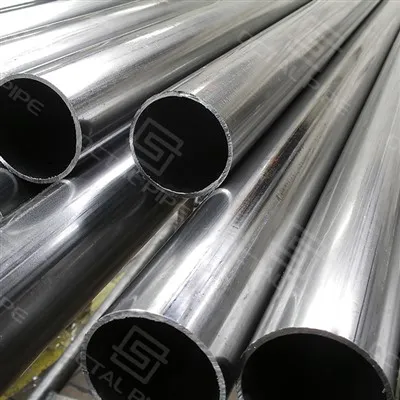
BA (Bright Annealed) sanitary tubing is chosen when buyers want a bright, smooth surface that reduces product hold-up and shortens cleaning time-common in dairy, beverage, cosmetics, and pharmaceutical utility lines. Compared with general-purpose stainless pipe, BA sanitary tubing is more sensitive to manufacturing discipline: as wall thickness increases, keeping uniform wall, stable OD/ID finish, and consistent appearance becomes harder, and finishing cost rises accordingly. For that reason, BA orders are typically controlled by a clear purchase description: grade (304L/316L), size, finish requirement, acceptance criteria (surface condition / dimensional control), and the document pack for release.


Chemical Composition and Mechanical Properties
Chemical limits in ASTM A270 ensure resistance to pitting and stress corrosion, while mechanical properties guarantee integrity under process pressures per ASME B31.3.
| Grade | C max (%) | Mn max (%) | P max (%) | S max (%) | Cr (%) | Ni (%) | Mo (%) |
|---|---|---|---|---|---|---|---|
| 304 | 0.08 | 2.00 | 0.045 | 0.030 | 18.0-20.0 | 8.0-11.0 | - |
| 304L | 0.035 | 2.00 | 0.045 | 0.030 | 18.0-20.0 | 8.0-13.0 | - |
| 316 | 0.08 | 2.00 | 0.045 | 0.030 | 16.0-18.0 | 10.0-14.0 | 2.0-3.0 |
| 316L | 0.035 | 2.00 | 0.045 | 0.030 | 16.0-18.0 | 10.0-14.0 | 2.0-3.0 |
Mechanical testing includes tensile and yield strength, with elongation supporting formability during installation. For 316L, minimum tensile strength reaches 515 MPa, yield at 205 MPa, and elongation at 35%, verified through ASTM E8 methods.
Manufacturing Process and Quality Assurance
Seamless tubing under ASTM A270 starts with extrusion or piercing, followed by cold drawing for precision. Welded variants use automatic TIG welding without filler, with heavily cold-worked options applying over 35% wall reduction before annealing to homogenize the structure. Final bright annealing in hydrogen atmosphere ensures oxide-free surfaces, complemented by electropolishing for Ra ≤0.4 μm where specified.
Quality protocols include hydrostatic testing to 1.5 times design pressure, eddy current for defects, and profilometer checks per ASME B46.1. Borescope inspections confirm weld flushness, while positive material identification (PMI) verifies chemistry. Mill test certificates per EN 10204 3.1 include heat treatment logs and NDT reports.
Stainless Steel Sanitary Tubing (A270) - Supply Range & What We Quote
ASTM A270 tolerances limit OD variation to ±0.13 mm for sizes under 1 in, scaling to ±0.38 mm for larger tubes, with wall thickness not under nominal by more than 12.5%. Straightness holds at 0.5% of length, supporting drainable installations.
Stock emphasizes welded and seamless in 304L and 316L, with lengths at 6 meters for efficient handling. Weights use a 0.02466 coefficient adjusted +1.2% for realism-final weight subject to actual weighing. Sizes can be customized; unlisted dimensions available on request.
Many buyer searches land on stainless steel sanitary tubing (A270) because A270 is a common project reference for hygienic tubing. Octal Pipe supports sanitary tubing supply as both seamless and welded routes, quoted with a defined finish level (including BA when required) and lot traceability.
| OD (in/mm) | WT (in/mm) | Grade | Length (m) | Pieces | Weight (MT) |
|---|---|---|---|---|---|
| 1 / 25.4 | 0.035 / 0.89 | 304L | 6 | 200 | 2.1 |
| 1 / 25.4 | 0.065 / 1.65 | 316L | 6 | 180 | 3.5 |
| 1 / 25.4 | 0.083 / 2.11 | 304L | 6 | 150 | 4.2 |
| 1.5 / 38.1 | 0.035 / 0.89 | 316L | 6 | 160 | 3.3 |
| 1.5 / 38.1 | 0.065 / 1.65 | 304L | 6 | 140 | 5.1 |
| 1.5 / 38.1 | 0.083 / 2.11 | 316L | 6 | 120 | 6.0 |
| 2 / 50.8 | 0.035 / 0.89 | 304L | 6 | 130 | 4.4 |
| 2 / 50.8 | 0.065 / 1.65 | 316L | 6 | 110 | 6.8 |
| 2 / 50.8 | 0.083 / 2.11 | 304L | 6 | 100 | 8.1 |
Inspection dossiers (MTC 3.1/3.2, NDT reports) available upon request.
Sanitary Pipe Suppliers - What Buyers Should Audit Before Release
When screening sanitary pipe suppliers, the fastest way to control on-site risk is to audit the measurable items that drive cleanability, fit-up yield, and release speed-especially on sanitary pipe stainless steel packages (ASTM A270 sanitary tube).
Surface finish (ID) & hygienic acceptance
- Define an ID roughness target that matches the cleaning method: Ra ≤ 0.8 μm is commonly accepted for CIP/SIP tubing; tighter specs can be set to Ra ≤ 0.4 μm, and projects that require validation-grade surfaces may request polishing down to 0.2 μm Ra.
- Make the acceptance visible: require profilometer checks (surface roughness records) and specify what counts as rejectable on ID/OD (e.g., scratches, pits, polishing marks, discoloration) by photos or defect limits-so receiving inspection isn't subjective.
- Octal Pipe typically aligns the PO to a measurable release: profilometer records (Ra reports) by lot, plus clear reject language for ID/OD (pits, continuous scoring, discoloration) so receiving inspection is not subjective.
Dimensions & straightness (what keeps orbital welding and clamp joints stable)
- Lock the size window up front: the common sanitary OD range is 0.5–12 in.
- Call out tolerances in the PO so fabrication doesn't "discover" them on site: OD tolerance can be as tight as ±0.13 mm (for <1 in), scaling up to ±0.38 mm for larger sizes; wall thickness is typically controlled so it is not under nominal by more than 12.5%; straightness is often held to 0.5% of length to support drainable routing and predictable clamp alignment.
Welded sanitary tube seam control - make the acceptance evidence-based
- For welded sanitary tube, the seam is not a yes/no label. Buyers usually require an explicit method: automatic TIG welding (often autogenous), and an inspection approach that proves internal condition.
- Octal Pipe commonly supports eddy current screening for tube defect control and can add borescope seam checks on representative lengths when the line is sensitivity-critical (to prevent late-stage rework after installation).
Sanitary Pipe Price - What Actually Moves the Cost
Sanitary pipe price is usually driven by a small set of real variables: grade (304L vs 316L), finish requirement (BA and stricter surface expectations), size (OD/WT), and the release package (traceability level, testing scope, and any third-party witnessing). In hygienic projects, the "cheapest tube" often becomes the most expensive once re-cleaning, rejected lots, or rework welding are counted. A cleaner quote comparison is to align three lines across suppliers: the same standard reference (e.g., A270 when applicable), the same finish description, and the same release evidence required at receiving.
Where Sanitary Tube Projects Fail
Cleanability disputes (tube looks fine, but CIP/SIP won't pass)
The hidden risk is the ID surface: micro-scratches, polishing marks, discoloration, or local pits that become product hold-up points. Sites feel it as longer CIP time, repeat swabs, or unexplained residues at spool joints.
How Octal Pipe controls it: we don't leave "polished/BA" as a vague label. The PO is aligned to a measurable finish target (commonly Ra-based when the project requires it), and the acceptance is written as an inspection rule (what defects are rejectable on ID/OD). Lots are released with surface/finish evidence tied back to the shipment so receiving inspection doesn't turn into subjective arguing.
Clean tube delivered dirty(handling contamination)
Even good tubing gets rejected if the ID arrives with dust, moisture marks, or debris-especially on WFI and biotech loops where acceptance is strict and time windows are short.
How Octal Pipe controls it: the shipment is treated like a hygienic component: end caps, sealed wrapping, and controlled bundling, with packaging that prevents ID contamination and surface damage during loading/unloading. This is usually the difference between tubing that can go straight to fit-up and tubing that sits in quarantine waiting for re-cleaning.
Traceability gaps (the tube is there, but QA can't release it)
A common failure mode is paperwork that cannot be matched quickly: missing heat mapping, unclear bundle IDs, or certificates that don't align with tube marking. The result is simple-material sits on site, and the project loses its shutdown window.
How Octal Pipe controls it: we ship with an auditable chain: tube marking → heat/lot map → MTC (EN 10204 3.1), so receiving inspection can accept or isolate by bundle without guessing. When projects require higher assurance, 3.2 / third-party witnessing can be arranged, but the baseline is always "fast, verifiable release."
Sanitary pipe Applications
ASTM A270 tubing suits dairy transfer lines handling slurries, pharmaceutical loops for water-for-injection (WFI), and biotech fermentation systems. Its smooth internals prevent bacterial adhesion in food processing, while low-carbon grades resist sensitization in high-temperature CIP cycles. In aggressive media, duplex variants extend life in chloride-rich environments like seawater desalination tie-ins.
Sanitary tube is usually specified where the "real problem" happens during operation and cleaning, not on the drawing. Below are typical workfront situations Octal Pipe sees on hygienic packages-written the same way crews and QA teams talk on site:
- WFI / purified-water loops after shutdown maintenance: during restart, the loop is flushed, heated, and sampled. What fails projects is often surface condition and handling contamination (ID dirt, moisture ingress, mixed lots). Octal Pipe typically packages sanitary tube with capped ends and lot-mapped certificates so the site can trace heat numbers quickly and avoid re-cleaning or quarantine caused by missing release evidence.
- Fermentation / biotech skid installation (frequent washdown + thermal cycling): tubing sees repeated hot–cold cycles and chemical cleaning. The workfront pain is discoloration, roughness change, and sensitization risk around weld heat-affected zones if the material/finish is mismatched. Low-carbon grades and a defined finish basis reduce post-install cleaning surprises and shorten validation time.
- High-chloride utility tie-ins (brine/Caustic-cleaning proximity): the challenge is not "corrosion in general" but localized pitting at crevices, clamps, and dead-legs after repeated wet–dry exposure. In these packages, material selection (often moving from 304L to 316L or duplex by spec) is decided by the exact wash chemistry and downtime reality, not a brochure label.
Why Choose Octal Pipe sanitary tube
Octal Pipe supports ASTM A270 sanitary tube supply as a process-controlled release, built around the checkpoints that decide whether tubing passes hygienic acceptance and installs smoothly during shutdown windows. On the supply side, our stainless tube capacity baseline is ~8,000 t/y seamless and ~10,000 t/y welded, with a practical size window of Φ6–Φ630 mm (WT 1–35 mm) for seamless and Φ19–Φ2620 mm (WT 1–35 mm) for welded-so one package can cover utility tubing, manifolds, and large OD spool fabrication without splitting vendors.
| Audit point (buyers actually check) | What's controlled / how it's measured | What Octal Pipe can release with the shipment |
|---|---|---|
| ID finish for cleanability | Finish level is specified as a measurable target (common sanitary benchmarks: Ra ≤ 0.8 μm for standard CIP, Ra ≤ 0.4 μm for tighter hygiene, and Ra ≤ 0.2 μm when the project calls for very low hold-up). | Roughness records (profilometer checks by lot / by sampling plan) + defined reject criteria for pits/scratches/discoloration. |
| Weld seam stability (welded sanitary tube) | Seam quality is controlled by welding + bead conditioning; acceptance is verified by seam inspection evidence (not "looks OK"). | Seam inspection records (e.g., eddy current where specified) and traceable rework/repair logs if any. |
| Dimensional repeatability (fit-up yield) | OD/WT/ovality/straightness are checked as fabrication drivers so clamps/orbital welding don't turn into rework. | Dimensional inspection sheet tied to the heat/lot map. |
| Clean handling & packaging | Hygienic tube can fail at receiving due to handling contamination. | End caps + sealed wrapping + bundle identification that matches certificates. |
| Traceability & release evidence | Receiving needs to match tube marking → certificate → shipment bundle without guessing. | Lot-mapped EN 10204 3.1 MTC (3.2 / third-party witnessing when required by ITP). |
FAQ

FAQ 1: ASTM A270 sanitary tubing vs ASME BPE - which one should I specify?
FAQ 2: What does BA finish mean for sanitary tube (BA bright annealed)?
FAQ 3: What Ra should be specified for sanitary pipe stainless steel, and how is Ra measured?
FAQ 4: What drives sanitary pipe price (and how do sanitary pipe suppliers quote fairly)?
Certifications
CE Certificate
ISO 9001 Certificate
API Q1 Certificate
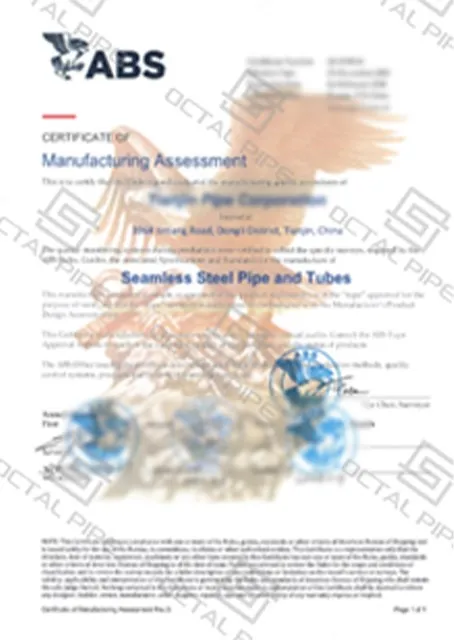
ABS Certificate
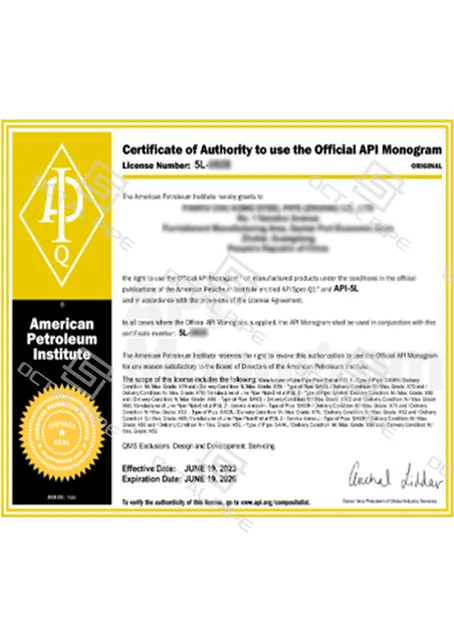
AP-5L Certificate
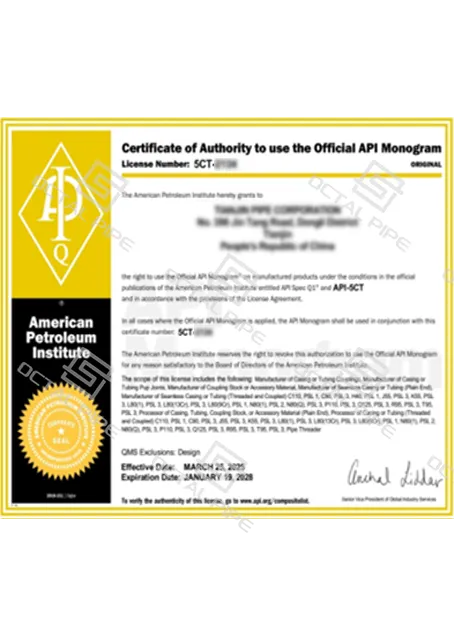
API-5CT Certificate
| Item | Quick Spec |
|---|---|
| Product | Sanitary stainless tube/pipe (ASTM A270) |
| Grades | 304/304L, 316/316L |
| Finish | BA (Bright Annealed) or specified polish/Ra |
| Sizes | Seamless: OD Φ6–Φ630 mm, WT 1–35 mm; Welded: OD Φ19–Φ2620 mm, WT 1–35 mm |
| Docs & Packing | EN 10204 3.1 MTC; capped & sealed packing (as required) |
Hot Tags: sanitary pipe, China sanitary pipe manufacturers, suppliers, factory,ASTM A270 tubing, sanitary stainless steel pipe, stainless steel hose pipe, galvanized electrical conduit, steel conduit pipe, welded elbow, flex steel hose, metric stainless steel tubing
Previous
Boiler PipeNext
No InformationYou Might Also Like


Send Inquiry