Material Insights
Developed to withstand aggressive chemical conditions, the 316 series of stainless steels-comprising 316L, 316H, and 316Ti-offers exceptional resistance to chloride corrosion and oxidation.
Each grade serves distinct thermal or fabrication demands, providing engineers flexibility across processing plants, power systems, and marine environments.
- 316L: Low-carbon variant minimizing carbide precipitation during welding.
- 316H: High-carbon grade optimized for high-temperature strength and creep resistance.
- 316Ti: Titanium-stabilized version enhancing intergranular corrosion protection at elevated service temperatures.
Alloy Design and Corrosion Behavior
The alloy's 18% chromium and 12% nickel foundation forms a stable austenitic structure, while molybdenum (~2.0–3.0%) significantly boosts pitting and crevice corrosion resistance in chloride-bearing media.
Titanium or controlled carbon adjustments allow tailored performance-whether in cryogenic piping or superheater assemblies.
Key metallurgical advantages:
- Excellent resistance to acetic, phosphoric, and sulfuric acids
- High immunity to chloride-induced stress corrosion cracking
- Stable oxide film formation up to 870 °C (1600 °F)
- Outstanding weld integrity with minimal sensitization risk
Chemical Composition (per ASTM A312 / A213 / A269)
|
Grade |
C (%) |
Mn (%) |
Si (%) |
P (%) |
S (%) |
Cr (%) |
Ni (%) |
Mo (%) |
Ti (%) |
N (%) |
|
316L |
≤ 0.03 |
≤ 2.00 |
≤ 1.00 |
≤ 0.045 |
≤ 0.03 |
16.0–18.0 |
10.0–14.0 |
2.00–3.00 |
- |
≤ 0.10 |
|
316H |
0.04–0.10 |
≤ 2.00 |
≤ 1.00 |
≤ 0.045 |
≤ 0.03 |
16.0–18.0 |
10.0–14.0 |
2.00–3.00 |
- |
- |
|
316Ti |
≤ 0.08 |
≤ 2.00 |
≤ 1.00 |
≤ 0.045 |
≤ 0.03 |
16.0–18.0 |
10.0–14.0 |
2.00–3.00 |
5 × C–0.70 |
- |
The presence of molybdenum and chromium in balanced ratios ensures superior resistance to oxidation and acid corrosion, making these alloys ideal for both industrial and architectural applications.
Mechanical Strength and Temperature Range
|
Grade |
Tensile Strength (MPa) |
Yield Strength (MPa) |
Elongation (%) |
Hardness (HBW) |
Service Temp. |
|
316L |
≥ 485 |
≥ 170 |
≥ 40 |
≤ 217 |
up to 425 °C |
|
316H |
≥ 515 |
≥ 205 |
≥ 40 |
≤ 217 |
up to 870 °C |
|
316Ti |
≥ 515 |
≥ 205 |
≥ 40 |
≤ 217 |
up to 870 °C |
Mechanical observations:
316L is best for welded assemblies and cryogenic pipelines; 316H and 316Ti excel in sustained high-temperature conditions with improved creep performance.
Production and Fabrication Route
The manufacturing of 316-series stainless steel pipes requires precise metallurgical control to preserve corrosion resistance and mechanical uniformity.
Unlike carbon steels, these austenitic alloys demand clean melting environments, strict temperature regulation, and controlled cooling rates to prevent sensitization or grain coarsening.
Standard production flow:
- Vacuum or Argon Furnace Melting: Refines the alloy chemistry and minimizes nitrogen or sulfur contamination.
- Hot Piercing and Elongation: Converts solid billets into seamless hollows with directional grain flow for higher pressure endurance.
- Cold Drawing and Sizing: Achieves precise tolerances, improved concentricity, and enhanced surface smoothness.
- Solution Annealing: Conducted between 1040 °C and 1120 °C, followed by rapid water or air quenching to dissolve carbides and restore full austenitic corrosion resistance.
- Pickling and Passivation: Removes oxides and restores the chromium-rich passive film critical for durability in acidic or chloride-rich environments.
Welded pipes are fabricated using GTAW (TIG) or laser welding with filler materials matched to the base composition (ER316L or ER316Ti).
Post-weld solution annealing and polishing may be applied to restore corrosion resistance in critical process installations such as chemical and pharmaceutical piping systems.


Dimensional Range and Tolerance
|
Parameter |
Range / Tolerance |
|
Outside Diameter |
6 – 610 mm |
|
Wall Thickness |
0.5 – 100 mm |
|
Length |
Up to 12 m (SRL / DRL / custom) |
|
OD Tolerance |
± 1 % |
|
WT Tolerance |
± 10 % |
|
Straightness |
≤ 0.8 mm per m |
Available in annealed, pickled, or polished finishes, these pipes are supplied for both sanitary and pressure-grade use.
Testing and Quality Verification
Comprehensive inspection ensures that every 316-series stainless steel pipe maintains metallurgical stability and leak-proof performance before delivery.
Testing procedures conform to ASTM A312, A999, and corresponding ASME SA specifications, covering both destructive and non-destructive verification stages.
Standard quality checks:
- Hydrostatic or Eddy-Current Testing: Confirms internal integrity and detects surface discontinuities.
- Tensile, Hardness, and Flattening Tests: Validate mechanical consistency across production lots.
- Intergranular Corrosion Test (ASTM A262 Practice E): Verifies immunity to carbide precipitation, especially for 316L and 316Ti.
- Positive Material Identification (PMI): Ensures alloy compliance with nominal Cr-Ni-Mo content.
- Visual and Dimensional Inspection: Measures straightness, end finish, and wall uniformity with precision gauges.
For high-purity or process-critical applications, optional ferrite analysis, radiographic weld testing, or surface roughness evaluation (Ra ≤ 0.8 μm) may be specified.
All test data are recorded under controlled QA documentation and issued as EN 10204 3.1 / 3.2 certificates for complete traceability.
Performance in Service
316L, 316H, and 316Ti each demonstrate unique resilience under operational stress:
- 316L: Excellent in welding-heavy equipment, minimizing carbide precipitation.
- 316H: Resists creep and rupture under prolonged thermal exposure.
- 316Ti: Retains ductility and corrosion protection even after multiple heating cycles.
Their stable oxide layer and low permeability make them suitable for both food-grade and chemical process systems.
Application Domains
- Petrochemical heat exchangers and condenser tubing
- Pharmaceutical and food processing lines
- Pulp and paper bleaching equipment
- Offshore platforms and marine exhaust systems
- High-temperature heat recovery and flue-gas systems
- The versatility of the 316 family ensures reliable service across industries demanding both corrosion and temperature endurance.
Engineering Supply and Traceability
As part of its stainless-steel portfolio, Octal Pipe delivers 316L, 316H, and 316Ti pipes with full traceability, mill certification (EN 10204 3.1/3.2), and NDE verification.
Each batch is produced under ISO-controlled processes, ensuring compliance with ASTM and ASME codes for industrial and project-level applications.
FAQ

Q1: What is the main difference between 316L, 316H, and 316Ti stainless steel pipe?
Q2: When should I choose 316L stainless steel pipe?
Q3: When is 316H stainless steel pipe preferred?
Q4: When should I use 316Ti stainless steel pipe instead of 316L?
Certifications
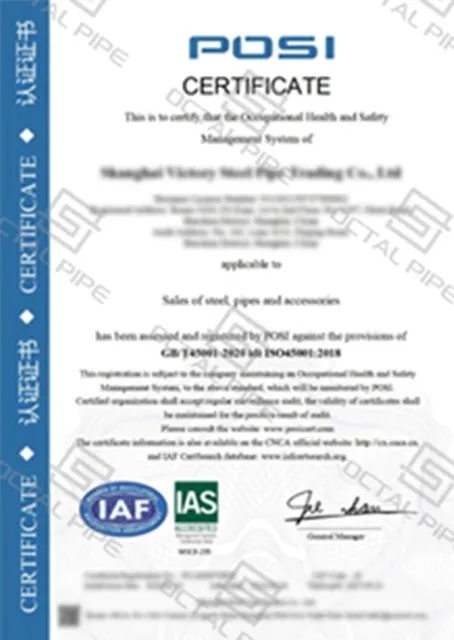
CE Certificate

ISO 9001 Certificate

API Q1 Certificate
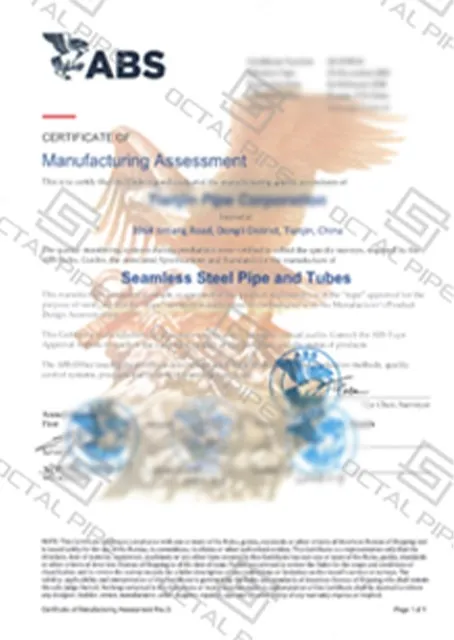
ABS Certificate
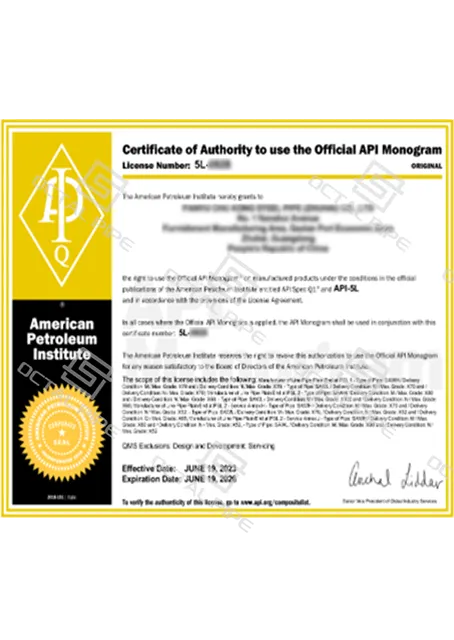
AP-5L Certificate
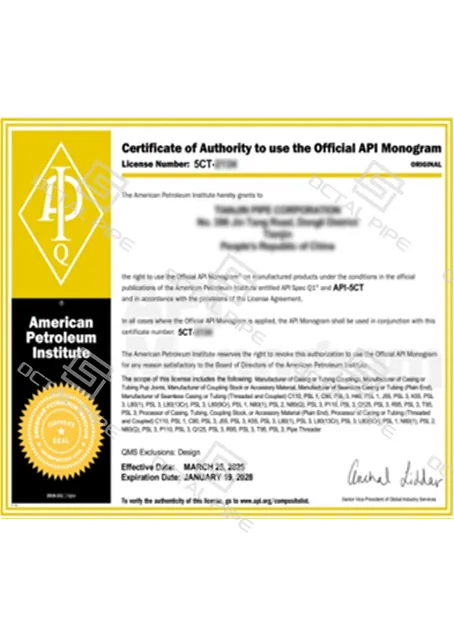
API-5CT Certificate