




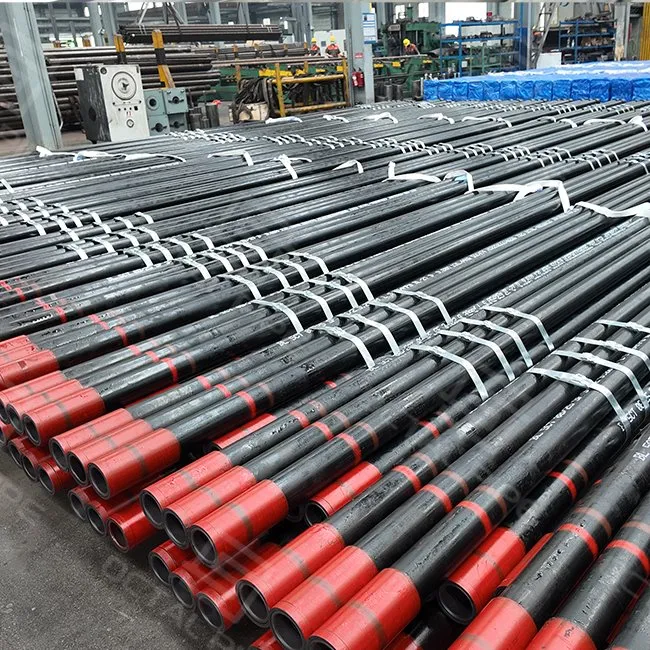


Tubing
Grades: H40, J55, K55, N80-1/N80Q, L80, C90, T95, P110, Q125, CRA (13Cr / Duplex / Super Duplex)
OD Range: 1.900" – 4½"
Wall Thickness: per API 5CT mass tables; special walls on request
Lengths: R1 (6.1–7.3 m), R2 (8.5–9.75 m), R3 (11.6–13.7 m)
Connections: NU (Non-Upset), EUE (External Upset End), Premium (Flush / Semi-Flush / Integral)
Drift: API drift or Special Drift for tight-clearance completions
Applications: Onshore/offshore wells, sour service, HPHT wells, shale multistage frac, CO₂/acidic environments
Product Overview
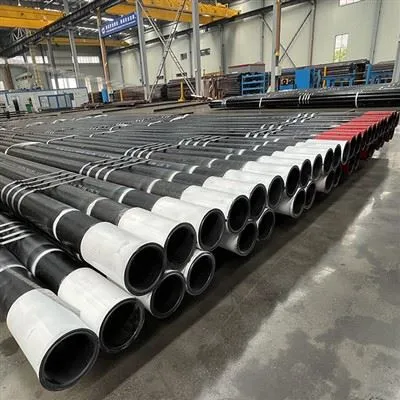
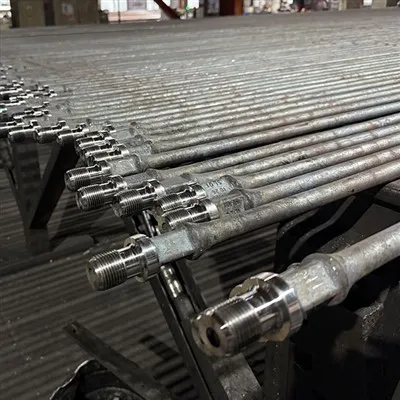
Tubing is seamless steel production pipe used as a threaded-and-coupled string installed inside casing to provide the controlled flow path that carries oil, gas, and produced fluids from downhole to surface.Octal Pipe supplies OCTG seamless tubing for production strings, with ordering built around drift, connection selection, and leak-control requirements for completion readiness.
Most tubing headaches start with scope gaps: connection type (NUE/EUE or gas-tight premium), drift requirements not aligned to completion tools, or paperwork that can't close incoming inspection. That's why Octal Pipe treats tubing supply as completion-ready delivery: clear connection identification, protected threads for logistics handling, and an acceptance-focused document pack (MTC/traceability, plus thread gauging and drift/hydro/NDT reports when specified in your PO/ITP).
Instead of just quoting a size and a price, we check the details that usually cause trouble later – collapse and burst ratings, sour-service limits, coupling type, internal coating options and matching OCTG casing and tubing grades. The result is a production tubing package that fits your completion design, passes third-party inspection and arrives on location ready to run, not a mixed pile of joints that your rig crew has to sort out on the catwalk.
- Standard grades: H40, J55, K55, N80 (N80-1, N80Q), L80, C90, T95, P110, Q125
- CRA materials: 13Cr, Super 13Cr, Duplex 22Cr, Super Duplex 25Cr, Nickel alloys
- Heat treatment: Normalizing, Quench & Temper, solution treatment for CRA, hardness control for sour service
OCTG Casing and Tubing – How Tubing Fits in the String
In a producing well, casing and tubing don't do the same job. Casing is there to hold the hole open and isolate formations. OCTG tubing – the production tubing – is the part of the string that actually carries your oil, gas or injection fluids. If the casing is your "wall", tubing is your "pipeline" inside that wall.
A typical OCTG casing and tubing design might use several casing strings (surface, intermediate, production casing) and then one or more tubing strings inside. The tubing has to match the casing ID, packers, safety valves and wellhead outlets exactly:
• OD and drift must clear the smallest restriction in the casing or liner.
• Connection type (NU, EUE or premium) must match crossovers, packers and wellhead.
• Grade and weight must give enough collapse, burst and tension capacity for the planned production and workover loads.
This is where Octal Pipe adds value. Instead of just quoting "3½" J55 tubing", we look at the whole OCTG casing and tubing program you are running on that field. We check that tubing OD / drift fit your production casing, that grades line up with your collapse and burst envelopes, and that connection types are consistent from tubing pipes to accessories such as pup joints, crossovers and nipples.


Size & Dimensional Range
- OD: 1.900" – 4½" (other diameters on request)
- Weight / Wall Thickness: per API 5CT tables; heavy walls available on demand
- Lengths: R1, R2, R3
- Drift: API drift or Special Drift (tight-clearance wells)
- Ends: NU (Non-Upset), EUE (External Upset End), Premium flush/semi-flush
API 5CT OCTG Tubing Data Sheet
Use this OCTG tubing chart as a purchasing reference; final sizes, weight and drift requirements are confirmed on the PO.

Special Notes on Chemical Composition Limits
- For Grade L80, the maximum allowable carbon content may be increased up to 0.50% if the product has been oil-quenched.
- For Grade C90 Type 1, the requirement for molybdenum has no minimum value when the wall thickness is less than 17.78 mm.
- For Grade R95, the carbon content may be increased up to 0.55% maximum if oil quenching is applied.
- For Grade T95 Type 1, the molybdenum minimum may be reduced to 0.15% when the wall thickness is below 17.78 mm.
- For Electric-Welded Grade P110, the phosphorus content must not exceed 0.020%, and sulfur must not exceed 0.010%.
Note: "NL" (No Limit) indicates that the element is reported but not restricted. All listed elements shall be included in the product analysis report.
OCTG Tubing chart(dimensions and weight )

OCTG tubing sizes are typically ordered by OD, wall thickness (or weight), length range (R1/R2/R3), and connection type (NUE/EUE or premium).
OCTG Tubing Specifications (PO Key Items)
| PO item | What to specify | Why it matters |
|---|---|---|
| Standard + grade | API 5CT + grade (e.g., J55/N80/L80/P110) | Locks compliance and strength level |
| Size + length | OD + wall thickness/weight + R1/R2/R3 | Prevents size mismatch and logistics issues |
| Connection | NUE/EUE or premium (type/name) | Drives make-up and leak-control performance |
| Drift requirement | API drift or special drift basis (when specified) | Completion readiness; avoids restrictions |
| QA / documents | MTC/CMTR (3.1/3.2 when specified) + required test reports per ITP | Faster receiving and project QA acceptance |
Threads & Premium Connections
For tubing, the connection often decides whether a well is easy to run and keep gas-tight, or a constant source of leaks and rig-time loss. Below is a clear snapshot of what we can supply and where each option makes sense.
Connection Types & Typical Use
| Connection type | Key features | Typical use / recommendation |
|---|---|---|
| API NU (Non-Upset) | Slim OD, no external upset; relies on thread interference + compound seal | Restricted boreholes, slim completions, situations where clearance is critical |
| API EUE (External Upset) | Upset OD, higher joint strength and pressure capacity than NU | Conventional oil wells, moderate-pressure gas, general production tubing |
| Premium metal-to-metal | Metal-to-metal seal + torque shoulder, high compression & bending capacity, high gas-tightness | Dry gas and high-pressure gas wells, HPHT, CO₂ injection and storage, critical wells |
| High-torque premium | Enhanced torque & bending capacity, robust shoulder and seal | Horizontal shale wells, multistage fracturing, long lateral strings |
| Flush / semi-flush | Near-flush OD or reduced upset for tight restrictions | Slim-hole completions, liner tiebacks, wells with tight ID clearances |
Thread Manufacturing & Inspection at Octal Pipe
| Aspect | What Octal Pipe does | What it means for you |
|---|---|---|
| Thread standard & gauging | Cut threads to API 5B and premium drawings; 100% gauging (L1, taper, lead, profile, stand-off) | Predictable make-up on the rig; fewer re-cuts and back-offs |
| Surface treatment | Phosphated threads as standard; tin / nickel plating or dope-less coating where specified | Better galling resistance and more stable torque behaviour |
| Make-up control | Torque-turn make-up monitoring for shoulder-type premium connections | Clear confirmation that the metal-to-metal seal and shoulder are properly engaged |
| NDT & visual inspection | 100% visual inspection of threads and sealing surfaces; NDT on critical areas as required | Lower risk of leak paths from handling damage or machining defects |
| Connection qualification | Premium types qualified to ISO 13679 CAL II–IV or equivalent test programs (on request) | Easier technical approval for gas-tight, HPHT and sour-service strings |
Selection & Engineering Support
Instead of just asking "NU or EUE?", we look at your well design and completion plan:
- Casing ID and smallest restrictions
- Pressure / temperature envelope and gas-tight requirements
- Dogleg severity, lateral length and fracturing program
- H₂S / CO₂ and any sour-service limitations
Based on that, Octal Pipe helps you choose between API 8RD tubing threads and different premium connection families, and can provide make-up torque ranges, running recommendations and connection test data together with your tubing order. So you don't just get a box of joints – you get a connection setup that is matched to how your well will actually be drilled, completed and produced.
Manufacturing & Heat Treatment
- Seamless route: Billet → piercing → elongation → rolling → Q&T → straightening → NDT → finishing
- Threading & coupling make-up: 100% gauging, phosphate threads, protectors applied
- Welded route (if specified): strip forming → HF/SAW welding → PWHT → inspection
Coatings, Protection & Accessories
External:
Varnish or black lacquer provides basic storage protection, while FBE and 3LPE coatings offer long-term corrosion resistance for buried or high-humidity environments. Choosing the right external coating helps reduce rust, extend tubing life and keep visual inspection easier at the yard and on the rig.
Internal:
Internal epoxy, phenolic and glass-flake linings can improve flow efficiency, reduce friction and protect against CO₂, water and certain chemical components in the produced fluids. For corrosive service or where clean internal surfaces are required for logging and interventions, internal coating can significantly reduce scaling and internal corrosion.
Thread protection:
Plastic or steel thread protectors, phosphate finish and controlled thread dope application protect the connection during transport, storage and handling. Good thread protection means fewer damaged joints at the rig and less time spent re-cutting or repairing tubing.
Packaging:
Tubing can be supplied in bundled or loose form, with lifting bails, thread guards and clear tally / marking. Proper packaging makes yard handling and rig floor operations safer and faster, and reduces the risk of mix-ups between sizes or grades.


Engineering Properties & Selection
- Burst & collapse resistance
For most buyers, the first question is simple: "Can this string survive the pressure windows in my well file?"
Octal Pipe calculates burst and collapse ratings to API 5C3 and then checks them against your own safety factors and design envelopes. Where the connection becomes the limiting point, we can move from standard API threads to higher-efficiency or premium connections, so the joint is not the weak link in the tubing string.
- Tension & joint strength
Tubing capacity is always a mix of body strength + connection efficiency + correct make-up. We look at your setting depth, well deviation and expected workover loads, then balance body yield, joint strength and make-up torque so the string can safely carry its own weight and any extra pulling or snubbing forces. The aim is simple: no surprises on tensile capacity when you're hanging the string off the wellhead or pulling through tight doglegs.
- Material selection for real well conditions
Instead of pushing one "universal" grade, we match tubing grade to the actual environment in your well:
- J55 / K55 / N80 for conventional sweet oil and gas wells.
- L80 / T95 for H₂S service and controlled hardness requirements.
- P110 / Q125 for HPHT or deep deviated wells.
- 13Cr and duplex where CO₂, chlorides and temperature make corrosion the main risk.
You send us the basic well data – pressure, temperature, H₂S / CO₂ / chloride levels and planned operating envelope – and Octal Pipe recommends a tubing grade and connection combination that meets the design, passes API 5CT / 5C3 checks and is practical to run with your completion hardware.


Why Choose Octal Pipe for Tubing
When we work on tubing, we treat it as a well-level project item, not just "3½" N80 from stock". Everything we do is built around making your string easier to design, approve and run.
| What you need on tubing | What Octal Pipe actually does |
|---|---|
| A string that really fits your well, not just the catalogue | Work from your tubing tally / well program – casing ID, setting depths, H₂S / CO₂, packers and SSSV – then pick grade, OD, drift and connection so the string clears all restrictions and meets API 5C3 burst / collapse envelopes. |
| Less drama on the rig floor | Control OD, drift, thread quality and make-up torque range so joints run smoothly through slips and rams, with fewer partial make-ups, back-offs and leak checks. We've supplied strings for gas wells, horizontals and workovers where rig reports specifically note "tubing ran clean". |
| Tubing, pups and accessories that actually match | Supply tubing joints, pup joints, couplings and crossovers in the same grade, weight and thread, with consistent drift and OD. That way, you don't discover at the wellsite that the pups or x-overs are the weak link or won't pass tools. |
| Quick approval with operators and third parties | Prepare tubing files with API 5CT / 5B certs, EN 10204 3.1 / 3.2, NDT / hydro / SSC reports and drift records clearly tied to joint and heat numbers, so IOCs / NOCs and TPIs can sign off without re-writing your documentation. |
| Deliveries that match your tally, not random bundles | Build and pack strings exactly to your tally and length range (R1 / R2 / R3), mark joints clearly, protect threads properly and use routes we already run into major oilfield regions, so the tubing arrives ready to lay out and run, not as a mixed pile you have to re-sort. |


Applications – How OCTG Tubing Works Inside the Well
Production tubing inside casing
OCTG tubing is run inside the production casing as the main flow path from reservoir to wellhead. It protects the casing from direct contact with produced fluids, keeps flow under control and allows you to pull and replace the string without touching the casing. Most standard oil and gas producers use this "casing + production tubing" configuration.
Injection and gas-lift strings
In water-injection, gas-lift and CO₂ / disposal wells, tubing is used as a dedicated injection string inside the casing. It delivers injection fluids to the target depth while isolating them from the annulus, and provides a known ID for valves, mandrels and gas-lift equipment. Choosing the right OCTG tubing grade and drift helps avoid injection restrictions and premature failures.
Workover, test and temporary service strings
During testing or workovers, operators often run a temporary tubing string inside existing casing to flow the well, set tools or clean out the hole. For this role, buyers need OCTG tubing that can be made up and stripped multiple times, holds pressure reliably and is easy to handle as a rental or service string without damaging the casing.
Protective string for sensitive casing and liners
In some completions, especially slim or expensive liner/casing programs, tubing acts as a sacrificial protective string: it takes the wear from tools, scale, sand and chemical treatment, so the casing does not. When the inner surface is damaged or corroded, you pull and replace the tubing instead of repairing or sidetracking the well.
Tie-back and completion extensions
OCTG tubing is also used to tie back lower completions or liners to the surface. In deep or subsea wells, a tie-back tubing string connects the lower completion section to the wellhead, providing a continuous production path and an extra barrier. Here, the combination of tubing OD, connection type and joint strength must match both the existing casing ID and the completion hardware.


Tubing Design Notes – What Most Engineers Really Worry About
Matching tubing grade to real well chemistry:On paper, API 5CT gives you a long list of grades; in practice, the choice usually comes down to sweet vs sour vs CO₂-dominated service. For sweet producers, engineers tend to stay with J55, K55 or N80; once H₂S or stricter hardness limits appear, they move to L80 or T95, and for HPHT or deep horizontals to P110 / Q125. Where CO₂ and chlorides are high, we see a shift towards 13Cr or duplex production tubing, because the long-term corrosion rate matters more than the initial steel cost. Octal Pipe reads your pressure, temperature and H₂S / CO₂ data first, then recommends a tubing grade that fits both API 5CT and your corrosion assumptions.
Size, wall and drift – will the tubing actually take your completion?
Most field problems with API 5CT tubing are not about yield strength, but about ID and drift: packers won't pass, safety valves hang up, or coiled-tubing tools get stuck. That's why we treat OD / weight and drift diameter as part of the completion design, not just catalogue numbers. When you send a tally or tubing section from the well file, we check that the selected tubing size, weight and drift match your smallest restriction, your tool OD and the casing ID – and that the collapse / burst window from API 5C3 still works with that choice.
Connection choice for gas-tight and HPHT service:Search data – and our inbox – show that engineers are increasingly focused on tubing connection performance, especially on gas and shale wells. Standard API NU / EUE threads are still common on oil producers and moderate pressures, but for dry gas, high-pressure gas and HPHT horizontals, operators often move to high-efficiency or premium tubing connections to reduce leak risk and joint failures under cycling. Octal Pipe can build a tubing string either with API connections for conventional wells, or with gas-tight / metal-to-metal premium connections where your completion or fracture program demands it.
Quick Specification Snapshot
| Item | Details |
|---|---|
| Standard | API 5CT / ISO 11960 |
| OD Range | 1.900" – 4½" |
| Lengths | R1, R2, R3 |
| Grades | H40, J55, K55, N80, L80, C90, T95, P110, Q125, CRA 13Cr / Duplex |
| Connections | NU, EUE, Premium |
| Tests | Hydrostatic, full-length drift, UT / EMI, tensile, hardness, SSC (as required) |
Ordering Checklist
| What to specify | Description / Notes |
|---|---|
| OD & Weight / Wall | API 5CT size and weight / wall thickness series |
| Grade & PSL level | Tubing grade (e.g. J55, N80, L80, P110, etc.) and required PSL / quality level |
| Length range | R1, R2 or R3 |
| Connection type | NU, EUE or premium connection; specify drift type if applicable |
| Special requirements | Sour service, internal / external coatings, third-party inspection, extra tests |
With Octal Pipe's API 5CT tubing, customers receive safe, gas-tight, high-performance products matched to today's complex well conditions, supported by full certification, defined testing and a global supply network.
FAQ

What's the difference between NUE, EUE, and gas-tight premium tubing connections?
What information should I include in an RFQ for tubing?
Do you provide drift testing and thread gauging for tubing?
What documents should come with tubing for incoming inspection?
Certifications
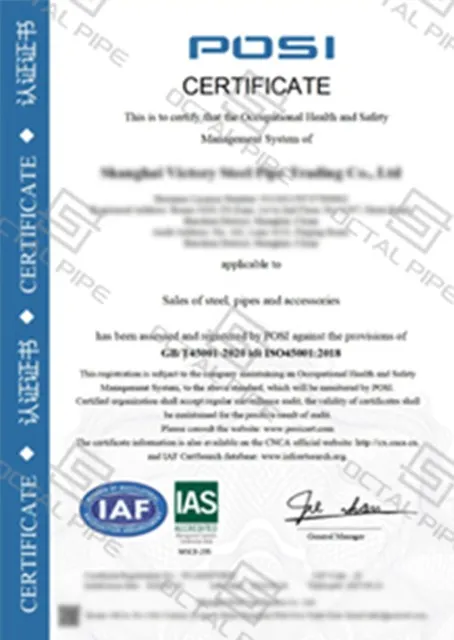
CE Certificate
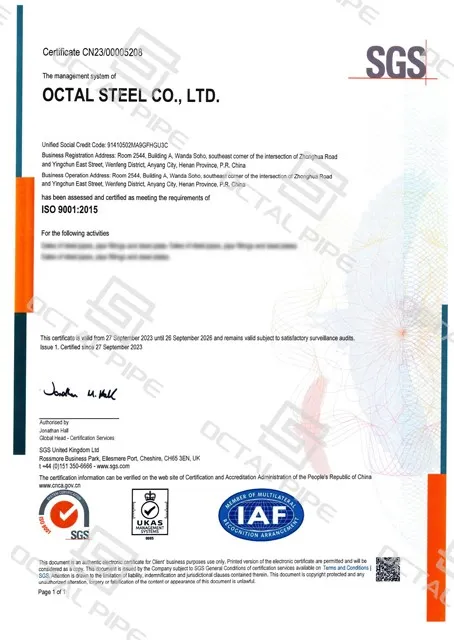
ISO 9001 Certificate
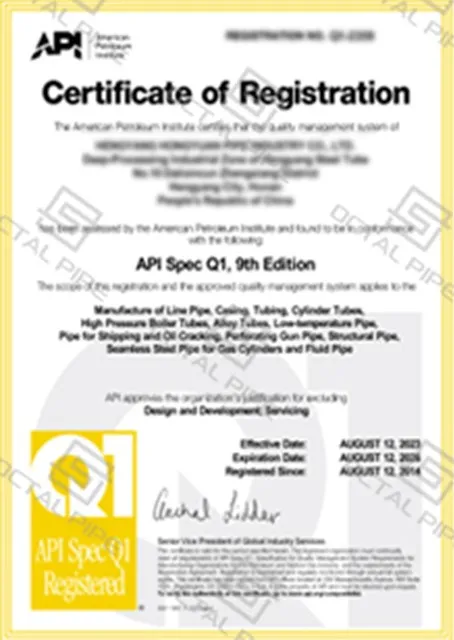
API Q1 Certificate
ABS Certificate
AP-5L Certificate
API-5CT Certificate
Standards & Normative References
API 5CT – Specification for Casing and Tubing
API 5B – Threading and gauging of casing and tubing connections
API 5C1 / 5C3 – Recommended practices for care/use and property calculation (burst, collapse, tension)
ISO 11960 – International equivalent of API 5CT (on request)
NACE MR0175 / ISO 15156 – H₂S service requirements
Mill test certificates to EN 10204 3.1 / 3.2, full heat traceability
Grades & Metallurgy
Standard grades: H40, J55, K55, N80 (N80-1, N80Q), L80, C90, T95, P110, Q125
CRA materials: 13Cr, Super 13Cr, Duplex 22Cr, Super Duplex 25Cr, Nickel alloys
Heat treatment: Normalizing, Quench & Temper, solution treatment for CRA, hardness control for sour service
Hot Tags: OCTG Tubing, China Tubing manufacturers, suppliers, factory, well casing pipe steel, glow tubing, apollo casing pipe, submersible casing pipe, 2 well casing, copper pipe with insulation
Previous
Vacuum Insulated TubingNext
Drilling RiserYou Might Also Like



Send Inquiry