




Internal FBE Coating
Sour-service options for CO₂ / H₂S / produced-water wells
Anti-wax / anti-scale variants for paraffin and mineral deposit control
Low-surface-prep systems for difficult-to-blast pipe IDs
Compatible with API 5CT / API 5L / ASTM / GB/T pipe supply
Custom film thickness (250–500 μm or higher) with holiday test reports
Can be delivered together with external coating, beveling and export packing
Internal FBE Coating(Fusion Bonded Epoxy) is a factory-applied epoxy powder lining used on the inside of oil tubing, casing and gathering lines. After the pipe ID is cleaned and preheated, the epoxy powder is sprayed, melted and cured to form a hard, continuous barrier. This barrier separates the produced fluid from the steel, slows down CO₂/H₂S corrosion, and keeps the inner surface smooth, which helps to reduce pressure loss and deposition.
For operators and EPC buyers this is valuable because the coating can be supplied together with the pipe itself. Octal Pipe can deliver pipe + internal FBE + external coating + documentation in one lot, so the buyer does not have to send material to a separate coating yard.
Where FBE Internal Coating Works Best: OCTG Tubing and Casing
CO₂ + produced water tubing strings (sweet corrosion + under-deposit risk): For wells where wet CO₂ drives internal corrosion and deposits trap water against steel. Internal FBE is specified to keep the ID sealed and smoother so corrosion cells don't start under deposits. Octal Pipe difference: we lock the route around end masking + controlled uncoated end length so couplings and make-up don't chip the lining, and we control preheat/cure window so the coating fully fuses rather than leaving weak "dusty" zones (defined in PO/ITP when required).
Low-to-medium H₂S production (mixed CO₂/H₂S with water): When the corrosion driver is wet sour + produced water and failures start as localized attack, not uniform thinning. Buyers usually need a resistant formulation and tighter process stability. Octal Pipe difference: coating selection is tied to your stated media (CO₂/H₂S/water) and we apply end protection + handling rules to prevent ID scuffing during yard moves and shipment-one of the most common "coating looked fine at factory, failed at site" causes.
Wax-prone crude (paraffin deposition / frequent cleanouts): In wells where wax builds fast, the operational pain is restriction and repeated hot-oil/cleanout runs. Internal FBE is used to keep a smoother ID and reduce wax anchoring points. Octal Pipe difference: we can specify an anti-wax / low-friction internal option and control ID cleanliness before coating (oil/grease removal + blasting standard when specified), because wax-control coatings fail early when the substrate prep is inconsistent.
Scale-prone produced water (CaCO₃ / BaSO₄ tendency): Where scale bridges quickly and turns into hard restrictions. The goal is fewer nucleation points and more predictable chemical inhibition/cleaning. Octal Pipe difference: we control ID continuity at the ends and transitions (no ragged overspray edge) and keep the ID surface consistent so you don't get "bare rings" that become scale starters-these are the joints that force early intervention.


Product Families
| Product type | Typical service | Key benefit |
|---|---|---|
| Standard internal FBE for tubing/casing | Sweet oil, water, light gas | General internal corrosion protection |
| H₂S / CO₂ resistant internal epoxy coating | Sour gas, high CO₂, produced water with chlorides | Better chemical resistance, longer service |
| High-build sour-service powder | Long downhole exposure, thicker barrier required | Higher DFT, improved life in aggressive media |
| OCTG epoxy powder lining | High-volume tubing and casing | Cost-effective, stable performance |
| Anti-wax / anti-scale internal coating | Wax-prone crude, CaCO₃/BaSO₄ scaling wells | Very smooth ID, lower deposition |
| Low-surface-prep tolerant coating | IDs where perfect blasting is difficult | Good adhesion even on lighter surface prep |
| Reinforced internal coating for heavy casing | Deep wells, mechanical impact during running | Toughened epoxy, better abrasion/impact resistance |
This table makes it clear to Google (and to real users) that this is not one generic coating, but a product line.


Internal FBE Coating Process Description
Internal surface preparation
ID is cleaned by abrasive or mechanical tools to remove mill scale, rust, grease and contamination. For best results, near-white metal (Sa 2½) is used. For low-prep formulations, a lower grade is acceptable.
Pipe preheating
Pipe is brought to the specified steel temperature (normally 200–230°C). This ensures that when the powder hits the surface it melts immediately.
Electrostatic powder spray
A spray lance moves through the pipe and applies FBE powder evenly along the full length. The powder is attracted to the hot steel and forms a uniform film.
Fusion and curing
The coating melts, levels and chemically crosslinks to form a dense, adherent epoxy lining.
Inspection and handling
Coating thickness (DFT) is measured, holiday detection (2.5–5 kV) is carried out, and the ID is visually checked. Qualified pipes are then cooled, capped and packed.
A paragraph like this helps Google detect "manufacturing process" patterns, which often score better than short AI-sounding descriptions.
Why Specify Internal FBE for Flow Efficiency
When tubing will see wax, scale, and high water cut, the field problem is often ID restriction and unstable flow, not just uniform corrosion. Internal FBE is specified to keep the internal surface smoother and chemically resistant, so deposits build up slower, pressure drop stays lower, and cleanout frequency becomes more predictable.
- Wax deposition: Wax anchors on rough ID and discontinuities. On the PO, specify lining type (standard vs anti-wax/low-friction when needed), target DFT, and holiday testing so the ID is continuously sealed.
- Scale deposition: Scale can bridge quickly and turn into a hard restriction. Specify produced-water/scaling tendency and an anti-scale option (when specified), plus coating integrity checks (DFT + holiday test) to avoid bare spots that become scale nuclei.
- Under-deposit corrosion: Deposits trap water against steel and create localized corrosion cells. For CO₂/H₂S + produced water service, specify the resistant formulation (when required) and request inspection evidence by lot (DFT record + holiday log) when specified in PO/ITP.
Typical Technical Data
| Item | Typical value / range |
|---|---|
| Coating type | Single-layer fusion bonded epoxy (FBE) |
| Internal DFT | 250–500 μm; higher film on request |
| Service media | Crude oil, produced water, CO₂ / H₂S mixtures |
| Recommended service temperature | 80–120°C (depends on formulation) |
| Adhesion (pull-off, ambient) | ≥ 10 MPa |
| Holiday test | 2.5–5 kV |
| Applicable pipe | API 5CT tubing/casing, API 5L line pipe, GB/T pipe |
| Inspection documents | MTC + coating inspection report |


Supply Options from Octal Pipe
| Option | Description |
|---|---|
| Pipe + internal FBE | OCTG supplied to API 5CT, coated on ID in plant |
| Pipe + internal FBE + external FBE/3LPE | For strings that need both internal and external protection |
| Custom thickness | 250–700 μm according to well condition |
| Coating for difficult IDs | Low-surface-prep epoxy for small-diameter tubing |
| Project package | Mixed sizes, mixed standards, single shipment |
| Inspection | Mill test, coating report, third-party (SGS/BV) if required |
Why Choose Octal Pipe for Internal FBE
Pipe standard stays first: The base pipe is supplied to the ordered API/ASTM/GB/T requirement, and the internal FBE is applied around real tolerances and connection needs-so you don't end up with a coating that looks good but conflicts with make-up practice.
Formulation is matched to the media: CO₂-dominant wells, low-to-medium H₂S, produced water, and wax/scale behave differently. We select the lining option based on the service statement on your PO instead of pushing one "universal epoxy" for everything.
Ends are treated as the risk area: Most internal-lining failures start at the ends-chipping during handling, coupling make-up, or running. We control the uncoated end length (when specified) and apply end protection so the transition is consistent and less prone to damage.
Process window is controlled, not guessed: Preheat and curing are managed to avoid weak fusion zones and brittle edges; if your PO/ITP calls for it, the coating run can be backed up with traceable process evidence.
Acceptance evidence is written for QA filing: When specified in PO/ITP, you receive DFT mapping (min/avg/max) and a holiday test log that states method, coverage (100% ID sweep), test voltage and results-so receiving doesn't stall on "what was actually tested."
FAQ

What DFT (dry film thickness) should I specify for internal FBE lining?
What inspection evidence should come with internally FBE-coated tubing?
Is internal FBE suitable for CO₂/H₂S, produced water, wax, or scale tendencies?
Certifications
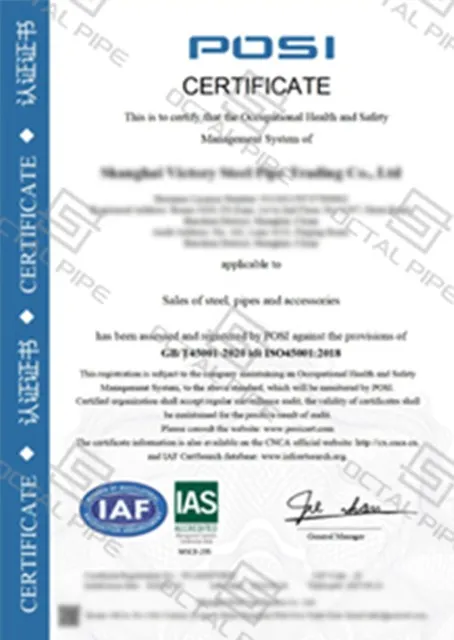
CE Certificate
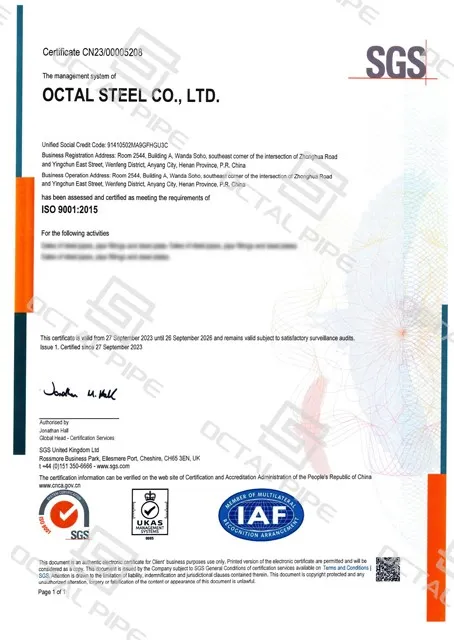
ISO 9001 Certificate
API Q1 Certificate
ABS Certificate
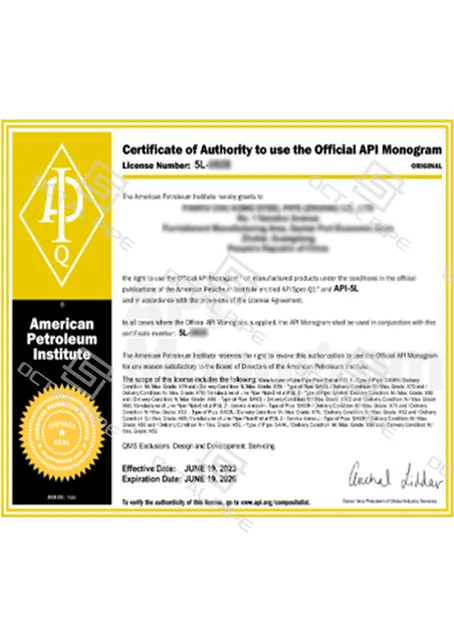
AP-5L Certificate
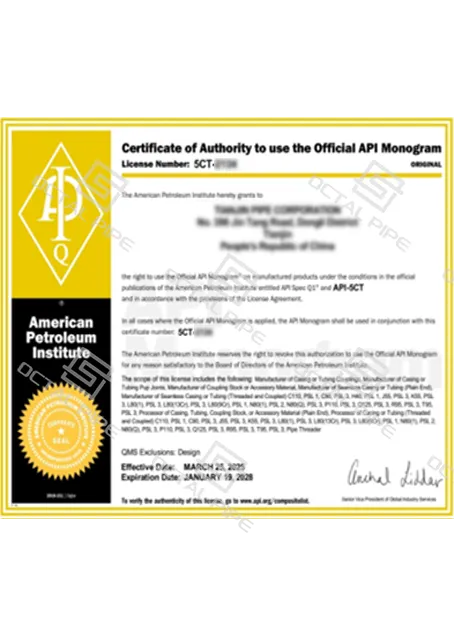
API-5CT Certificate
Hot Tags: Internal FBE Coating, China Internal FBE Coating manufacturers, suppliers, factory
Previous
3LPE Coating PipeYou Might Also Like


Send Inquiry