




Drilling Riser
Application: Designed for deepwater and ultra-deepwater operations.
Performance: Ensures safe fluid circulation and pressure control.
Design: Equipped with tensioners, flex joints, and buoyancy modules.
Material: High-strength, corrosion-resistant alloy steel construction.
Certification: Complies with API, DNV, and ISO offshore standards.
What is a Drilling Riser
In offshore drilling operations, the drilling riser serves as the essential tubular link that joins the subsea wellhead and blowout preventer (BOP) to the surface drilling platform.
Rather than acting as a permanent structural casing-like the conductor pipe-the riser functions as a temporary, high-integrity conduit used exclusively during the drilling phase.
Its primary purpose is to establish a controlled pathway for the circulation of drilling fluids, cuttings, and well-control pressures between the seabed and the rig floor.
This closed-loop circulation enables pressure balance, fluid recovery, and continuous well monitoring throughout the drilling process.
In deepwater and ultra-deepwater operations, where direct access to subsea wellheads is impossible, the riser becomes an indispensable part of the well control system.
It must endure complex marine dynamics, including vertical heave, current drift, and hydrostatic loads-often at depths greater than 2,000 meters.
Modern riser assemblies incorporate tension joints, buoyancy modules, and sealing elements that collectively ensure mechanical stability, pressure containment, and operational safety under continuously changing offshore conditions.


Key Functions and Specifications
A drilling riser operates as the primary mechanical and hydraulic link between the surface rig and the subsea well system, ensuring continuous control and communication during offshore drilling.
Its configuration integrates multiple specialized functions that work together to sustain operational stability and safety in open-sea conditions.
- Hydraulic Return Path: The riser establishes a sealed annulus for mud return, enabling efficient transport of cuttings and maintaining precise bottom-hole pressure.
- Well Pressure Regulation: Integrated choke and kill lines allow managed pressure operations, providing a secondary safety envelope for well integrity.
- Motion Accommodation: Through a combination of flex joints, tension rings, and buoyancy elements, the riser remains aligned despite rig heave and lateral displacement.
- Structural Backbone: It supports auxiliary control lines and provides a rigid yet flexible pathway for mechanical and fluid systems connecting the rig and BOP stack.
- Operational Reusability: Modular construction allows each riser joint to be detached, inspected, and re-certified, ensuring long-term cost efficiency across multiple drilling campaigns.
Each of these design aspects reflects the riser's role as a dynamic structural system, engineered not only to contain pressure but to sustain the mechanical rhythm of deepwater drilling.

Manufacturing Standards and Capabilities
At Octal Pipe, drilling risers are engineered and tested to perform under extreme offshore conditions.
Material Selection
High-strength low-alloy steels with excellent fatigue and fracture resistance.
Specialized coatings and cathodic protection systems against seawater corrosion.
Design Configurations
Customizable riser joints, tension joints, and flex joints for different rig types.
Integration of buoyancy modules to minimize system weight and enhance vertical stability.
Internal sealing assemblies engineered for leak-tight performance under high pressure.
Quality Assurance
Non-Destructive Testing (NDT): Ultrasonic, magnetic particle, and radiographic inspection of welds.
Hydrostatic Testing: Simulated deepwater pressure verification.
Fatigue & Corrosion Testing: Conducted under marine environmental conditions.
Certified according to API and DNV-GL standards for offshore applications.


Comparison: Conductor Pipe vs. Drilling Riser
| Aspect | Conductor Pipe | Drilling Riser |
|---|---|---|
| Primary Function | Permanent casing foundation stabilizing seabed and supporting wellhead. | Temporary conduit linking subsea wellhead/BOP to surface drilling rig. |
| Installation Stage | First casing string, driven or cemented into seabed. | Installed after wellhead and BOP during drilling operations. |
| Permanence | Remains as part of well structure. | Retrieved and reused after drilling phase. |
| Operational Depth | Common in shallow-water wells. | Designed for deepwater (>2,000 m) and ultra-deepwater conditions. |
| Load Handling | Transfers axial and lateral loads to seabed. | Manages dynamic loads via tension systems and buoyancy. |
| Typical Diameter | 20″ – 36″ | Often > 21″ ID depending on drilling program. |
🔹 Conclusion:
Conductor pipes provide the structural foundation in shallow water; drilling risers extend operational control into deepwater. Together, they form a complementary system bridging seabed integrity and surface operations.
Applications of Drilling Risers

Drilling risers are indispensable in deepwater and ultra-deepwater operations where reliable fluid circulation and pressure control are mission-critical.
Deepwater Exploration (> 2,000 m): Enables safe access to subsea formations in frontier basins like the Gulf of Mexico, offshore Brazil, and West Africa.
Dynamic Offshore Environments: Used on floating rigs, semi-submersibles, and drillships with motion-compensated riser systems.
HPHT (High-Pressure High-Temperature) Wells: Provides safe containment of extreme downhole pressures and temperature gradients.
Integration with BOP Systems: Supports choke and kill line operations, allowing immediate well shut-in during emergencies.
Workover & Intervention: Re-deployable riser systems for maintenance and completion tasks across multiple wells.
Engineering Example:
In Brazilian ultra-deepwater fields, risers connect semi-submersibles to wellheads at depths beyond 2,500 m. Even under 10 m wave heights, riser tensioners maintain stability and control-proving their indispensable role in modern offshore engineering.
Reliability and Offshore Performance
Every deepwater drilling campaign depends on the riser's integrity to maintain safe and consistent well control.
At Octal Pipe, each riser system is engineered to perform under cyclic loads, hydrostatic pressure, and corrosive seawater exposure with uncompromising reliability.
- Engineered Durability: Finite element–based fatigue analysis ensures endurance against repetitive dynamic loading.
- Marine-Proven Coatings: Multi-layer anti-corrosion protection minimizes degradation during prolonged subsea immersion.
- Integrated System Compatibility: Designed for seamless interface with BOP stacks, tensioners, and marine riser tension systems.
- Full-Cycle Validation: From material certification to factory acceptance tests and simulated sea trials, each riser passes stringent performance verification.
These measures make Octal Pipe drilling risers a trusted choice for offshore contractors seeking sustained reliability, operational safety, and predictable performance in the most demanding water depths.

In Summary – Why Choose Octal Pipe
Proven engineering for deepwater and HPHT applications.
Compliance with API / DNV-GL / ISO offshore standards.
Advanced material protection and NDT-certified quality control.
Custom riser systems designed for global EPC and drilling contractors.
Technical documentation, recertification, and project support included.
For reliable, field-proven riser systems that safeguard offshore drilling operations-Octal Pipe delivers confidence in every joint.
FAQ

01.What should be specified in a PO for API 5DP drill pipe?
02.How should the drill pipe grade be selected?
03.Why do connection type and upset type matter so much?
04.What should buyers add for sour or corrosive wells?
05.What inspection records matter most for incoming yard acceptance?
Certifications
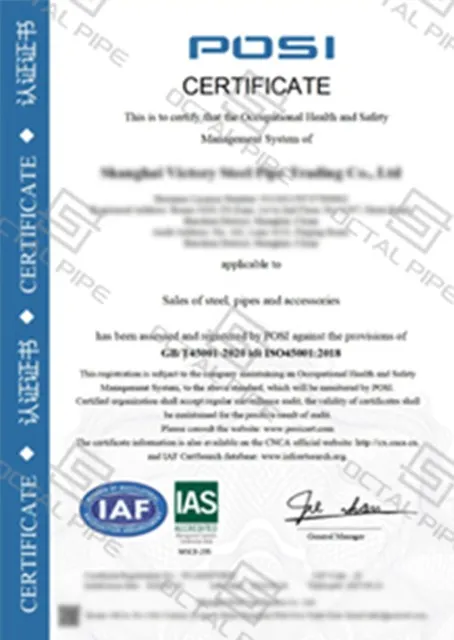
CE Certificate
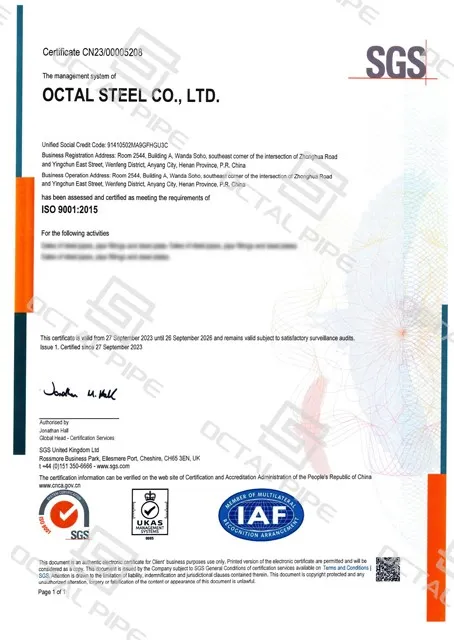
ISO 9001 Certificate

API Q1 Certificate
ABS Certificate
AP-5L Certificate
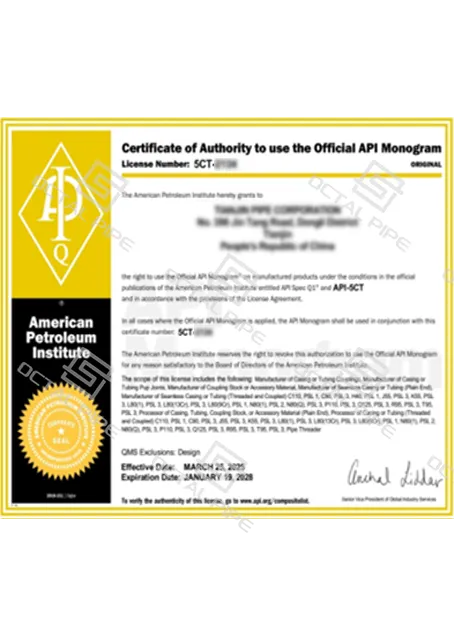
API-5CT Certificate
Hot Tags: drilling riser, China drilling riser manufacturers, suppliers, factory, well casing pipe steel, glow tubing, apollo casing pipe, submersible casing pipe, 2 well casing, copper pipe with insulation
Previous
TubingNext
Conductor PipeYou Might Also Like


Send Inquiry