




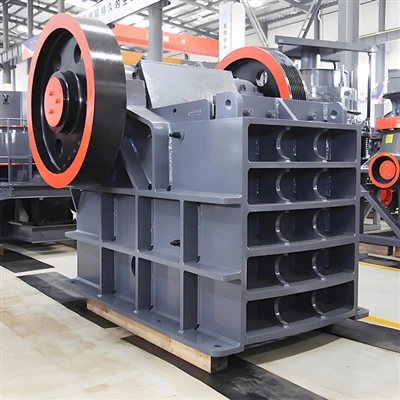
Hydraulic Cone Crusher
Multi-cylinder hydraulic design for secondary, tertiary and fine crushing
Models HP100 – HP800 for medium-hard to hard rock applications
Cavity options: C1 extra coarse, C2 coarse, M middle, F1 fine and F2 extra fine
Feed opening range from 33 mm to 450 mm, outlet size from 6 mm to 51 mm
Capacity range from 45 to 1200 t/h with installed power from 90 to 630 kW
Suitable for granite, basalt, river stone, limestone, iron ore and copper ore
Engineered for stable capacity, laminated crushing, hydraulic protection and controlled aggregate size
The HP series multi-cylinder hydraulic cone crusher is commonly used for granite, basalt, river stone, limestone, iron ore, copper ore and other materials that require controlled gradation, high crushing efficiency and continuous production. It is applied in quarry aggregate plants, mining crushing lines, manufactured sand production and road construction material processing. Model selection should be based on cavity type, feed size, outlet size, capacity requirement, material hardness, abrasiveness and the complete crushing circuit, rather than model name or motor power alone.

HP Series Cone Crusher Parameter Overview
| Item | Parameter Range / Description |
|---|---|
| Product Type | Multi-cylinder hydraulic cone crusher |
| Main Models | HP100, HP200, HP300, HP400, HP500, HP800 |
| Cavity Types | C1 Extra Coarse, C2 Coarse, M Middle, F1 Fine, F2 Extra Fine |
| Open Side Feeding Size | 33–450 mm |
| Closed Side Feeding Size | 20–352 mm |
| Minimum Outlet Size | 6–38 mm |
| Capacity Range | 45–1200 t/h |
| Installed Power | 90–630 kW |
| Crushing Stage | Secondary crushing, tertiary crushing, fine crushing |
| Applicable Materials | Granite, basalt, river stone, limestone, iron ore, copper ore, hard rock |
| Typical Applications | Quarry aggregate, mining crushing, manufactured sand, road construction aggregate |
The key parameters are cavity type, feed size, outlet size, capacity and installed power. These values should be reviewed together because the same crusher model can produce different capacity and product size under different cavity and outlet settings.

HP Series Cone Crusher Specifications
| Model | Cavity Type | Open Side Feeding Size (mm) | Closed Side Feeding Size (mm) | Min Outlet Size (mm) | Capacity (t/h) | Installed Power (kW) |
|---|---|---|---|---|---|---|
| HP100 | C1 Extra Coarse | 175 | 140 | 19 | 45–100 | 90 |
| HP100 | C2 Coarse | 125 | 105 | 13 | 45–100 | 90 |
| HP100 | M Middle | 100 | 70 | 10 | 45–100 | 90 |
| HP100 | F1 Fine | 71 | 50 | 9 | 45–100 | 90 |
| HP100 | F2 Extra Fine | 33 | 20 | 6 | 45–100 | 90 |
| HP200 | C2 Coarse | 235 | 190 | 19 | 65–250 | 160 |
| HP200 | M Middle | 171 | 120 | 16 | 65–250 | 160 |
| HP200 | F1 Fine | 150 | 95 | 13 | 65–250 | 160 |
| HP200 | F2 Extra Fine | 116 | 70 | 8 | 65–250 | 160 |
| HP300 | C1 Extra Coarse | 265 | 230 | 25 | 85–440 | 220 |
| HP300 | C2 Coarse | 240 | 210 | 20 | 85–440 | 220 |
| HP300 | M Middle | 190 | 150 | 15 | 85–440 | 220 |
| HP300 | F1 Fine | 145 | 105 | 11 | 85–440 | 220 |
| HP300 | F2 Extra Fine | 120 | 80 | 8 | 85–440 | 220 |
| HP400 | C1 Extra Coarse | 360 | 290 | 30 | 135–625 | 315 |
| HP400 | C2 Coarse | 310 | 250 | 25 | 135–625 | 315 |
| HP400 | M Middle | 260 | 196 | 20 | 135–625 | 315 |
| HP400 | F1 Fine | 182 | 110 | 13 | 135–625 | 315 |
| HP400 | F2 Extra Fine | 135 | 90 | 10 | 135–625 | 315 |
| HP500 | C1 Extra Coarse | 370 | 330 | 38 | 200–790 | 400 |
| HP500 | C2 Coarse | 320 | 290 | 28 | 200–790 | 400 |
| HP500 | M Middle | 245 | 210 | 22 | 200–790 | 400 |
| HP500 | F1 Fine | 180 | 130 | 13 | 200–790 | 400 |
| HP500 | F2 Extra Fine | 150 | 95 | 10 | 200–790 | 400 |
| HP800 | C1 Extra Coarse | 450 | 352 | 38 | 265–1200 | 630 |
| HP800 | C2 Coarse | 373 | 298 | 32 | 265–1200 | 630 |
| HP800 | M Middle | 340 | 275 | 25 | 265–1200 | 630 |
| HP800 | F1 Fine | 280 | 230 | 16 | 265–1200 | 630 |
| HP800 | F2 Extra Fine | 235 | 150 | 10 | 265–1200 | 630 |
Capacity values are reference ranges. Actual output depends on material hardness, feed grading, moisture, liner condition, cavity type, outlet setting, feeding continuity and downstream screening.
Capacity Range by Outlet Size
Outlet size is one of the most important operating parameters. A smaller outlet size normally produces finer material but may reduce throughput and increase liner wear. A larger outlet size usually improves capacity, but the final product may require screening or return crushing.
| Model | 6 mm | 8 mm | 10 mm | 13 mm | 16 mm | 19 mm | 22 mm | 25 mm | 32 mm | 38 mm | 45 mm | 51 mm |
|---|---|---|---|---|---|---|---|---|---|---|---|---|
| HP100 | 45–55 | 50–60 | 55–70 | 60–80 | 70–90 | 75–95 | 80–100 | 90–115 | 100–150 | - | - | - |
| HP200 | - | 65–85 | 90–125 | 110–150 | 135–180 | 150–195 | 160–210 | 170–225 | 190–235 | 210–250 | - | - |
| HP300 | - | 85–120 | 115–140 | 150–185 | 180–220 | 200–240 | 220–260 | 235–290 | 250–320 | 300–380 | 350–440 | - |
| HP400 | - | - | 135–180 | 190–230 | 225–275 | 250–320 | 270–350 | 295–380 | 290–375 | 355–490 | 410–565 | 460–625 |
| HP500 | - | - | 200–250 | 230–290 | 280–350 | 320–400 | 345–430 | 370–460 | 405–535 | 445–605 | 510–700 | 580–790 |
| HP800 | - | - | 265–340 | 320–425 | 285–510 | 425–540 | 470–605 | 495–740 | 545–800 | 600–945 | 690–1050 | 785–1200 |
Blank cells indicate that the outlet size is not normally used for that model range in the supplied parameter table. Final confirmation should still consider cavity type, crushing stage and the screening system.
How to Read the Main Parameters
| Parameter | What It Means | Why It Matters |
|---|---|---|
| Cavity Type | Crushing chamber profile, such as coarse, middle or fine | Determines feed acceptance and final product direction |
| Open Side Feeding Size | Larger feed reference under open-side condition | Helps review maximum material intake |
| Closed Side Feeding Size | More conservative feeding reference | Useful for stable production and chamber load control |
| Minimum Outlet Size | Smallest recommended outlet setting | Determines whether fine product size can be reached |
| Capacity | Reference output range under suitable conditions | Must be checked with material and outlet setting |
| Installed Power | Motor power configuration | Affects power supply, load control and plant design |
The parameter table should be read as a selection system, not as isolated numbers. Feed size, cavity type and outlet size must match each other before capacity can be evaluated realistically.
Hydraulic Cone Crusher Working Principle
The hydraulic cone crusher working principle is based on compression and laminated crushing. During operation, the motor drives the transmission shaft and eccentric sleeve. The eccentric sleeve makes the moving cone swing around the main shaft. When the mantle moves close to the concave, material is compressed and broken. When the mantle moves away, crushed material moves downward and enters the next crushing zone.
| Working Step | Crushing Action | Technical Meaning |
|---|---|---|
| Feeding | Material enters from the top of the chamber | Feed size and feeding stability affect chamber load |
| Eccentric Movement | Eccentric sleeve drives the moving cone | Creates repeated compression movement |
| Compression Crushing | Material is squeezed between mantle and concave | Main size reduction process |
| Laminated Crushing | Stone particles press against each other | Helps improve particle shape and crushing efficiency |
| Hydraulic Adjustment | Hydraulic system adjusts outlet setting | Helps control final product size |
| Discharge | Qualified material exits from the bottom | Output depends on outlet size, cavity and feeding condition |
For stable operation, the chamber should be properly filled. Uneven feeding, excessive fines, wet material or wrong cavity selection may reduce capacity and increase liner wear.

Main Parts of Multi-Cylinder Hydraulic Cone Crusher
The performance of a multi-cylinder hydraulic cone crusher depends on structural strength, liner profile, eccentric motion, hydraulic control and lubrication stability.
| Main Part | Function | Technical Note |
|---|---|---|
| Main Frame | Supports the crusher structure | Requires good rigidity and machining accuracy |
| Main Shaft | Supports the moving cone assembly | Must remain stable under crushing load |
| Moving Cone | Performs eccentric swing movement | Affects crushing force and chamber operation |
| Mantle | Wear liner installed on moving cone | Selected according to material and cavity type |
| Concave / Bowl Liner | Fixed liner forming the crushing chamber | Works with mantle to control crushing profile |
| Eccentric Sleeve | Drives cone movement | Affects stroke, frequency and crushing efficiency |
| Hydraulic Cylinders | Support adjustment and overload protection | Important for tramp release and cavity clearing |
| Lubrication System | Supplies oil to moving parts | Oil temperature, pressure and cleanliness must be controlled |
| Drive System | Transfers motor power to the crusher | Motor power and transmission stability must be matched |

Advantages of HP Series Cone Crushers
HP Series Cone Crushers are used in crushing lines that require stable capacity, controlled discharge size and reliable hard-stone performance. The multi-cylinder hydraulic system helps protect the crusher when uncrushable material enters the chamber and supports faster cavity clearing after blockage. Laminated compression crushing improves particle shape and crushing efficiency, while multiple cavity types allow the crusher to handle secondary, tertiary and fine crushing requirements. The adjustable outlet setting makes it easier to match downstream screening and final product specifications. With stable crushing force, proper mantle and concave matching, and reliable hydraulic and lubrication systems, the crusher can support continuous production while improving liner utilization and maintenance efficiency.
Model Selection by Capacity Requirement
| Capacity Requirement | Possible Model Direction | Review Point |
|---|---|---|
| 45–100 t/h | HP100 | Suitable for smaller secondary or fine crushing applications |
| 65–250 t/h | HP200 | Suitable for medium-output aggregate and hard-stone lines |
| 85–440 t/h | HP300 | Covers medium to high output with multiple cavity options |
| 135–625 t/h | HP400 | Suitable for high-capacity secondary or tertiary crushing |
| 200–790 t/h | HP500 | Suitable for large aggregate and mining crushing lines |
| 265–1200 t/h | HP800 | Suitable for large-output crushing circuits |
The wider the capacity range, the more important it is to confirm outlet size and cavity type. The same model can be used with different cavity configurations, but final product size, throughput and liner wear will not be the same.
How to Choose the Right Hydraulic Cone Crusher
When comparing Hydraulic Cone Crusher Sale options, selection should start from working condition data rather than price or motor power alone.
| Selection Factor | What to Confirm | Why It Matters |
|---|---|---|
| Material Type | Granite, basalt, limestone, ore, river stone | Determines crushing duty and liner wear |
| Material Hardness | Medium-hard, hard or very hard | Affects crushing pressure and motor load |
| Abrasiveness | Low, medium or high | Influences mantle and concave material selection |
| Feed Size | Open side and closed side feeding size | Must match chamber intake |
| Outlet Size | Required final discharge size | Affects capacity and screening system |
| Required Capacity | Target output in t/h | Determines model and power level |
| Crushing Stage | Secondary, tertiary or fine crushing | Determines cavity type |
| Feeding Condition | Continuous, stable or intermittent | Affects chamber load and output stability |
| Plant Layout | Stationary line or mobile plant | Affects feeder, screen and conveyor design |
| Spare Parts Plan | Mantle, concave, hydraulic and sealing parts | Reduces downtime during operation |
HP Series Cone Crusher vs Impact Crusher
Cone crushers and impact crushers are both used in aggregate production, but their crushing principles and suitable materials are different.
| Item | HP Series Hydraulic Cone Crusher | Impact Crusher |
|---|---|---|
| Crushing Principle | Compression and laminated crushing | High-speed impact crushing |
| Suitable Material | Medium-hard to hard rock | Medium-hard and lower-abrasive material |
| Typical Stage | Secondary, tertiary, fine crushing | Secondary crushing and shaping |
| Wear Cost | Usually better for hard and abrasive stone | Blow bar wear may be high with abrasive material |
| Product Shape | Good shape with proper cavity and screening | Strong shaping effect for suitable materials |
| Common Materials | Granite, basalt, ore, river stone | Limestone, concrete waste, asphalt, dolomite |
| Selection Focus | Cavity type, outlet size, liner life and capacity | Blow bar material, rotor speed and impact gap |
For hard and abrasive materials such as granite, basalt and ore, a cone crusher is often more suitable. For limestone, concrete recycling and lower-abrasive materials where shaping is the main target, an impact crusher may be selected instead.
FAQ

01.What is a hydraulic cone crusher?
02.How does a hydraulic cone crusher work?
03.What is the difference between a hydraulic cone crusher and a spring cone crusher?
04.What is CSS in a cone crusher?
05.What materials can HP Series Cone Crushers process?
06.How do I choose the right cone crusher model?
Hot Tags: hydraulic cone crusher, China hydraulic cone crusher manufacturers, suppliers, factory
Previous
No InformationNext
Impact CrusherYou Might Also Like



Send Inquiry