


HDPE pipe refers to polyethylene pipe manufactured from high-density polyethylene resin, typically supplied in PE80, PE100, or PE4710 grades for pressure-rated service. Compared with generic PE pipe, HDPE pipe offers higher strength-to-density ratio, improved long-term hydrostatic performance, and better resistance to slow crack growth, making it the standard choice for water, gas, and industrial fluid transmission.


HDPE Pipe
Durable Design: PE pipe meets ASTM D3035/F714/AWWA C906 for water systems, using PE4710 for 50+ year life in Latin America.
Grades & Ratings: PE4710 with SDR11-17; high crack resistance and UV protection.
Sizes: OD 4-8 in, tolerances ±0.5% OD, +12% wall; custom lengths available.
QA: Hydrostatic/NDT tested, MTC 3.1, TPI options for compliance.
Supply: Stock/custom SDRs, fusion kits
Grades & Ratings: PE4710 with SDR11-17; high crack resistance and UV protection.
Sizes: OD 4-8 in, tolerances ±0.5% OD, +12% wall; custom lengths available.
QA: Hydrostatic/NDT tested, MTC 3.1, TPI options for compliance.
Supply: Stock/custom SDRs, fusion kits
Send Inquiry
Product Introduction
Meeting ASTM D3035, ASTM F714, and AWWA C906 standards, Octal polyethylene pipe handles pressure classes up to 200 psi with long-term durability. Octal Pipe provides stock in high-performance grades, addressing regional infrastructure challenges like seismic activity and harsh soils.

Compliance and Standards
When selecting HDPE pipe size, engineers typically lock three items first: OD series (IPS/DIPS), SDR, and the target pressure class. In waterworks projects under AWWA C906, SDR is the practical "strength dial" (for example, SDR11 is commonly used for 200 psi classes), while tolerances and wall control determine field fusion consistency and long-term reliability.
Our HDPE pipe complies with ASTM D3035 for DR-PR rated pipes, ASTM F714 for larger diameters, and AWWA C906 for waterworks applications from 4 in. to 65 in. Materials like PE4710 ensure high hydrostatic strength, aligning with ISO 4427 for international potable and sewage projects in Latin America.
HDPE Pipe Size (OD, SDR & Pressure Class)
Below is a quick, commonly-used IPS size snapshot showing Actual OD and minimum wall thickness for DR11 and DR17, plus the typical PE4710 pressure rating reference.
Follow IPS/DIPS sizing with OD tolerances ±0.5% and wall +12%/-0%. SDR values set pressure ratings; SDR11 for 200 psi typical. Lengths 12-15m; 13.5m mid-value for stock calcs.
Stock in PE4710 across SDRs, weights via 0.95 g/cm³ density, +1.8% adjusted-final by scale. Custom sizes on request.
| Nominal Size (in) | OD (in/mm) | SDR | Min Wall (in/mm) | Length (m) | Pieces | Weight (MT) |
|---|---|---|---|---|---|---|
| 4 | 4.50 / 114.3 | 17 | 0.265 / 6.73 | 13.5 | 120 | 5.2 |
| 4 | 4.50 / 114.3 | 11 | 0.409 / 10.39 | 13.5 | 100 | 7.6 |
| 4 | 4.50 / 114.3 | 9 | 0.500 / 12.70 | 13.5 | 80 | 9.1 |
| 6 | 6.625 / 168.3 | 17 | 0.390 / 9.91 | 13.5 | 90 | 11.3 |
| 6 | 6.625 / 168.3 | 11 | 0.602 / 15.29 | 13.5 | 70 | 16.5 |
| 6 | 6.625 / 168.3 | 9 | 0.736 / 18.69 | 13.5 | 60 | 19.8 |
| 8 | 8.625 / 219.1 | 17 | 0.507 / 12.88 | 13.5 | 60 | 18.4 |
| 8 | 8.625 / 219.1 | 11 | 0.784 / 19.91 | 13.5 | 50 | 26.9 |
| 8 | 8.625 / 219.1 | 9 | 0.958 / 24.33 | 13.5 | 40 | 32.1 |
Inspection dossiers (MTC 3.1/3.2, NDT reports) available upon request.
| Nominal IPS Size | Actual OD (in / mm) | DR11 Min Wall (in / mm) | DR17 Min Wall (in / mm) | Typical PE4710 Pressure Rating* |
|---|---|---|---|---|
| 2" | 2.375 / 60.32 | 0.216 / 5.49 | 0.140 / 3.56 | DR11 200 psi / DR17 125 psi (ISCO Industries) |
| 3" | 3.500 / 88.90 | 0.318 / 8.08 | 0.206 / 5.23 | DR11 200 psi / DR17 125 psi (ISCO Industries) |
| 4" | 4.500 / 114.30 | 0.409 / 10.39 | 0.265 / 6.73 | DR11 200 psi / DR17 125 psi (ISCO Industries) |
| 6" | 6.625 / 168.27 | 0.602 / 15.29 | 0.390 / 9.91 | DR11 200 psi / DR17 125 psi (ISCO Industries) |
| 8" | 8.625 / 219.07 | 0.784 / 19.91 | 0.507 / 12.88 | DR11 200 psi / DR17 125 psi (ISCO Industries) |
| 10" | 10.750 / 273.05 | 0.977 / 24.82 | 0.632 / 16.05 | DR11 200 psi / DR17 125 psi (ISCO Industries) |
| 12" | 12.750 / 323.85 | 1.159 / 29.44 | 0.750 / 19.05 | DR11 200 psi / DR17 125 psi (ISCO Industries) |


Material Composition and Mechanical Properties
HDPE pipe uses high-density resin with ASTM D3350 cell classification, such as 445574C, for resistance to cracks and environmental stress.
| Property | PE4710 Value | Test Method |
|---|---|---|
| Density (g/cm³) | 0.941-0.955 | ASTM D1505 |
| Melt Index (g/10 min) | <0.15 | ASTM D1238 |
| Flexural Modulus (psi) | 110,000-160,000 | ASTM D790 |
| Tensile Strength at Yield (psi) | >3,500 | ASTM D638 |
| Hydrostatic Design Basis (psi at 73°F) | 1,600 | ASTM D2837 |
| Slow Crack Growth Resistance (hrs) | >10,000 | ASTM F1473 |
These attributes enable service life over 50 years, with additives for UV protection in aboveground use.
FDPE Pipe vs PE Pipe: What the Terms Mean
PE pipe vs HDPE pipe is often a terminology question. PE describes the polyethylene family, while HDPE is the high-density category within PE that is most commonly specified for pressure pipelines. In other words, most "PE pressure pipes" used in water and utility networks are actually made from HDPE resin grades.
From a procurement standpoint, what matters is not the label but the resin grade and performance classification. For example, a project may require a specific material class such as PE4710 (commonly referenced in North America) because it indicates long-term hydrostatic strength performance and supports higher pressure classes at a given SDR. This is also why a quotation that only says "HDPE pipe" can be incomplete-buyers typically need the resin grade, SDR, and the governing standard to evaluate equivalency.
On this page, the product is a pressure-rated HDPE/PE system aligned with common waterworks standards such as ASTM D3035, ASTM F714, and AWWA C906. Those standards define how the pipe is dimensioned, tested, marked, and released-so "PE vs HDPE" becomes a practical decision about compliance + pressure rating + traceable documentation, rather than a marketing name.
PE Pipe vs PPR: How to Choose by Service
For PE pipe vs PPR, the decision is usually about service temperature and installation method: PE pressure pipe is commonly selected for buried distribution mains and long outdoor runs (fusion-joined, movement-tolerant), while PPR is more often used for building hot/cold water systems with different joining practices and application standards (e.g., ISO 15874 is frequently referenced for PPR systems). Match the material to the duty first, then confirm the joining and certification package before ordering.
What Is HDPE Pipe Used For?
HDPE pipes are widely used for pressurized water networks because they stay reliable in the exact site conditions that usually create leaks: long trench runs, frequent tie-ins, and sections that see small movement from settlement or traffic loading. On an overseas municipal renewal scope in Dubai (UAE), the contractor replaced an aging DN200–DN400 distribution main along a busy roadside corridor where work was limited to night-shift windows with strict lane-reopening deadlines. The practical advantage wasn't "plastic vs metal" in theory-it was that butt-fused joints reduced mechanical leak points during segmented pressure testing, so commissioning could progress section-by-section without chasing minor seepage at couplings after backfill. For this type of program, Octal Pipe typically supplies the pipe as a defined package (size + SDR + pressure class) with clear lot marking, so site QA can reconcile the pressure test record to what was installed.
HDPE pipe is also chosen when installation method drives the material decision. On an HDD crossing package near Rotterdam (Netherlands) for a short water transfer line under a canal, the contractor needed a continuous pull-through string with predictable OD control so the pipe could pass rollers and guide frames smoothly during pullback, without snagging or forcing rework at the entry pit. The team locked the scope upfront as "size + SDR + joining method," ran fusion using recorded parameters for traceability, and focused field QA on bead inspection plus hydrotest acceptance-rather than managing threaded/flanged joints inside a constrained bore where access is limited and repairs are costly.
Gas distribution upgrades with service connections (gas-standard compliance matters):
HDPE pipe gas applications are governed by different standards and acceptance logic than potable water lines. For fuel gas transmission/distribution, specifications commonly reference ASTM D2513 and/or ISO 4437 / EN 1555 (depending on region and operator requirements). The key procurement control is to quote and certify the pipe explicitly as "gas service" (standard + grade + marking + test scope), instead of assuming a water-grade PE certificate can be reused.
HDD/boring crossings where a continuous pull string is required:
On an Octal Pipe HDD canal crossing, the contractor needed a long continuous string with stable OD so it could pass rollers and guide frames smoothly. The order was locked as "size + SDR/pressure class + joining method," and field QA focused on fusion parameters, bead inspection, and hydrotest-rather than managing multiple mechanical joints inside a constrained bore.
Humanize 134 words
For procurement, the key is to buy HDPE pipe as a system: confirm the service (water vs gas), then specify OD/size series, SDR/pressure class, resin grade where required, and the fusion standard/method. That is the difference between a smooth site release and a job that stalls because the pipe is "PE" in name but not aligned to the pressure class, joining procedure, or documentation the inspector expects.
HDPE Pipe Production Line & Quality Assurance
HDPE Pipes Manufacture Process
Production of HDPE pipe begins with the extrusion of virgin high-density polyethylene resin, featuring a bimodal molecular weight distribution in PE4710 grades to enhance toughness and crack resistance. Following extrusion, pipes are subjected to rigorous hydrostatic testing per AWWA C906 at 1.5 times the pressure class, along with ultrasonic inspections to verify wall uniformity and detect any defects. Comprehensive quality controls incorporate positive material identification (PMI), precise dimensional verifications, and burst testing to ensure structural integrity. Mill test certificates (MTC per EN 10204 3.1) provide detailed records of resin batches, extrusion parameters, and non-destructive testing (NDT) results, while third-party inspections from agencies like SGS or BV are readily available for added assurance.

Field Acceptance Before Backfill(Why Choose Octal Pipe)
Most HDPE pipe projects don't get delayed because "PE is hard"-they get delayed because the workfront can't backfill until the inspector can close the acceptance checklist. Octal Pipe treats PE supply as a release-ready package built around how trenches actually move: delivery lots, fusion activity, and hydrotest sections must line up so the site team can prove compliance fast, not after the pipe is already in the ground.
- Fusion-focused acceptance support: PE performance lives in the joint. For projects that want tighter control, Octal Pipe aligns supply scope and jobsite execution by confirming the joining method (butt fusion / electrofusion), fitting compatibility, and acceptance approach up front, so the crew's fusion logs and joint IDs can be reviewed against the right standard basis without "wrong method for the fittings" surprises.
- Hydrotest clarity before installation: We push a simple procurement discipline: define test boundaries, hold time, and acceptance criteria early (and ship in lots that support that plan). This prevents the late-stage rework scenario where a section has to be re-tested because materials and test planning were not aligned.
- Wall uniformity and pressure reliability: Pressure performance is design-based, but field reliability depends on stable wall control and clean extrusion. For water mains and HDD strings, we emphasize wall consistency to reduce weak spots that become hydrotest surprises.
- Surface and handling protection that prevents hidden damage: Gouges and deep scratches can become rejection points before backfill. We use practical packing/end protection and handling guidance so pipe arrives and stages with fewer damage claims and fewer cut-outs on site.
FAQ

Q: How do I choose the right HDPE pipe size and SDR?
A: Choose by OD series (IPS/DIPS or metric) + SDR to meet the required pressure class; lower SDR = thicker wall = higher pressure rating under the governing standard.
Q: What is HDPE pipe used for in real projects?
A: It's commonly used for buried water mains, service connections, and HDD pull-through strings where fusion joints and flexibility help reduce leak points and installation risk.
Q: PE pipe vs HDPE pipe - what's the difference?
A: HDPE is a type of PE (high-density polyethylene). Most pressure "PE pipes" for water/gas networks are HDPE; selection should be based on resin grade + SDR + standard, not the label.
Q: Is HDPE pipe suitable for gas service?
A: Yes, but only when ordered and certified to gas-service standards (e.g., ASTM D2513 / ISO 4437 / EN 1555 as applicable) with the correct marking and test scope-water-grade certification is not interchangeable.
Certifications
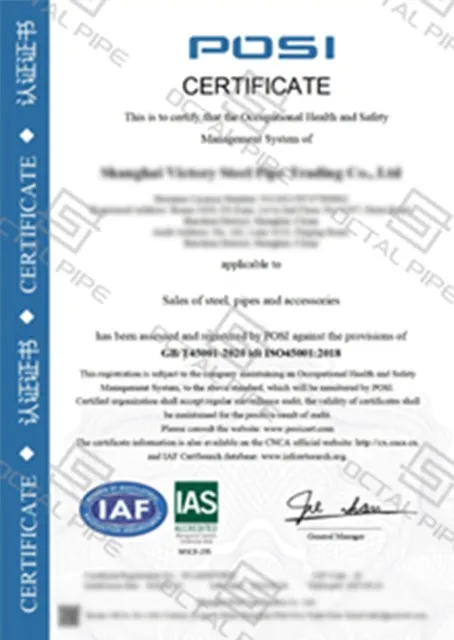
CE Certificate
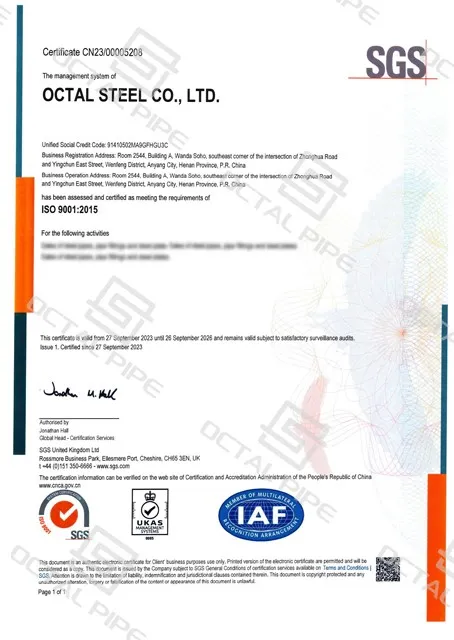
ISO 9001 Certificate

API Q1 Certificate
ABS Certificate
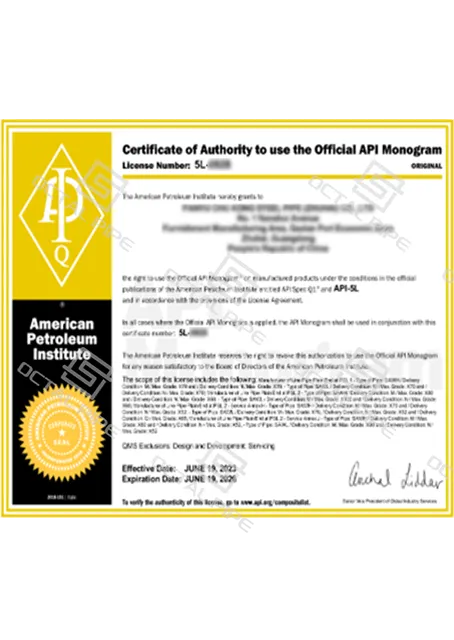
AP-5L Certificate
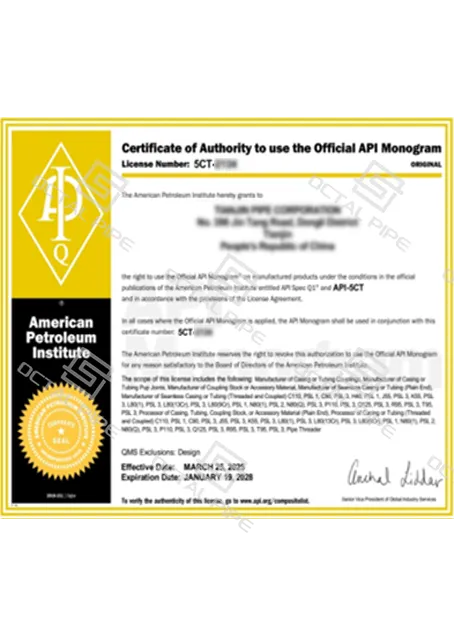
API-5CT Certificate
Product: PE pressure pipe (HDPE), available for water and gas service (per applicable standard)
Material Grades: PE80 / PE100; PE4710 (where specified)
Size Range: IPS/DIPS or metric OD series (typical mains from 2"–24"; larger on request)
SDR / Pressure: Common SDR 11 / SDR 17 / SDR 21 (pressure class per standard, temperature, and design factor)
Length: Straight lengths (typ. 6–12 m) and coils for smaller sizes (on request)
Joining: Butt fusion / Electrofusion (matched to fittings and service)
Standards (Typical): Water-AWWA C906, ASTM D3035 / F714; Gas-ASTM D2513, ISO 4437 / EN 1555 (as applicable)
Hot Tags: hdHDPE Pipe, China hdHDPE Pipe manufacturers, suppliers, factory,polyethylene pipe, ASTM D3035 pipe, AWWA C906 PE, Latin America water pipe, stainless steel hose pipe, galvanized electrical conduit, steel conduit pipe, welded elbow, flex steel hose, metric stainless steel tubing
Previous
Carbon Steel PipeYou Might Also Like



Send Inquiry