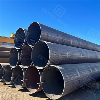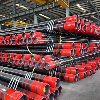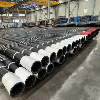
How to ensure the zinc coating thickness meets your project requirements?
For galvanized steel pipe, long-term corrosion protection is driven by zinc coating thickness and coating process. The right galvanizing method should be selected according to the environment where the pipeline will be installed.
For highly corrosive environments – such as offshore platforms, coastal structures or splash zones – we recommend heavy hot-dip galvanizing with coating weights of 500 g/m² and above. This thicker zinc layer offers maximum life in marine atmospheres, offshore jackets, jetty pipelines, pipe racks in refineries and exposed steelwork.
For urban water supply networks, fire protection lines and general industrial pipelines, a standard hot-dip galvanized coating around 300 g/m² is usually sufficient. This level of protection fits most municipal water lines, building services piping, fire sprinkler and hydrant systems, providing good durability at a reasonable cost.
For large-volume, budget-sensitive projects such as temporary works, rural water distribution or light structural framing, pre-galvanized strip (galvanized coil pipe) in the range of 60–150 g/m² can be an economical choice. These galvanized pipes are suitable when design life and exposure are moderate and replacement or redundancy is acceptable.
By matching zinc coating thickness and galvanizing process to the actual corrosion category of your project, you can extend service life, avoid premature failures and keep maintenance costs under control.


How to choose the right galvanized pipe standard for your project?
The standard you select determines wall thickness, mechanical properties and minimum zinc coating weight, and is a key factor in overall project stability and life cycle cost.
For low to medium corrosion environments such as commercial buildings, low-pressure water and gas distribution, fire sprinkler networks and HVAC systems, ASTM A53 galvanized steel pipe is widely used. A typical hot-dip galvanized coating for this standard is around 1.8 oz/ft² (≈0.55 kg/m²), which is sufficient for indoor or mild outdoor exposure.
For water transmission, raw water intake lines, buried water mains and wastewater systems that are continuously exposed to water and soil, AWWA C200 and related waterworks standards are often specified. Here, zinc coatings of 2.0 oz/ft² (≈0.61 kg/m²) or higher are recommended, giving better protection in municipal water pipelines, sewage and wastewater lines, treatment plants and pumping stations.
Depending on your project, we can also work to EN or ISO galvanized pipe standards where specific regional norms or client requirements apply. Our role is to help you select the standard that balances:
- required design life
- environment (indoor/outdoor, soil, marine, industrial)
- pressure and mechanical loading
- installation and maintenance conditions
so that your galvanized steel pipe system remains stable for the entire project life.
How to ensure galvanized pipe quality meets project requirements?
| Stage / Item | What We Check & How | What It Ensures for Your Project |
|---|---|---|
| Base steel verification | Check chemical composition and mechanical properties (yield, tensile, elongation) of the base steel. | Pipe really meets the ordered grade, with enough strength and toughness for the specified pressure and loading. |
| Galvanizing bath & coating weight | Control bath chemistry and temperature; measure zinc thickness with magnetic gauges and, where needed, X-ray fluorescence (XRF). | Uniform, correctly weighted zinc coating inside and outside, not just nominal or uneven galvanizing. |
| Corrosion performance (salt spray) | Perform salt spray tests or accelerated corrosion tests to simulate coastal, industrial or polluted atmospheres. | Proven resistance for building exteriors, pipe racks, exposed pipe bridges and similar environments. |
| Geometry & adhesion | Dimensional checks, flattening / bending tests and adhesion evaluation of the galvanized layer. | Coating that stays bonded during handling, threading, grooving and welding, reducing damage and rework. |
In practical terms, "zinc conforming to ASTM B6" means using high-purity zinc ingots with tightly controlled levels of lead, cadmium, iron and other trace elements. ASTM B6 defines several zinc grades with minimum zinc content and maximum impurity limits to ensure good fluidity in the hot-dip bath, stable coating thickness and strong adhesion to the steel surface. By using only ASTM B6-compliant zinc, the hot-dip galvanized coating provides more predictable corrosion resistance and avoids coating defects that can appear when low-grade or recycled zinc is used.


Post-processing and end finishing after galvanizing
| Post-processing item | What we supply | Main application / benefit |
|---|---|---|
| Threaded galvanized pipe | NPT or BSP threads to American, British or other national standards. | Ready for fire sprinkler, building services, gas distribution and industrial utility piping. |
| Pipe end configuration | Grooved, plain or beveled ends according to project requirements. | Compatible with grooved couplings, welding or flanged connections, making system design more flexible. |
| Surface cleaning after galvanizing | Internal and external cleaning to remove residual flux, ash and loose particles. | Lowers risk of blockage or contamination in water, air and process lines, improving system reliability. |
| Protection during transport | Couplings and plastic end caps on each length, plus proper bundling and stacking methods. | Protects threads and pipe ends during transport and handling, reducing damage, rework and site modification. |
Typical applications – how galvanized pipe protects different sectors
Thanks to its zinc coating and robust steel body, galvanized steel pipe is widely used wherever a balance of strength, cost and corrosion resistance is needed.
Typical application scenarios include:
- Building and construction
External rainwater downpipes, handrails, guard rails, cable supports and light structural members exposed to weather. Galvanized pipe reduces repainting and repair frequency on building envelopes and facades.
- Water and wastewater systems
Potable water distribution, fire mains, irrigation lines and sections of wastewater and sewage networks where moderate corrosion protection is needed. Galvanized pipe is often used in above-ground sections, pump rooms and treatment plants.
- Industrial utility piping
Compressed air, cooling water, low-pressure process water and general service lines in factories and plants. Galvanized steel pipe offers durable protection in industrial atmospheres, workshops and outdoor pipe racks.
- Oil storage and transfer (low-pressure)
Low-pressure fuel oil, diesel and lube oil transfer lines around tanks, loading bays and terminals. Galvanized pipe provides a robust, easy-to-maintain solution for outdoor manifolds, loading arms, pump skids and utility oil systems exposed to humidity and occasional splash.
- Gas distribution and utility networks
Low-pressure natural gas and LPG distribution inside buildings or within plant utility systems, where codes allow galvanized pipe. The zinc coating protects above-ground gas lines, meter runs and indoor pipework from condensation and mild industrial atmospheres.
- Fencing and light structural works
Fence posts, sign posts, scaffolding and temporary structures, especially in rural, agricultural and infrastructure projects, where a durable but economical solution is required.
By selecting the right galvanized pipe specification and coating level for each of these scenarios, you improve system reliability and reduce total maintenance cost.
Why choose us as your galvanized steel pipe supplier
As a specialized galvanized steel pipe supplier, we do more than sell standard catalog items. We help you build a solution around your project:
- Custom zinc coating and process selection
Heavy hot-dip galvanizing for offshore and marine use, standard hot-dip for building and industrial systems, or pre-galvanized coil pipe for large-volume, cost-sensitive work-chosen according to your environment and design life.
- Standards and specifications matched to your sector
We supply galvanized pipe to ASTM A53, AWWA C200 and related standards, with the coating weight, mechanical grade and test scope tailored to waterworks, building services, oil and gas utilities or industrial plants.
- End finishing and processing in one package
Threaded, grooved or beveled galvanized pipe with matching couplings, flanges and fittings can be supplied together, reducing coordination between multiple vendors and making site installation faster.
- Documented quality and technical support
You receive complete test documentation and coating records, along with engineering support on coating selection, standard choice and application scenarios, so your team can justify decisions to owners and consultants.
With our custom galvanized pipe solutions, you can specify exactly what you need for each project-coating thickness, standard, finishing and packaging-and get a package that is ready to install, durable in service and easier to maintain over the long term.
FAQ

Q1: What zinc coating weight (g/m²) should I choose for galvanized steel pipe?
Q2: Hot-dip galvanized vs. pre-galvanized-what's the practical difference?
Q3: What should I verify before buying galvanized steel pipe to avoid quality issues?
Certifications
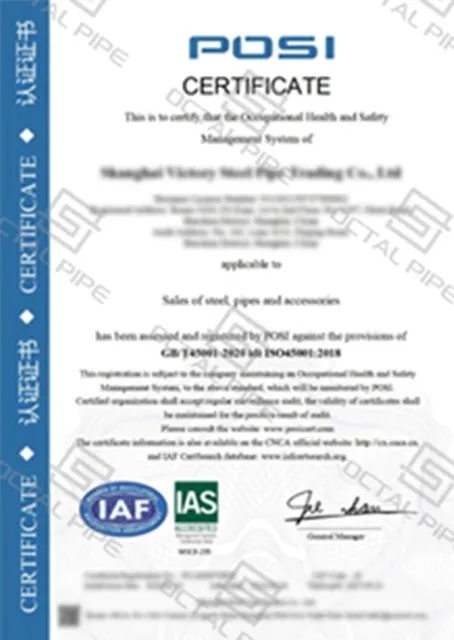
CE Certificate

ISO 9001 Certificate

API Q1 Certificate
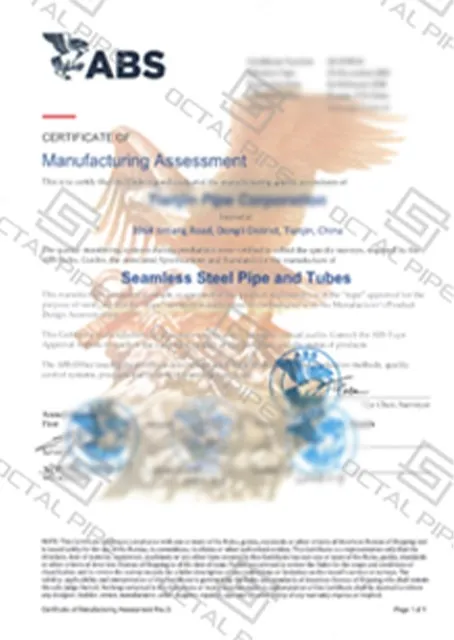
ABS Certificate
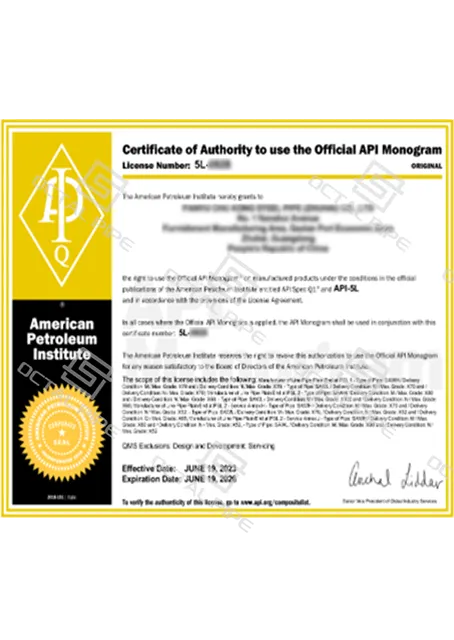
AP-5L Certificate
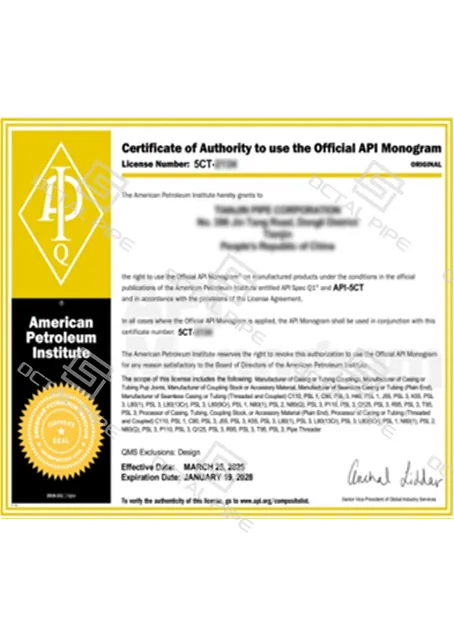
API-5CT Certificate
Our address
Unit 2544, 25/F, Tower A, Wanda Plaza, Wenfeng District, Anyang, Henan, China & Building A, No.18 Dirun Road, Zhengdong New District, Zhengzhou, Henan, China
Phone Number
+8618637271277
+86 372 2157660
info@octalsteel.com