API 5CT Casing & Tubing Connections: When Standard Threads Aren't Enough
On a well schematic, casing and tubing strings look simple: OD, weight, grade, drift. In the field, leaks and integrity problems almost never start in the pipe body – they start at the connections.
API 5CT is the core standard for both casing and tubing: it defines grades, dimensions and the standard thread forms such as STC/LTC/BTC for casing and NUE/EUE for tubing. For many conventional oil wells, these API connections are still the right answer. But in high‑pressure gas wells, HP/HT work, long horizontal sections and heavily cycled wells, the risk center shifts from the steel body to the connection design. That's where special / premium connections come in.

Standard API 5CT Threads – What They Do (and Don't) Guarantee
API 5CT and API 5B define the main thread families for casing and tubing:
Casing
- STC – Short Thread Coupled (short round)
- LTC – Long Thread Coupled (long round)
- BTC – Buttress Thread Coupled
Tubing
- NUE – Non‑Upset End
- EUE – External Upset End
These standard connections are:
- Strong enough (tension, compression, torque) for many land and conventional wells
- Cost‑effective and widely available
- Familiar to rig crews, with a full ecosystem of compatible accessories
But there are two uncomfortable truths:
- API round threads (STC/LTC) were not designed to be perfectly gas‑tight at high pressure; they rely heavily on thread compound and interference.
- Even BTC prioritizes structural capacity first and gas‑tightness second.
For moderate pressures, mostly liquid service and relatively simple trajectories, this is acceptable. As pressure, gas fraction, temperature and deviation go up, "good enough" on the connection side starts to look more like "design margin eroded."


When Premium / Special Connections Become a Casing and Tubing Issue
Once wells move beyond the conventional envelope, it's no longer just about upgrading casing connections. Tubing can become a critical leak path and fatigue hotspot as well.
Premium or special connections are usually considered when some of the following are true:
- High‑pressure gas wells where any sustained casing pressure is a serious concern
- HP/HT and deepwater wells with high combined burst, collapse and tension loads
- Extended‑reach and highly deviated wells with significant bending and dogleg severity
- Gas storage, CO₂ injection and disposal wells with frequent pressure cycling
- Severe sour service, where crack initiation and growth at the thread root must be tightly controlled
- Well designs that explicitly require connection performance to match or exceed pipe body ratings
In these wells, staying with STC/LTC/BTC and NUE/EUE doesn't automatically mean "unsafe" – but it does mean the connection performance envelope sits much closer to the design envelope. Any variation in torque, surface treatment, make‑up practice or operating conditions can push the system into trouble.
What Makes a Premium Connection Different?
Premium / special connections sit on API 5CT pipe bodies, but they change how the joint seals and carries load. Most share a few key features:
Metal‑to‑metal seals
Instead of relying solely on thread compound, premium designs include one or more metal‑to‑metal seal areas that generate high contact stress at make‑up torque. This allows them to maintain gas‑tight performance under pressure and temperature cycling.
Torque shoulder
A defined torque shoulder gives a positive stop at the end of make‑up. That improves torque control, reduces the risk of over‑torque damage, and increases bending and torsional capacity in deviated and ERD wells.
Optimized thread geometry
Re‑engineered thread forms reduce stress concentration and distribute load across more engaged thread flanks. That improves fatigue performance where the string sees rotation, bending and repeated pressure changes.
Flush and semi‑flush options
Where OD growth is critical – near liner tops, tie‑back points or tight restrictions – flush or semi‑flush connections maintain a controlled OD while still providing strength and sealing.
Full‑scale qualification
Modern premium connections are typically qualified using ISO 13679 / API RP 5C5 or similar full‑scale tests, covering combined loads, cycling and, in many cases, bending. That gives a realistic picture of how the connection behaves under field‑like envelopes, not just single‑axis tests.
These advantages matter on both casing and tubing:
- For casing, the focus is overall structural integrity and long‑term gas‑tightness.
- For tubing, you add workover cycles, stimulation, well control operations and frequent pressure changes on top.
Turning Premium Connections into Part of the Well Design
Once the well design calls for premium connections, the task is no longer "buying a special thread." It's integrating those connections into the entire OCTG design and QA chain.
A practical engineering checklist usually includes:
Define the operating envelope clearly
- Maximum and minimum pressures and temperatures for each string
- Required gas‑tightness and allowable sustained casing pressure
- Expected dogleg severity and any planned rotation under load
- Workover and stimulation plans that introduce additional cycles
Specify connection qualification requirements
- Required ISO 13679 / API RP 5C5 test level (for example, CAL IV for severe HP/HT service)
- Load envelopes to be covered (combined tension, compression, internal / external pressure, bending if relevant)
- Any sour‑service or corrosion testing needed beyond base pipe requirements
Align pipe body and connection performance
- Confirm that tensile, burst and collapse performance of the connection meets or exceeds the selected pipe body grade and wall thickness
- For high‑collapse designs, check that the connection doesn't become the weak section in collapse
Plan inspection, make‑up and documentation up front
- Define thread gauging and visual inspection procedures at the threading facility
- Specify make‑up torque windows and monitoring requirements for both casing and tubing
- Plan how MTCs, connection qualification data, torque charts and running manuals will be captured in the OCTG data book and well files
Treating premium connections as part of the design – not an afterthought – is what prevents arguments later at the rig or during regulatory review.

Don't Forget the Tubing String
Many operators have already moved production casing to premium, gas‑tight connections, but still run standard EUE/NUE tubing. In higher‑risk wells, this shifts the weak link from casing to tubing.
Situations where premium tubing connections are often justified include:
- Gas wells and high‑GOR oil wells where long‑term tubing gas‑tightness matters and annulus pressure must be tightly controlled
- Tubing strings expected to see repeated fracturing, acidizing, well clean‑outs and other heavy interventions
- Extended‑reach and horizontal wells, where tubing experiences significant bending, vibration and rotation during running and production
- Sour or high‑CO₂ environments where the connection root is a likely site for stress corrosion cracking
For these wells, tubing with premium connections – featuring a torque shoulder, metal seal and optimized thread geometry – can significantly reduce the risk of leaks and fatigue failures at the joints, and give operations teams more confidence when cycling pressure or conducting heavy interventions.
Integrating Special Connections into a Coherent OCTG Program
Premium and special connections deliver the most value when they're treated as part of a complete API 5CT casing and tubing program, not one‑off upgrades. That typically means:
- Planning by well or pad: defining which intervals need premium connections and which can safely stay with standard API threads
- Keeping connection families as consistent as possible within a string or field, to simplify procedures, spares and crew training
- Checking compatibility for all accessories – pup joints, crossovers, liner hangers, packers, safety valves and other completion hardware
- Cleaning up yard logistics with clear color coding, marking and tallies so that mismatched connections don't reach the rig floor
Handled this way, premium connections are not just a "special product name" in a string list, but a clearly defined part of the well integrity strategy.
Quick Q&A: API 5CT and Premium Connections
Q1: What types of wells typically require premium (special) connections?
A1: HP gas wells, HPHT/deepwater wells, ERD/high-deviation wells, pressure-cycling wells (gas storage/CO₂ injection), and severe sour service.
Q2: What makes a premium connection more gas-tight than standard API threads?
A2: Metal-to-metal seals and controlled make-up (torque shoulder) help maintain leak resistance under temperature/pressure cycling.
Q3: What should I request to verify premium connection performance before purchase?
A3: ISO 13679 or API RP 5C5 qualification, plus torque charts/running manual, thread gauging records, and MTC/inspection documents.
Contact Us
For inquiries or more information, feel free to reach out to us. Our team is ready to assist you.
-
Phone: +86 186 3827 1277 / +86 372 2157660
-
Email: info@octalsteel.com
-
Address: Unit 2544, 25/F, Tower A, Wanda Plaza, Wenfeng District, Anyang, Henan, China & Building A, No.18 Dirun Road, Zhengdong New District, Zhengzhou, Henan, China

Certifications
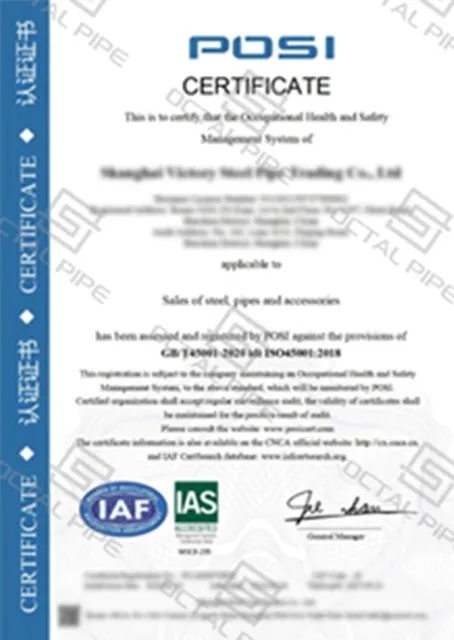
CE Certificate

ISO 9001 Certificate

API Q1 Certificate
ABS Certificate
AP-5L Certificate
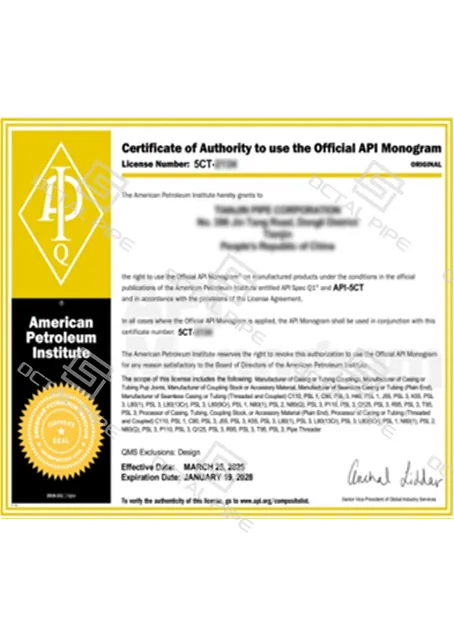
API-5CT Certificate