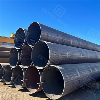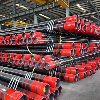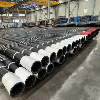
Today's a common "buy wrong / run wrong / rework later" topic on site: Casing vs. Slotted Casing Extension vs. Perforated Pipe-what's the real difference?
You've probably heard these before:
- It's all just pipe with openings, right?
- Slots and holes both let fluids in-either one works.
- Let's just run a slotted casing extension there and save time later.
They sound reasonable, but this is exactly where costly mistakes start. These three may look similar, but they are built for different jobs. Treat them as the same item and you may end up with sanding, plugging, run-in issues, or the procurement nightmare-documents and acceptance not matching what the project requires.
Let's be clear about what each one is for
- Casing: the "backbone" of the well. Structural support, pressure integrity, zonal isolation, and the cementing basis. It is not designed primarily as an inflow component.
- Slotted Casing Extension (Slotted Liner/Extension): an inflow path with limited sand retention. The key variables are slot width and slot pattern.
- Perforated Pipe (Perforated Liner): an inflow path through holes. The key variables are hole diameter, hole pitch/pattern, and open area; sand control typically relies on the overall completion strategy, not the perforated pipe alone.
A Table Gives the Conclusion: What Each One Solves
| Item | Casing | Slotted Casing Extension (Slotted Liner/Extension) | Perforated Pipe (Perforated Liner) |
|---|---|---|---|
| Primary function | Wellbore structural support, zonal isolation, pressure containment, cementing basis | Provides inflow while using slot size to "hold back" some sand (limited sand control) | Provides inflow through holes; can simplify completion or enable localized inflow |
| Typical location | Full well sections / casing strings by interval | Often used across openhole/barefoot intervals as liner/extension | Used across specific inflow intervals; sometimes considered as an alternative inflow component |
| Inflow control | Typically depends on later perforating/completion tools | Influenced by slot width + slot pattern + open area | Influenced by hole diameter + hole pitch/pattern + open area |
| Sand control | None by itself | Limited; depends on matching slot width to formation sand | Generally weaker than slots at similar open area; often needs additional measures |
| Main risks | Isolation failure / integrity and acceptance issues | Wrong slot width → plugging or sanding; slot burrs/edges → run-in issues and pressure loss | Poor hole design → sanding/erosion; hole burrs/edges → run-in issues |
| Completion logic | Integrity and acceptance driven | Inflow + light sand retention driven | Inflow pathway design driven |
Key note: In cased-hole applications, relying on a screen/slotted section as the only sand-control measure can be higher risk, because annulus/perforations may fill with sand and reduce productivity; evaluate it within the full completion plan.
Why they may all "let fluids in," but field results differ?
1. Because opening type (holes vs. slots) changes three things: plugging vs. sanding sensitivity, erosion life, and run-in risk.
- Plugging vs. sanding: wrong opening size causes opposite failures
- Slot width/hole diameter too small: higher plugging risk, higher pressure drop, declining productivity (sometimes it starts "fine" and degrades over time).
Too large: higher sanding risk, downstream erosion, and damage to valves/manifolds and other equipment.
Slots are often chosen for "light sand retention" because slot width can act like a filtration scale. But it's still "light" sand control, not a complete sand-control system.
2. Erosion: edges are the weak points
At high rates with solids and high drawdown, both slot edges and hole edges can erode. Higher open area is not automatically better. Erosion life and edge quality (deburring, edge finishing, cleaning) should be reviewed together with the inflow design.
3. Run-in risk: many "can't run it in" issues come from poor machining control
If burrs, deformation, or cleaning are not controlled after slotting/perforating, you can see:
- hang-ups during run-in
- drift/ID failures
- local deformation restricting subsequent tools
That's why good projects don't only ask for "opening parameters." They also ask for acceptance records (drift/ID checks, dimensional reports) and how the openings were finished. For Octal Pipe projects, these items are typically aligned early-opening dimensions and layout, edge finishing, drift/dimension records, and a matched documentation package-so the site does not end up fixing preventable issues.


The three most common selection mistakes
Scenario A: You think you need sand control, but you only need inflow
If the formation is not prone to sanding, selecting slots "for sand control" can increase plugging risk and pressure loss. In many cases, a perforated design is sufficient and simpler to specify (hole diameter, pitch, open interval length).
Scenario B: You expect holes/slots alone to solve sand control, but the completion has no backup
If sanding is likely (high rates, high drawdown, significant solids), relying on holes or slots alone can be risky. Whether you need screens, gravel pack, or other sand-control systems is a system-level decision, not just "slots vs. holes."
Scenario C: You underestimate acceptance and documentation
With EPC/TPI/export requirements, issues often appear at documentation and acceptance gates:
- RFQ calls for 3.1/3.2, NDT, test records, but the supplier can't deliver complete sets
- You need an MDR/Data Book, but only receive a basic MTC
- You need opening size/layout records, but only get verbal confirmation
This is where schedules slip. Octal Pipe commonly starts by aligning a clear document list (what ships by default, what is optional, what needs third-party witness) to reduce acceptance uncertainty early.
To quickly converge on slots vs. holes, prepare
- Completion type: openhole or cased-hole; will there be perforating elsewhere?
- Formation: sand size distribution, fines content, sanding history
- Rate and drawdown: target rate and expected pressure drop range
- Service: media, temperature, CO2/H2S, solids loading
- Priority: maximize inflow / minimize sanding / maximize life
- Pipe basics: OD, wall thickness, grade, connection, lengths
- Opening design: slot width or hole diameter, pattern/pitch, open interval length, target open area
- Acceptance & docs: drift/ID report, deburring requirement, NDT, tests, 3.1/3.2, MDR/Data Book, TPI witness if required
Common Questions
Q1: Is a slotted liner the same as a screen?
Not exactly. A slotted liner uses machined slots; "screen" often refers to more specialized sand-control designs. Slots can be a lighter inflow/sand-retention option, while screens are usually part of a dedicated sand-control strategy.
Q2: Is more open area always better?
Not always. More openings can increase erosion risk, reduce local strength, and raise sensitivity to plugging or sanding. The right size and pattern depend on formation and operating conditions.
Q3: In cased-hole, can I rely on slots/holes as the only sand control?
Be cautious. Cased-hole behavior also depends on perforations, annulus conditions, and sand deposition. It's often safer to evaluate slots/holes as part of the overall completion and sand-control plan.
Final Note
Don't start with "slots or holes." Start with the real objective for that interval: integrity/isolation, inflow, or sand control. Once the objective is clear, selection becomes faster-and if the interval must pass strict acceptance, define the opening parameters and the documentation package at the same time.
Certifications
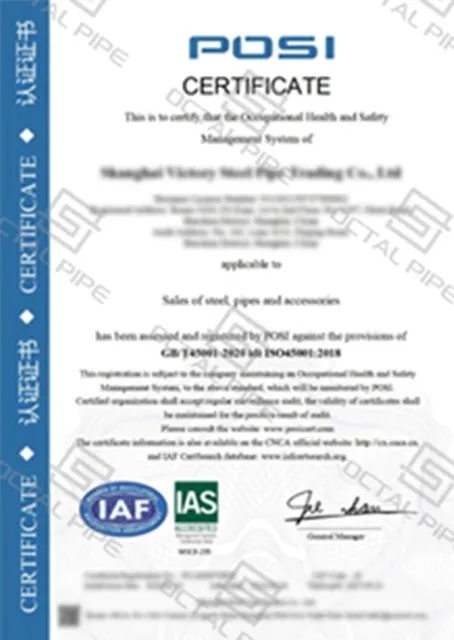
CE Certificate

ISO 9001 Certificate

API Q1 Certificate
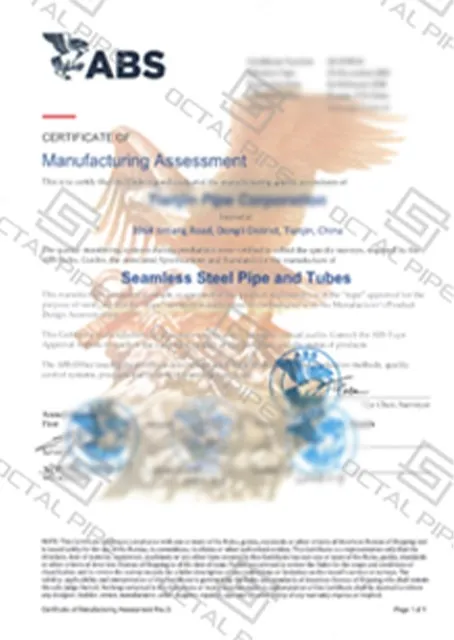
ABS Certificate
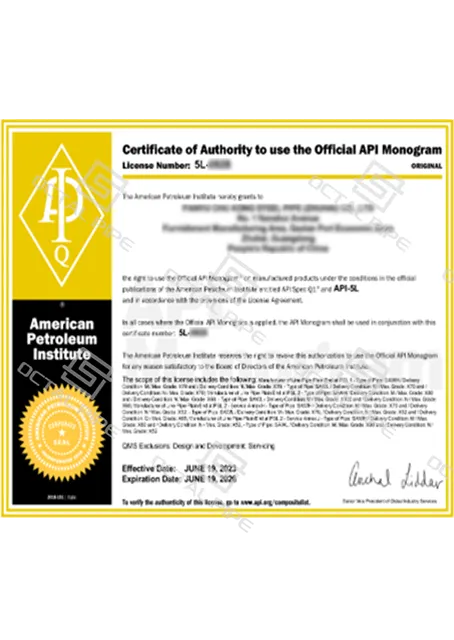
AP-5L Certificate
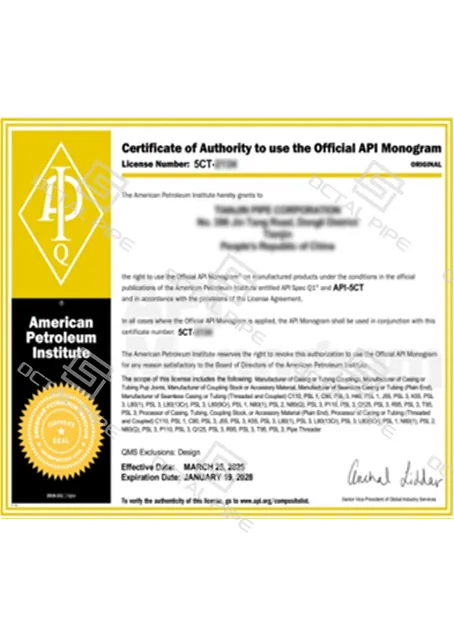
API-5CT Certificate