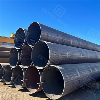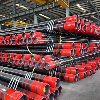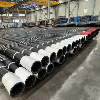
In pressure piping projects, this specification often shows up where delivery is not only about producing pipe, but about passing inspection with a complete, review-ready evidence package. Large OD, heavy wall, sensitive pressure boundaries, and strict hold points make two things decisive: whether quality can be reproduced consistently, and whether documentation can pass review on the first submission.
What the standard controls
This specification covers welded steel pipe produced from pressure-vessel-quality plate, intended for high-pressure service at moderate temperatures. In practice, it functions as a delivery framework:
- The base material must fall within permitted plate systems, with traceability maintained end-to-end
- Manufacturing and welding must be controllable, inspectable, and recordable
- Delivery condition, inspection, and testing combinations must be definable at the purchase order level
Treating it only as a "welded pipe standard" misses the point. Its project value is in locking the acceptance route into executable requirements.
How to read the grade system
Grades are commonly written as a letter plus a number. In project work, the most practical interpretation is:
- The letter is used to identify the plate system or series
- The number is used as a strength-level marker
This is why grade selection is not only a strength discussion. It anchors the material basis so heat treatment, inspection scope, and traceability can be executed under one consistent boundary. Large performance swings between lots are more often caused by unclear material and acceptance boundaries than by welding alone.
Why class often determines the acceptance route
A frequent project mistake is to specify grade carefully while treating class as a secondary detail. In reality, class often acts as the acceptance switch, especially under TPI or owner hold-point review.
Class commonly drives three linked items:
- Heat treatment condition, including how it must be recorded and evidenced
- Weld inspection scope, including whether radiography or other NDE is required and how coverage is defined
- Pressure testing requirements and how results must appear in the deliverable package
When grade is specified but class is not clearly aligned, the typical failure mode is not that pipe cannot be produced. The failure mode is scope mismatch at inspection: RT coverage, heat treatment records, hydrotest records, and dossier structure do not align with what the project expects.
Where variation usually starts in manufacturing
For welded pressure pipe, variation is most commonly amplified in two areas: upstream plate processing and closing-line geometry stability. These steps determine whether welding operates within a stable window or becomes dependent on constant adjustment.
Many supply chains start from coil, then convert to formable plate sections through secondary processing:
- Leveling and shape control to stabilize forming geometry
- Cut-to-length and width consistency to stabilize closing alignment
- Edge machining and bevel consistency to stabilize root gap and fit-up behavior
- Early removal of edge defects and burrs to reduce repair volatility later
Closing-line geometry is the precondition for stable welding. When mismatch, alignment, and root gap are stable, weld shape is more predictable and NDE repair volatility typically decreases.


Inspection and testing depend on scope alignment
Project acceptance usually runs on two tracks in parallel:
Physical track
- Dimensions and end condition
- Weld seam condition and geometry
- Required test results
Evidence track
- Traceability mapping from plate/coil/section to finished pipe
- Weld seam NDE records and reports
- Heat treatment records and batch linkage when applicable
- Hydrotest records when applicable
- Dossier index logic and document-number consistency
Many delays are not caused by missing a report, but by scope mismatch: what the purchase order requires, what production executes, and what the reports actually demonstrate are not aligned.
Minimum purchase order boundary that prevents rework
To avoid repeated clarifications late in the schedule, purchase orders typically need to lock the acceptance boundary with at least:
- Standard and any project-defined version boundary
- Grade and class
- OD, wall thickness, length, and tolerance boundary
- End finish and bevel requirements
- Seam inspection method, coverage definition, acceptance criteria, and repair rules
- Hydrotest requirement and record format
- Heat treatment requirement and record format
- Documentation package requirements: dossier index, traceability mapping, report list, and submission format
When these fields are complete, manufacturing and inspection can follow one consistent boundary from day one. When they are incomplete, the most common impact is not production failure, but documentation and scope rework.
Why the dossier becomes a second deliverable
In strict projects, the deliverable is effectively two products: the pipe and the dossier. The priority is not volume of documents, but stable structure and consistent mapping.
A typical dossier structure is built around four information blocks:
- Material and traceability mapping
- Seam inspection: NDE records, scope coverage, and repair closure
- Heat treatment and testing: records linked to the correct batch and item, when applicable
- Dimensional reporting: key-point data and report consistency
For Octal Pipe deliveries in similar projects, traceability mapping, seam inspection, key dimensional data, and required heat treatment/testing records are commonly organized into a consistent dossier directory logic, so each report directly maps to item marking and batch information and review loops are reduced.
FAQ
Certifications
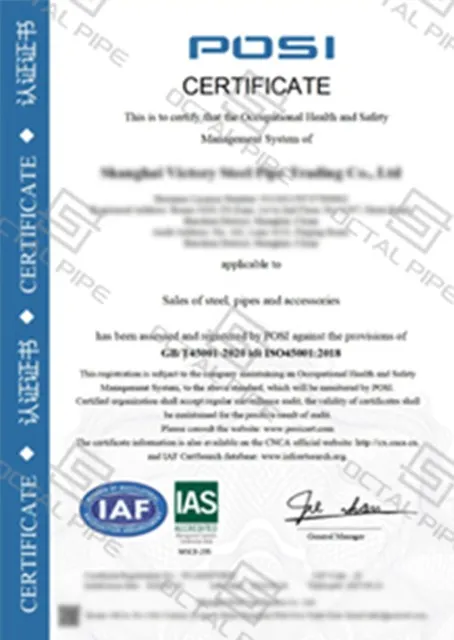
CE Certificate
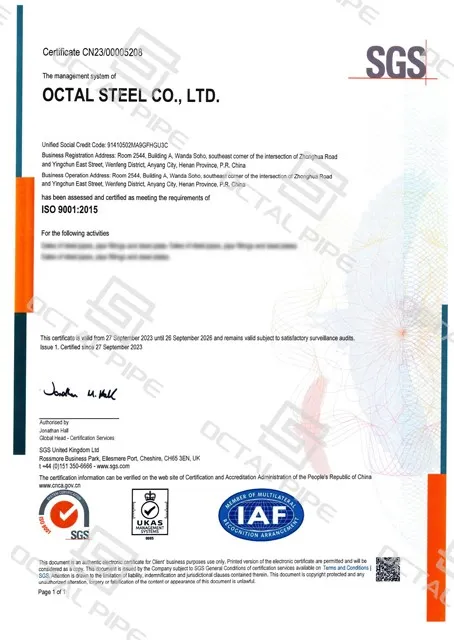
ISO 9001 Certificate
API Q1 Certificate
ABS Certificate
AP-5L Certificate
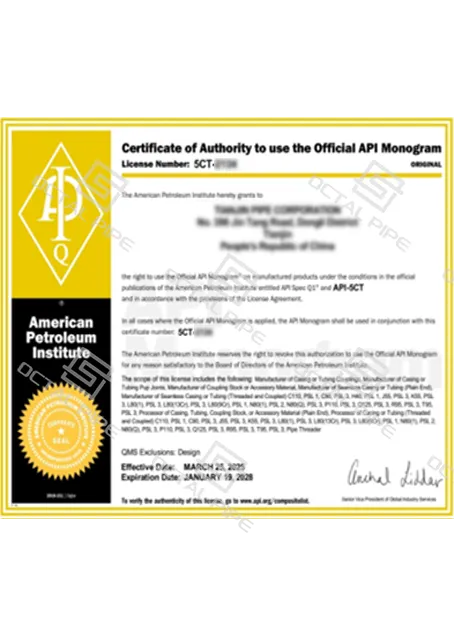
API-5CT Certificate