




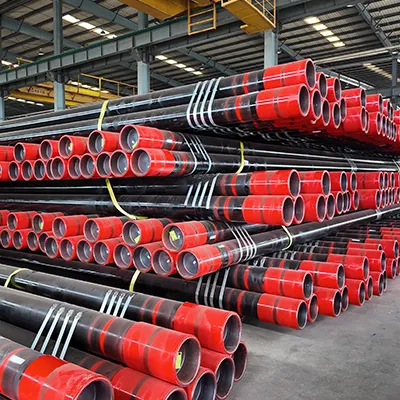
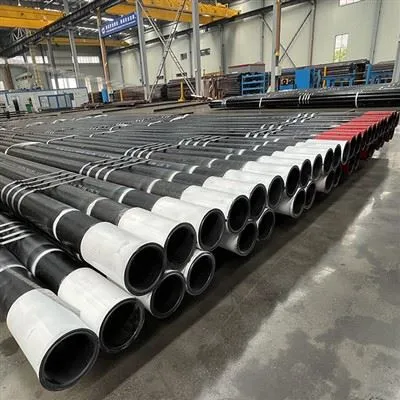
High Collapse(HC) Casing
Size Range: 4 1/2"–20"
Length: R2 / R3
Connections: BTC, LTC, STC, Premium
Application: Deep wells, depleted reservoirs, salt formations, HPHT wells, and high mud weight drilling
Advantage: Helps reduce ovalization, inward deformation, and collapse failure under severe well conditions
What Is High Collapse Casing?
High Collapse Casing, also called HC casing, is designed for wells where regular casing may not provide enough resistance to external collapse pressure. Its main function is to keep the casing body stable under severe well conditions and reduce the risk of ovalization, inward deformation and collapse failure.It is usually produced from selected API 5CT casing grades such as N80, L80, P110 or Q125, with controlled steel chemistry, proper heat treatment, uniform wall thickness and tighter ovality control to improve collapse resistance.
Compared with regular casing of the same grade, High Collapse Casing is ordered for verified collapse performance, not only for strength level. It helps the pipe body remain stable under deep-well pressure, depleted reservoir conditions, salt formations and high-pressure drilling sections, reducing the risk of ovalization, inward deformation and collapse failure.
Chemical Composition of High Collapse Casing
High Collapse Casing is not defined by one fixed chemical formula. It is usually produced from selected API 5CT casing grades such as N80 HC, L80 HC, P110 HC or Q125 HC. The chemical composition depends on the selected base grade, while the final collapse performance also depends on heat treatment, wall-thickness uniformity, ovality control and verified collapse rating.
| Grade / Route | Typical Chemical Composition, Mass Fraction % | Buyer Meaning |
|---|---|---|
| N80 HC / N80Q HC | P ≤ 0.030%, S ≤ 0.030%; other elements are reported in product analysis. | Practical choice for medium-depth wells where standard N80 collapse margin is not enough. |
| L80 Type 1 HC | C ≤ 0.43%, Mn ≤ 1.90%, Ni ≤ 0.25%, Cu ≤ 0.35%, P ≤ 0.030%, S ≤ 0.030%, Si ≤ 0.45%. | Used when collapse resistance and controlled mechanical properties are both required. |
| L80 13Cr HC | C 0.15–0.22%, Mn 0.25–1.00%, Cr 12.00–14.00%, Ni ≤ 0.50%, Cu ≤ 0.25%, P ≤ 0.020%, S ≤ 0.010%, Si ≤ 1.00%. | Better option when corrosion resistance is also part of the casing selection. |
| P110 HC | P ≤ 0.030%, S ≤ 0.030% for common seamless route; for EW P110, P ≤ 0.020%, S ≤ 0.010%. | Common high-strength HC route for deep wells and high external-pressure sections. |
| Q125 HC Type 1 | C ≤ 0.35%, Mn ≤ 1.35%, Mo ≤ 0.85%, Cr ≤ 1.50%, Ni ≤ 0.99%, P ≤ 0.020%, S ≤ 0.010%. | Used for severe high-load wells or ultra-deep sections requiring very high collapse performance. |
Why High Collapse Resistance Matters
Collapse failure happens when the external pressure acting on the casing is higher than the pipe body can safely resist. This pressure difference may come from formation pressure, cementing conditions, high mud weight, reservoir depletion, salt creep or pressure changes during drilling and production.
In the field, collapse risk is often related to these conditions:
| Well Condition | Collapse Risk |
|---|---|
| Deep wells | Higher external pressure and mud-column pressure increase casing collapse load |
| Depleted reservoirs | Internal pressure may reduce while external pressure remains high, increasing differential pressure |
| Salt formations | Salt creep can apply long-term, non-uniform external load on casing |
| HPHT wells | Pressure and temperature changes can increase casing load instability |
| High mud weight drilling | Heavy drilling fluid can create high external pressure on the casing body |
| Cementing and pressure-test stages | Temporary pressure imbalance may expose casing to higher collapse load |
The purpose of High Collapse Casing is to provide a safer pipe-body margin in these conditions, especially where a casing failure would cause expensive workover, well control problems or delayed completion.
High Collapse Casing vs Regular API 5CT Casing

| Item | Regular API 5CT Casing | High Collapse Casing |
|---|---|---|
| Main function | Wellbore support, cementing barrier and zonal isolation | Higher resistance to external collapse pressure |
| Key performance | Collapse, burst, tensile strength and connection performance | Enhanced collapse rating and tighter pipe-body control |
| Typical grades | J55, K55, N80, L80, P110, Q125 | N80 HC, L80 HC, P110 HC, Q125 HC or project-specific HC grades |
| Main risk controlled | General well integrity | Pipe ovalization, inward deformation and collapse failure |
| Typical wells | Conventional shallow or medium-depth wells | Deep wells, depleted reservoirs, salt formations, HPHT and high external-pressure sections |
| Buyer focus | Size, weight, grade, length and connection | Collapse rating, wall uniformity, ovality, heat treatment, NDT and traceability |
A buyer should not judge HC casing only by the grade name. For example, P110 casing and P110 High Collapse Casing may have the same base grade, but the high collapse product should be controlled around collapse performance and dimensional stability.
What Makes High Collapse Casing More Resistant to Collapse?
| Control Item | Why It Matters | Buyer Review Point |
|---|---|---|
| Wall Thickness Uniformity | Uniform wall thickness helps reduce local weak points under high external pressure. Thin-wall areas can lower collapse resistance. | Review wall-thickness inspection records, especially for heavy-wall casing and deep-well strings. |
| Ovality and Roundness Control | Excessive ovality makes casing more likely to deform under external pressure. Collapse often starts from the weakest geometry point. | Check OD, roundness and ovality records, not only nominal size and weight. |
| Stable Yield Strength | Higher strength helps, but stable yield strength is also critical for predictable collapse performance. | Review mechanical test results by heat/lot and compare them with the required grade route. |
| Heat Treatment Discipline | Grades such as P110 and Q125 depend on controlled heat treatment to achieve stable strength and toughness. | Check heat-treatment consistency together with MTC values, not only the final grade marking. |
| Inspection and Traceability | Collapse resistance is more reliable when dimensional records, NDT, hydrotest, drift test, thread inspection and MTC are complete. | Ensure the final document package connects each casing joint to heat number, lot and inspection records. |
Download:what makes high collapse casing more resistant to collapse-octal steel
High Collapse Casing gains its collapse resistance from a complete pipe-body control system, not only from a higher steel grade. Wall thickness uniformity, ovality and roundness control, stable yield strength, disciplined heat treatment, and a traceable inspection package all work together to improve resistance against external pressure. For buyers, this means the review should not stop at N80 HC, L80 HC, P110 HC or Q125 HC; the order should also verify dimensional records, mechanical test results, NDT reports, hydrostatic test records, MTC and heat/lot traceability before shipment release.

Typical High Collapse Casing Grades
| Grade Route | Typical Selection Logic |
|---|---|
| N80 HC | Used where medium-depth wells require better collapse resistance than standard N80 casing |
| L80 HC | Used where collapse resistance is needed together with controlled mechanical properties; sour-service requirements should be checked separately |
| P110 HC | Commonly selected for deep wells, high-pressure sections and production casing requiring higher collapse margin |
| Q125 HC | Used for severe high-load wells, ultra-deep sections or projects requiring very high strength and collapse performance |
The final grade should be selected by well depth, external pressure, internal pressure, mud weight, temperature, connection type and required collapse rating. Grade name alone is not enough for safe specification.
Typical Supply Range
| Item | Common Supply Information |
|---|---|
| Standard | API 5CT / ISO 11960 |
| Common Grades | N80 HC, L80 HC, P110 HC, Q125 HC, project-specific HC grades |
| OD Range | Common API casing sizes from 4 1/2" to 20" |
| Length Range | R1, R2, R3 according to project requirement |
| Connections | STC, LTC, BTC and premium connections |
| Manufacturing Route | Seamless casing is commonly preferred for severe high-collapse sections |
| Heat Treatment | Normalized, quenched and tempered, or as required by grade and project specification |
| Inspection | Dimensional inspection, wall-thickness check, NDT, hydrostatic test, drift test, thread inspection |
| Documents | MTC, heat number traceability, mechanical test records, NDT records, packing list, third-party inspection if required |


Applications of High Collapse Casing

The diagram shows typical well conditions where High Collapse Casing is selected to improve pipe-body stability under high external pressure. It is commonly used in deep production wells, depleted reservoirs, salt formation sections, HPHT and high mud weight wells, and offshore wells where casing collapse could lead to difficult repair work and high intervention cost.
In these applications, the main purpose of HC casing is to reduce the risk of ovalization, inward deformation and collapse failure, helping the casing string maintain reliable well integrity during drilling, cementing and long-term production.
Buyer Checklist for High Collapse Casing
| RFQ Item | Why It Matters |
|---|---|
| Required collapse rating | The core performance requirement for HC casing |
| Standard and grade | Confirms the API 5CT / ISO 11960 basis and material route |
| OD, weight and wall thickness | Directly influence collapse capacity and running design |
| Length range | R2 or R3 affects connection count and running efficiency |
| Connection type | BTC, LTC or premium connection must match torque, sealing and load requirements |
| Manufacturing route | Seamless casing is often preferred for severe collapse conditions |
| Heat treatment | Controls strength, toughness and pipe-body consistency |
| Ovality and wall-thickness control | Critical for collapse resistance |
| Drift test | Confirms internal clearance for tools and completion equipment |
| NDT and hydrotest | Supports pipe-body integrity before shipment |
| Thread inspection | Reduces make-up problems and connection-related rejection |
| MTC and traceability | Links chemistry, mechanical properties, heat number and inspection records |
| Third-party inspection | Useful for critical wells or operator-specified projects |
Download:Buyer Checklist for High Collapse Casing
Octal Supply and Quality Control
Octal Pipe supplies casing for oil and gas drilling projects where collapse resistance, connection reliability and document traceability must be controlled before shipment. For High Collapse Casing orders, the supply review can cover size, weight, grade route, required collapse rating, connection type, inspection scope and export packing requirements.
For project handover, the document package can include MTC, heat number traceability, dimensional inspection, NDT records, hydrostatic test records, drift test records, thread inspection records, packing list and third-party inspection report when required by the buyer.
FAQ

1. What is High Collapse Casing used for?
2. What causes casing collapse in oil and gas wells?
3. What is casing collapse pressure?
4. What documents should buyers request for High Collapse Casing?
| Item | Details |
|---|---|
| Grades | N80 HC, L80 HC, P110 HC, Q125 HC |
| Size Range | 4 1/2"–20" |
| Length | R2 / R3 |
| Connections | BTC, LTC, STC, Premium |
| Application | Deep wells, depleted reservoirs, salt formations, HPHT wells, and high mud weight drilling |
| Advantage | Helps reduce ovalization, inward deformation, and collapse failure under severe well conditions |
Hot Tags: high collapse(hc) casing, China high collapse(hc) casing manufacturers, suppliers, factory, well casing pipe steel, glow tubing, apollo casing pipe, submersible casing pipe, 2 well casing, copper pipe with insulation
Previous
Casing PipeYou Might Also Like


Send Inquiry