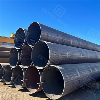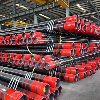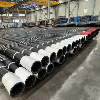
Polyurethane insulation pipes are insulated pipe assemblies used to reduce heat loss or temperature gain in thermal pipeline systems. They are also known as polyurethane insulated pipe, PU insulated pipe, polyurethane foam insulated pipe, or pre-insulated steel pipe, depending on the application and regional terminology. In heating, cooling, and buried utility networks, their performance is not determined by the foam layer alone. The service pipe, polyurethane foam quality, HDPE outer casing, bonding condition, joint sealing, operating temperature, and installation environment all affect long-term reliability. Their main advantages are low thermal conductivity, stable insulation performance, and good suitability for direct buried heating or cooling networks. Their main limitations usually appear around field joint sealing, water ingress risk, temperature range, and repair difficulty after burial.
In district heating applications, EN 253 pre-insulated pipe systems are a common technical reference. The standard describes factory-made pipe assemblies for directly buried hot water networks, typically consisting of a steel service pipe, rigid polyurethane foam insulation, and an outer polyethylene casing. Standard references for EN 253-type systems also indicate continuous hot water service up to 120°C and occasional peak temperature up to 140°C, depending on system design and standard edition.
What Are Polyurethane Insulation Pipes?
A polyurethane insulation pipe is usually a pipe-in-pipe structure. The inner pipe carries the medium, the polyurethane foam layer provides thermal insulation, and the outer jacket protects the insulation from soil, moisture, transportation damage, and mechanical contact.
| Component | Main Function | Technical Notes |
|---|---|---|
| Service pipe | Carries hot water, chilled water, oil, gas, or process medium | Commonly carbon steel for heating networks; material depends on pressure, temperature, corrosion, and medium |
| Polyurethane foam insulation | Reduces heat transfer between the pipe and the environment | Foam density, cell structure, bonding, and void control affect insulation performance |
| Outer casing / jacket | Protects the insulation layer from moisture and mechanical damage | HDPE or polyethylene casing is common for direct buried insulated pipe systems |
| Field joint system | Connects adjacent insulated pipe sections after welding or assembly | Joint sealing is one of the most important reliability points |
| Monitoring wires | Detect moisture ingress or system faults in some district heating pipe networks | Common in many pre-insulated district heating systems |
Download:Polyurethane Insulation PipeTechnical Data & Application Guide
For pre-insulated district heating systems, related standards may also include fittings, valves, and field joints. EN 448 covers factory-made insulated fitting assemblies such as bends, tees, reducers, compensators, and anchors; EN 489 covers joint assemblies made between adjacent pre-insulated pipes, fittings, or valves in buried hot water networks.


Advantages of Polyurethane Insulation Pipes
1. Low Thermal Conductivity and Reduced Heat Loss
The main advantage of polyurethane insulation pipes is their low heat transfer rate. Rigid polyurethane foam has a closed-cell structure, which helps reduce heat loss in pipelines carrying hot water and helps reduce temperature gain in chilled water systems. This is why PU foam insulation pipe is widely used in district heating, chilled water networks, and other thermal pipeline systems.For chilled water lines, the same insulation layer also helps reduce temperature gain and condensation risk when vapor sealing is properly controlled.
Specific thermal conductivity values depend on the foam formulation, density, test temperature, aging condition, and production process. Some EN 253 pre-insulated pipe product references list PUR foam thermal conductivity around λ50 = 0.0260–0.027 W/(m·K), but this should be treated as product-specific data rather than a universal value for every polyurethane foam insulated pipe.
This low thermal conductivity helps in several ways:
- reduces temperature drop in long hot water pipelines;
- improves district heating energy efficiency;
- lowers unnecessary heat loss between the plant and end users;
- helps stabilize chilled water temperature in cooling networks;
- reduces condensation risk when vapor control and jacket sealing are properly designed.
The technical value is not only "energy saving." In a long thermal network, lower heat loss also supports more stable system balancing and reduces the temperature compensation needed during operation.
2. Good Suitability for Direct Buried Insulated Pipe Systems
Polyurethane insulated pipe is especially common in direct buried heating networks. In this structure, the service pipe carries pressure and temperature, the PU foam insulation reduces heat loss, and the HDPE outer casing protects the insulation layer from soil contact, moisture, backfill pressure and minor mechanical damage during installation. The bonded pipe assembly also helps keep the service pipe, insulation layer and outer casing working as one system.
This structure is useful where the pipeline must be buried under roads, utility corridors, industrial areas, or municipal heating routes. Compared with bare pipe plus loose field-applied insulation, a factory-made pre-insulated steel pipe gives a more controlled structure before installation, especially where long pipe runs need stable insulation thickness and outer jacket continuity.
For direct buried systems, the advantage comes from the whole assembly:
- the service pipe carries pressure and temperature;
- the PU foam insulation reduces heat loss;
- the HDPE outer casing acts as a protective barrier against soil moisture and handling damage;
- the bonded structure helps maintain pipe alignment inside the casing;
- joint systems connect pipe sections after welding or installation.
This is why terms such as corrosion-resistant outer casing, HDPE jacket insulated pipe, and direct buried insulation pipe often appear together. The outer casing does not directly replace corrosion protection on the service pipe, but it helps prevent water from reaching the insulation layer and pipe surface.
However, direct burial only works well when the jacket and field joints remain sealed. A waterproof insulated pipe is not created by foam alone; it depends on the outer casing, joint sleeve, casing closure, and installation quality.
3. More Consistent Factory-Made Insulation Quality
Polyurethane foam pre-insulated steel pipe is manufactured in a controlled production process. Compared with insulation applied entirely on site, factory-made insulation can provide more consistent foam thickness, casing alignment, concentricity, and outer jacket formation.
This matters because thermal insulation performance is affected by details that are not always visible after installation:
- uneven foam filling can create weak thermal areas;
- poor bonding can affect system stability;
- foam voids may reduce thermal performance;
- casing eccentricity can lead to uneven insulation thickness;
- damaged jacket surfaces can become moisture-entry points.
Factory production does not remove every risk, but it reduces some of the variation caused by weather, site access, labor skill, and limited inspection conditions.
4. Faster Installation for Long Pipeline Sections
Because the insulation layer and outer casing are applied at the factory, field work can focus on pipe alignment, welding, trench lowering and joint completion. This reduces the amount of on-site insulation work, especially for long district heating, chilled water and buried thermal pipeline sections.
The key point is that installation risk does not disappear; it shifts to the field joint area. After pipe welding, the joint section must be cleaned, dried, insulated and sealed correctly. Sleeve positioning, foam filling, casing closure and jacket continuity all need to be checked before burial, because even a small gap or poorly sealed edge can allow groundwater to enter the insulation layer and reduce long-term thermal performance.
Disadvantages of Polyurethane Insulation Pipes
1. Higher Initial Cost Than Basic Pipe Insulation
One disadvantage of polyurethane insulation pipes is the higher initial cost. A pre-insulated steel pipe includes more than the service pipe and insulation layer; it also involves factory foam injection, HDPE casing, pipe-in-pipe production, field joint kits and larger transport volume.
The cost difference is mainly affected by:
- service pipe material and wall thickness;
- insulation thickness;
- HDPE casing diameter and jacket thickness;
- field joint kits and sealing accessories;
- transport volume caused by the larger outer diameter.
For short exposed pipe runs, simple site-applied insulation may be more flexible. For long buried thermal pipelines, polyurethane pre-insulated pipe is often selected because the insulation and protection system are already built into the pipe assembly.
2. Field Joint Sealing Is a Major Weak Point
The straight pipe section is produced in a factory, but the joints between pipe sections are completed on site. This is one of the most common technical weak points of pre-insulated pipe systems.
If the field joint is not sealed correctly, water can enter the insulation layer. Water ingress in insulated pipe joints can reduce thermal performance, damage the foam structure, and increase corrosion risk around the service pipe. The problem is more serious in buried networks because the defect may remain hidden until heat loss, moisture alarms, ground settlement, or corrosion problems appear.HDPE jacket scratches, damaged casing ends, or exposed foam at cut-back areas can also become water-entry points if they are not repaired before burial.
Typical causes of insulation joint sealing failure include:
- poor surface cleaning before sleeve installation;
- rainwater or groundwater entering before closure;
- incomplete foam filling at the joint;
- weak shrink sleeve or casing closure;
- damaged casing ends;
- incorrect handling of branch joints, bends, or reducers;
- poor repair of jacket cuts or scratches.
For polyurethane insulation pipes, the joint should be treated as part of the insulation system, not as a secondary construction detail. EN 489-type joint standards focus exactly on this area: joints between adjacent factory-made pipes, fittings, or valve assemblies in buried hot water networks.
3. Repair Is Difficult After Burial
Another disadvantage of polyurethane insulation pipes is difficult maintenance after burial. Once the pipeline is installed, backfilled, and covered, the insulation system cannot be inspected as easily as exposed pipe insulation.
If the outer casing is damaged or insulation becomes wet, repair may require several steps:
- locating the affected section;
- excavating the pipeline;
- cutting or opening the damaged jacket area;
- checking whether the PU foam is wet or degraded;
- drying, replacing, or restoring the insulation;
- repairing the casing;
- resealing the joint or jacket;
- backfilling again.
This makes underground insulated pipe failure more expensive and time-consuming than surface insulation repair. The difficulty is not only labor cost; it is also the interruption to the heating or cooling network.
4. Temperature Limits and Foam Aging Risk Must Be Checked Carefully
Polyurethane foam works well in many hot water and chilled water systems, but it is not suitable for every high-temperature application. EN 253-type pre-insulated pipe systems are mainly used for directly buried hot water networks, with standard references commonly mentioning continuous operation up to 120°C and occasional peak temperature up to 140°C for certain systems.
This does not mean every polyurethane foam insulated pipe can operate safely at those temperatures. The actual temperature limit depends on foam formulation, pipe system design, continuous service condition, aging behavior and the applicable project standard. Long-term elevated temperature may cause thermal aging, while moisture exposure after jacket damage or field joint failure can further reduce insulation performance.
Foam degradation may appear as increased thermal conductivity, weaker bonding, foam shrinkage or cracking, and localized heat loss at joints or damaged sections. For steam pipelines, very high-temperature process lines or continuous high-temperature service, insulation materials such as mineral wool, calcium silicate or cellular glass may be more suitable than polyurethane foam.
5. Larger Outer Diameter Affects Layout and Installation Space
A polyurethane insulation pipe has a much larger outer diameter than the service pipe. The final size includes the steel pipe OD, insulation thickness, and HDPE casing. This larger outer diameter insulated pipe affects trench width, spacing, transport, support layout, and fitting design.
For example, two systems may use the same DN service pipe but have different casing diameters because of different insulation thickness or casing series. This affects:
- trench excavation width;
- spacing between supply and return lines;
- bend radius and fitting clearance;
- backfill material volume;
- transport and storage space;
- field joint sleeve size.
This is a technical limitation that is often underestimated when only the inner service pipe size is considered.
Advantages and Disadvantages Summary
| Aspect | Advantage | Disadvantage / Limitation |
|---|---|---|
| Thermal performance | Low thermal conductivity polyurethane foam helps reduce heat loss in pipelines | Performance can drop if insulation becomes wet, damaged, or aged |
| Direct burial | Factory-made pipe-in-pipe structure suits district heating pipe networks | Field joint sealing and outer casing protection must be controlled |
| Installation | Fast installation pre-insulated pipe reduces site-applied insulation work | Joint insulation still requires careful field workmanship |
| Moisture protection | HDPE outer casing pipe protects the insulation layer | Jacket damage or poor joint sealing can allow water ingress |
| Cooling service | Helps reduce condensation risk in chilled water systems | Vapor sealing must be maintained in humid environments |
| Maintenance | Low maintenance heating pipeline when sealed correctly | Difficult maintenance of pre-insulated pipe after burial |
| Temperature use | Suitable for many hot water and chilled water systems | Not automatically suitable for steam or continuous high-temperature service |
| Layout | Integrated structure simplifies buried thermal pipe design | Larger outer diameter affects trench, spacing, and transport |
| Safety | Buried systems have limited fire exposure after installation | Exposed PU foam requires fire-safety control |
Download:Polyurethane Insulated Pipe Advantages & Limitations Data Sheet


Comparison With Other Pipe Insulation Materials
Polyurethane insulation pipes are not the best solution for every pipeline. Their performance should be compared with other insulation systems according to temperature, moisture, fire exposure, installation method, and maintenance access.
 Download:Pipe Insulation Material Comparison
Polyurethane foam performs well where low heat loss, compact insulation, and factory-made pipe assembly are important. Mineral wool or cellular glass may be more appropriate where fire resistance, high temperature, or severe moisture resistance is the primary requirement.
How to Select Polyurethane Insulation Pipes for the Right Application
The correct use of polyurethane insulation pipes depends on operating conditions and installation environment. The following technical factors should be checked before selecting this type of pipe system.For projects that require factory-made insulated pipe supply with defined service pipe, PU foam, outer jacket, and delivery scope, polyurethane pipe insulation should be reviewed together with the operating temperature, insulation thickness, casing material, joint system, and installation route.
| Selection Factor | Why It Matters |
|---|---|
| Medium temperature | Confirms whether PU foam is suitable for hot water, chilled water, or process service |
| Continuous vs peak temperature | Long-term exposure affects foam aging more than short temperature peaks |
| Service pipe material | Determines pressure resistance, corrosion behavior, and welding requirements |
| Insulation thickness | Affects heat loss, casing OD, and trench layout |
| Outer casing material | Controls external protection against soil, moisture, and handling damage |
| Field joint method | Directly affects water ingress risk and long-term insulation reliability |
| Burial condition | Soil moisture, groundwater, load, and backfill quality affect jacket performance |
| Fire exposure | Exposed or above-ground areas may require additional fire-safety review |
Download:Polyurethane Insulated Pipe Selection Checklist
Polyurethane insulation pipes are generally suitable for:
- direct buried hot water networks;
- district heating pipe systems;
- chilled water supply and return lines;
- industrial thermal utility lines;
- cold-region buried pipelines where heat retention is required.
They require closer review for:
- steam pipelines or continuous high-temperature service;
- above-ground exposed areas with fire-safety requirements;
- routes with frequent excavation or mechanical damage risk;
- sites where future repair access is difficult.
FAQ

01. What is the biggest disadvantage of polyurethane insulated pipe?
02.Are polyurethane insulated pipes suitable for direct burial?
03.Can polyurethane insulated pipe be used for steam pipelines?
04.How does polyurethane insulated pipe compare with mineral wool and cellular glass insulation?
Certifications
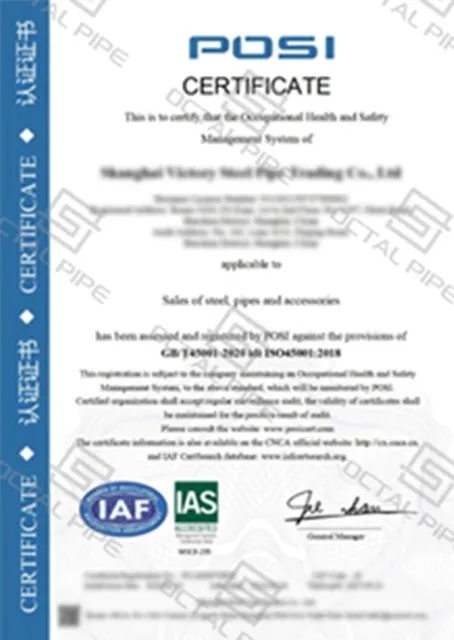
CE Certificate

ISO 9001 Certificate

API Q1 Certificate
ABS Certificate
AP-5L Certificate
API-5CT Certificate