Problems T9 Is Built to Solve
Superheater banks, reheater circuits, HRSG convection sections and heater coils face tube-metal temperatures and oxidation loads that overwhelm low-Cr alloys. ASTM A213 T9 delivers higher hot strength and steadier scale behavior than 1.25–2.25Cr grades without the fabrication sensitivity of 9Cr–V–Nb steels, which makes it a practical choice where long hours, thermal gradients and coil integrity dominate risk.
What the Specification Covers
ASTM A213/SA213 defines seamless alloy-steel tubing for boilers and heat exchangers. Projects specify outside diameter, minimum wall and cut length directly on the datasheet instead of piping schedules. Straightness and ovality are typically tightened for tube-to-tubesheet fit; ends are supplied plain or square-cut for fixture welding, with bevels only where field butt welds are planned.
Composition That Drives Performance
Table 1 - A213 T9 chemical composition (wt.%)
|
Element |
Range |
Engineering note |
|
C |
≤ 0.15 |
Strength–ductility balance for bends and coils |
|
Mn |
0.30–0.60 |
Deoxidation; solid-solution contribution |
|
Si |
≤ 0.50 |
Excess can depress toughness |
|
P |
≤ 0.025 |
Weldability and toughness control |
|
S |
≤ 0.025 |
Better hot workability at low sulphur |
|
Cr |
8.00–10.00 |
Slower oxide growth; improved hot tensile |
|
Mo |
0.90–1.10 |
Carbide stability; creep resistance at temperature |
Room-Temperature Mechanical Baselines
Table 2 - Minimum properties for screening
|
Property |
T9 minimum |
|
Tensile strength |
= 415 MPa (60 ksi) |
|
Yield strength |
= 205 MPa (30 ksi) |
|
Elongation |
= 20% |
Design uses allowable stresses at operating temperature from the governing code.
Oxidation and Creep in Real Service
Performance is controlled by the metal temperature, start–stop frequency and surface deposits acting together. With ~9% Cr, oxidation tends to follow a parabolic law (oxide-thickness² ≈ k·time); the parabolic rate is much lower than in low-Cr steels, which limits scale thickness and spallation events. Mo stabilizes carbides, delaying grain-boundary sliding and cavity growth so wall loss from time-dependent deformation is slower.
In hot, dry sections such as hot-reheat circuits and heater convection banks, T9 preserves roundness and wall thickness better than 1.25–2.25Cr options, reducing retube frequency and downstream fouling caused by shed scale. In HRSG duty with frequent cycling, thermal transients raise oxide stresses and increase spallation/"re-oxidation"; moderating ramp rates, optimizing soot-blowing, and tracking tube-metal temperature (TMT) hotspots materially reduce risk. Deposit chemistry matters: alkali-rich or sulfur-bearing ash can modify the oxide and accelerate local attack, so fuel/ash analysis combined with borescope inspection is used to plan cleaning and inspection intervals.
For creep, T9's advantage sits in the long-life region: a fine, continuous grain-boundary carbide network from proper tempering improves rupture time and keeps deformation uniform. Overheating or ill-controlled reheat coarsens grains and spheroidizes carbides, producing early bulging, ovality or leaks. In practice, trending oxide thickness/weight gain together with TMT history provides the evidence base for inspection scheduling.
Table 3 - Field signal vs. engineering response
|
Field signal |
Engineering response |
|
Faster ΔP rise and efficiency drop |
Check scale spallation; tune soot-blowing and firing |
|
IR mapping shows local hot spots |
Inspect shields/baffles and flow distribution; review grade window |
|
Start–stop count higher than design |
Soften ramp rates; shorten borescope/UT thickness intervals |

Dimensions That Work in the Shop
Table 4 - Typical dimensional envelope
|
Parameter |
Common window |
Notes |
|
Outside diameter |
12.7–101.6 mm (½–4 in) |
Larger ODs subject to mill route |
|
Wall thickness |
1.2–12.7 mm |
Heavy walls available by enquiry |
|
Cut length |
Up to ~12 m |
Fewer field welds in bundles |
|
Geometrics |
Tight straightness/ovality |
Better tube-sheet sealing and fit |
Surface Integrity, Cleanliness, and Preservation
Surface state often decides lifetime in hot duty. A practical control loop is: de-scale → clean → dry → cap → wrap → verify. After forming, remove heat tint and residual scale from ID/OD; flush with clean media, then dry the ID to a documented target (e.g., dew point below the ambient by a defined margin). Fit tight end caps and use protective wrapping that resists dust and moisture; store bundles off the floor with drainage and UV protection.
Acceptance belongs in the ITP so QA can sign off without debate. Define what "clean" means (visual class, chloride/oil limits if applicable), how dryness is checked, and what packaging is required for the storage climate. Keep carbon-steel tooling away from T9 tubing to prevent free-iron embedment; where mixed shops are unavoidable, run a post-clean ferroxyl check on samples. Before release, record photos and batch the preservation log with the bundle ID so installation crews know the line has not been contaminated in storage.
Supply Note
For projects centered on ASTM A213 T9, Octal Pipe supplies seamless tubing, aligns procedures and documentation with the project ITP, and can arrange independent witnessing (e.g., BV, SGS) when required.
FAQ
Q1: What is ASTM A213 T9 (ASME SA213 T9) tubing used for?
A1: Seamless 9Cr-1Mo ferritic alloy tubing for boilers, superheaters, and heat exchangers in high-temperature, high-pressure service.
Q2: Is A213 T9 equivalent to A335 P9?
A2: They're commonly treated as equivalents by chemistry/UNS (T9 = tubing spec, P9 = pipe spec), but you should match the project's required standard and test scope.
Q3: What should I request to verify ASTM A213 T9 tubing quality before purchase?
A3: 3.1 MTC with heat number + heat treatment condition, chemistry/mechanical results, hydrotest or NDE (as specified), dimensional checks, and full marking/traceability.
Certifications
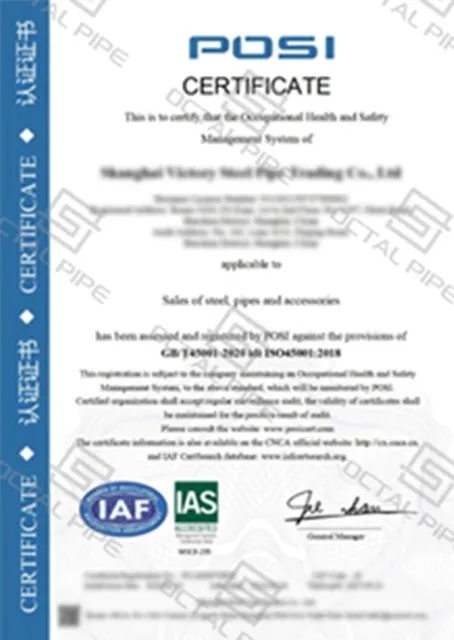
CE Certificate

ISO 9001 Certificate

API Q1 Certificate
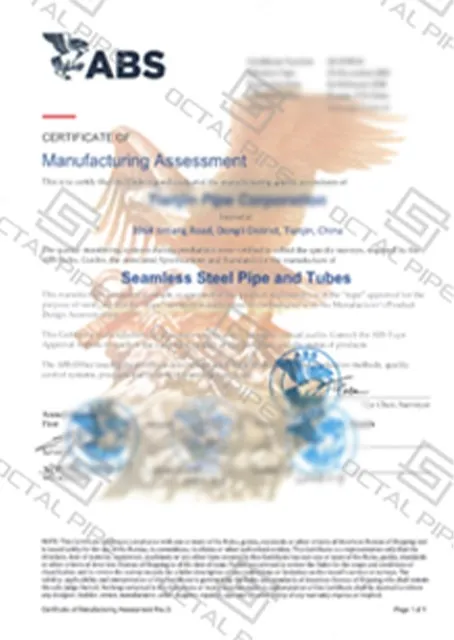
ABS Certificate
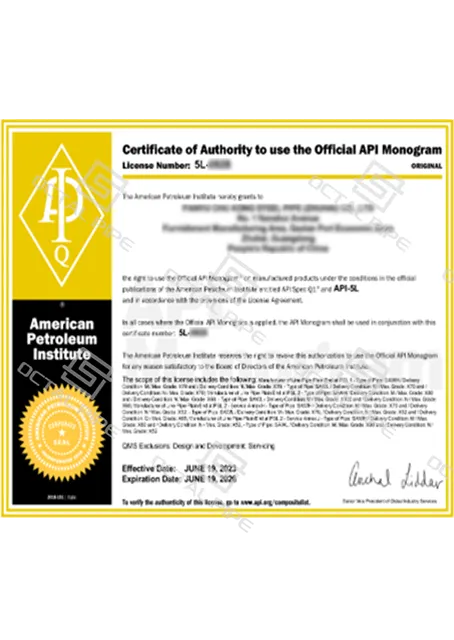
AP-5L Certificate
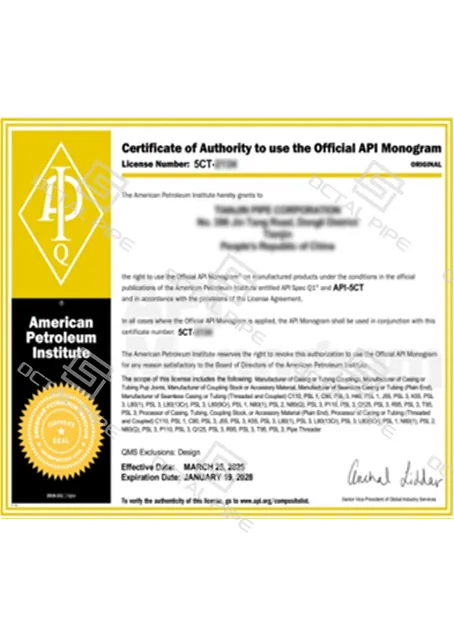
API-5CT Certificate