Role of X65 in Modern Pipeline Design
Within the API 5L family, X65 is often chosen when designers want higher operating pressure and long-distance transmission, but still need a grade that can be welded and installed efficiently on site. It is widely specified for crude and gas trunk lines, offshore export pipelines, regional gas loops and high-pressure station headers where X52/X60 become tight on wall-thickness checks, while X70/X80 would add unnecessary material and welding complexity.
Once X65 is selected, the next decision is usually the product form: ERW/HFW, LSAW/SAWL or SSAW/SAWH. That choice depends on how the line will be built - straight onshore spreads, road/river crossings, shallow-water S-lay or deep-water J-lay - and on the external and internal coating systems required for the service.
Standard and Grade Definition (API 5L / ISO 3183)
The grade X65 is defined in API 5L (closely aligned with ISO 3183), the main standard for seamless and welded line pipe used in pipeline transportation systems for the oil and gas industry. Designations such as "X65M" or "X65Q" reflect both strength level and delivery condition:
- X65 (PSL1) – baseline line pipe grade
- X65M (PSL2) – thermo-mechanically processed, enhanced toughness
- X65Q (PSL2) – quenched and tempered for very demanding service
For route sections considered critical - such as environmentally sensitive crossings and offshore service export lines - specifications usually call for PSL2 X65 because of its tighter chemistry control, mandatory toughness tests and more detailed documentation. Seamless X65 is allowed by the standard, but large-diameter and long-distance pipelines commonly select welded X65 to balance capacity, weld quality and project cost.
Mechanical Properties – What the Numbers Look Like
In the API 5L system, X65 corresponds to a specified minimum yield strength (SMYS) of 65,000 psi (≈ 450 MPa). That value goes straight into the wall-thickness and pressure formulas in ASME B31.4, B31.8 and similar codes.
Table 1 – Typical minimum mechanical properties (reference):
|
Grade |
PSL Level |
SMYS – Min. Yield (MPa) |
SMTS – Min. Tensile (MPa) |
Typical Elongation (%) |
|
X52 |
PSL1 / PSL2 |
≥ 360 |
≥ 455 |
≈ 21 |
|
X60 |
PSL1 / PSL2 |
≥ 415 |
≥ 520 |
≈ 21 |
|
X65 |
PSL1 / PSL2 |
≥ 450 |
≥ 535 |
≈ 20–22 |
In design calculations, SMYS is multiplied by a design factor to give the allowable hoop stress, and this then sets the maximum operating pressure. SMTS provides additional margin against ultimate failure when internal pressure is combined with bending, temperature effects and external loads. Elongation is important during construction and operation, because it indicates how well the pipe can tolerate field bending, tie-ins, backfilling and long-term ground movement without cracking.
For PSL2 X65, project documents often specify Charpy V-notch impact tests at a defined temperature, and, for thick wall or low-temperature lines, DWTT (drop-weight tear tests) to support fracture control assessments.
Chemical Composition of API 5L X65 (Welded Pipe Focus)
To reach X65 strength without making welding too difficult, the grade relies on balanced chemistry rather than very high alloy content. Carbon, manganese and microalloying elements are adjusted together to meet strength and toughness targets, while phosphorus and sulfur are limited to protect weld and HAZ performance.
Table 2 – Typical composition ranges for X65 welded line pipe (reference values):
|
Level |
Pipe Type |
C max (%) |
Mn max (%) |
P max (%) |
S max (%) |
Notes |
|
PSL1 |
Welded |
0.26–0.28 |
up to ~1.40 |
0.030 |
0.030 |
Cu, Ni, Cr, Mo often each ≤ 0.50 % |
|
PSL2 |
Welded |
≈ 0.22–0.24 |
≈ 1.60–1.75 |
0.025 |
0.015 |
Stricter P/S; total Nb+V+Ti limited |
From an engineering perspective:
- Carbon (C) provides base strength but must be kept at a level that keeps carbon equivalent (CE) suitable for field welding.
- Manganese (Mn) supports both strength and low-temperature toughness.
- Phosphorus (P) and sulfur (S) are reduced in PSL2 to minimise brittle behaviour, especially around welds and the HAZ.
- Niobium, vanadium and titanium (Nb/V/Ti) in small amounts refine grain size and help meet toughness requirements for more demanding projects.
For cold regions or offshore service in deep or low-temperature water, project specifications may introduce tighter limits on CE and microalloy totals to give extra margin for welding and fracture control.


Manufacturing Routes for X65 Pipe
In project execution, the discussion is never about abstract "X65 steel", but about X65 pipe made by a specific process, each with its own diameter range, wall-thickness capability and cost structure.
ERW / HFW (High-Frequency Welded):
- Produced from hot-rolled coil that is slit, formed into round and welded along the longitudinal seam.
- Common for small and medium diameters with moderate wall thickness in land pipelines and station piping.
- Weld seam quality is monitored by online NDT; for PSL2 projects, local post-weld heat treatment in the weld and HAZ can be specified.
LSAW / SAWL (Longitudinal SAW):
- Manufactured from plate using UOE or JCO forming, followed by inner and outer submerged arc welds.
- Suited to large diameters and thick walls required in high-pressure trunk lines and offshore export pipelines.
- Typical specifications include full-body UT and/or RT, and stress-relief heat treatment on heavy sections.
SSAW / SAWH (Spiral SAW):
- Formed from coil at a helical angle and welded on both sides by submerged arc processes.
- Attractive where large diameters and coil utilisation are important cost drivers.
- The spiral weld seam is scanned along its full length, usually by UT and, where required, RT.
- API 5L allows both seamless and welded X65, but for most high-capacity onshore and offshore service pipelines, welded X65 is preferred because it offers larger diameters, repeatable weld quality and competitive installed cost.
PSL1 vs PSL2 – What Changes for X65
The "PSL1 / PSL2" suffix on X65 mainly affects reliability and traceability, not the basic strength level. SMYS is the same, but PSL2 adds stricter requirements for chemistry, toughness, NDT and documentation.
Table 3 – X65 PSL1 vs PSL2 (simplified):
|
Aspect |
X65 PSL1 |
X65 PSL2 |
|
Chemistry |
Standard API 5L limits |
Stricter P/S limits, controlled microalloy content |
|
Mechanical tests |
Tensile tests |
Tensile + mandatory impact tests at agreed temperature |
|
NDT |
Weld seam NDT as required |
Extended NDT scope, tighter defect acceptance |
|
Documentation |
Standard MTC |
Detailed MTC, traceable heat → plate/coil → pipe |
|
Typical use |
General transmission/gathering |
Critical sections incl. major crossings and offshore service segments |
In practice, PSL1 is often used for lower-risk gathering or in-plant lines, while PSL2 is selected for mainline segments, important crossings and export lines related to offshore developments.
Dimensional Range and Tolerances
X65 welded pipe can be ordered in a dimensional range that covers gathering systems, long-distance transmission lines and offshore export routes, with wall thickness determined by internal pressure, external pressure and stability checks.
Table 4 – Typical dimensional range for X65 welded line pipe (indicative):
|
Item |
Range / Description |
|
Outside Diameter |
Approx. 1/2" – 48" (≈ 21.3 – 1219 mm) |
|
Wall Thickness |
About 3.2 – 40 mm, set by design requirements |
|
Length |
SRL 5–7 m, DRL 10–13 m, or project-specific cut length |
|
OD Tolerance |
Typically around ± 0.75–1.0 % (per API 5L) |
|
WT Tolerance |
Negative tolerance usually up to −12.5 % |
|
Straightness |
Often limited to ~0.15 % of total length |
For offshore service, specifications may additionally control ovality and local geometric imperfections, because external pressure, bending and installation loads (S-lay, J-lay, reel-lay) are more severe than on typical onshore lines. Pipe ends can be supplied as plain (PE), beveled (BE) or with custom machining to match buckle arrestors, field-joint coating details or mechanical connector systems.
Inspection, Testing and Offshore Service Considerations
The quality plan for X65 normally combines hydrotesting, NDT and mechanical testing. For pipelines designed for offshore service or nearshore corridors, the same test types are used, but their scope and acceptance criteria are often refined.
Table 5 – Indicative inspection matrix (with offshore service focus):
|
Category |
X65 PSL1 Pipe |
X65 PSL2 Pipe |
Additional Offshore Service Focus* |
|
Hydrostatic test |
100 % of pipes |
100 % of pipes |
Test pressure aligned with collapse/stability checks |
|
Weld seam NDT |
UT / RT / EC per process & spec |
Wider NDT scope, tighter acceptance |
Extra attention to girth weld transition areas |
|
Pipe body NDT |
As required by API / client |
Often full-body UT for LSAW/SSAW |
Increased focus on laminations and mid-wall flaws |
|
Tensile tests |
Per heat / lot |
Per heat / lot |
– |
|
Impact tests (CVN) |
Normally not mandatory |
Provided at agreed temperature where specified |
Lower test temperatures for cold seabed routes |
|
DWTT |
Usually not specified |
Optional per project spec |
Used where fracture control is critical for long subsea lines |
|
Geometry/ovality check |
Basic straightness and OD control |
Tighter geometric tolerances by agreement |
Ovality checks for reeling or tight-radius bends |
|
Coating inspection |
Holiday test / visual per spec |
Holiday test / visual per spec |
Added focus on bendability, adhesion and water resistance |
* "Additional offshore service focus" summarises typical project-specific refinements for subsea or nearshore lines.
Beyond the table, offshore service usually demands stronger control of external corrosion and mechanical protection, for example:
- Qualification of external coating systems under bending during S-lay, J-lay or reel-lay.
- Proven field joint coating procedures compatible with the mainline coating.
- Concrete weight coating or sleeves to achieve on-bottom stability.
- Optional third-party witnessing (BV, DNV, SGS, etc.) for coating and mechanical tests.
API 5L X65 pipe for these projects can be produced and tested under third-party surveillance to match offshore design codes and project QA/QC requirements.
Applications and Octal Pipe Supply Scope
For many operators, X65 is a practical "workhorse" grade once the required pressure, route length and importance of the line move beyond the comfort zone of X52/X60, but the project still needs predictable welding behaviour and installation cost. Typical applications include:
- Long-distance crude oil and natural gas transmission pipelines
- Offshore export lines from subsea fields to shore terminals
- Nearshore landfall sections and complex approach routes
- Regional gas transmission loops and high-pressure station piping
- Selected flowline and riser sections where X65 fits the global system design
As a project-oriented supplier, Octal Pipe can provide API 5L X65 pipe in PSL1 and PSL2 with ERW, LSAW and SSAW options, matched to route design, diameter, wall thickness, coating system and test scope, and can arrange third-party inspection on request to align with the client's engineering and QA/QC requirements for both onshore and offshore service.
FAQ

Q1: What's the difference between API 5L X65 PSL1 and PSL2 welded line pipe?
Q2: How do I choose ERW vs LSAW vs SSAW for API 5L X65 welded line pipe?
Q3: What documents and tests should I request for API 5L X65 welded line pipe before purchase?
Certifications
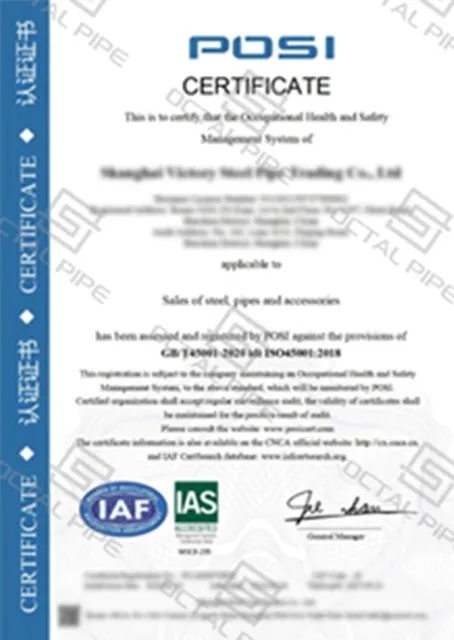
CE Certificate

ISO 9001 Certificate

API Q1 Certificate
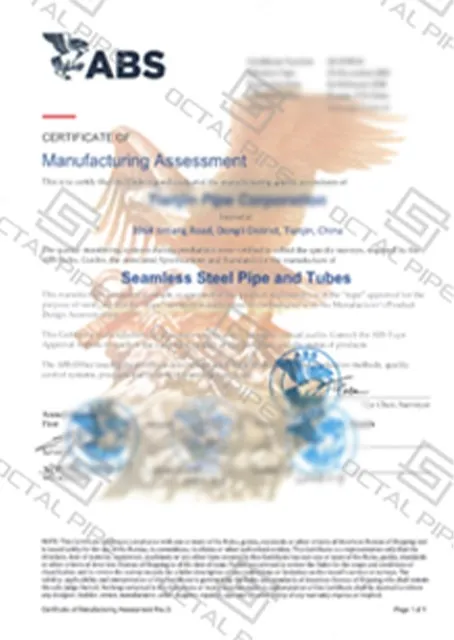
ABS Certificate
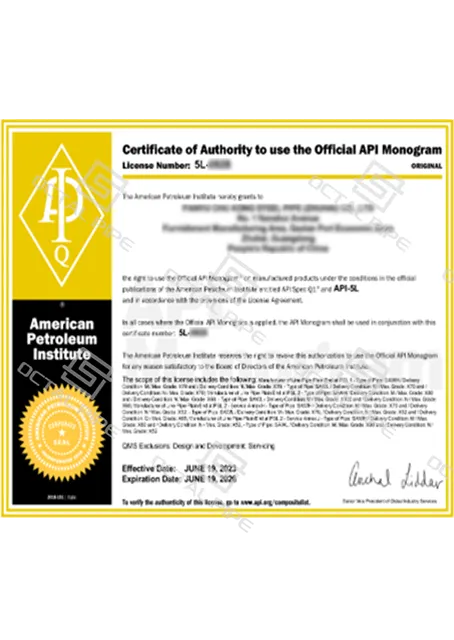
AP-5L Certificate
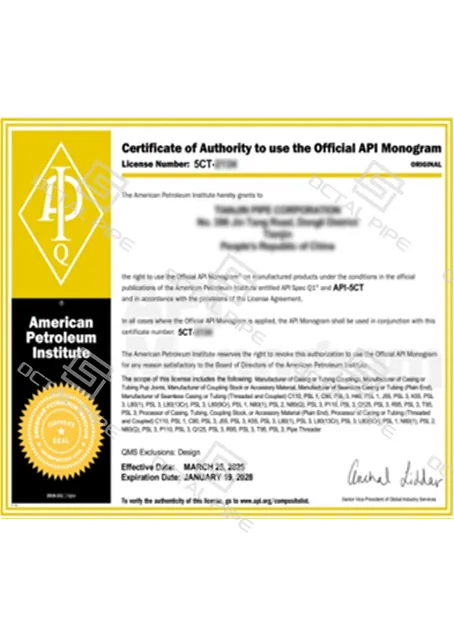
API-5CT Certificate