
AISI 4130 alloy steel, UNS G41300, is a chromium-molybdenum low-alloy steel, widely used where a component needs a stronger strength-to-weight balance and a more useful heat-treatment response than plain carbon steel can usually provide. Its nominal chemistry-about 0.28–0.33% carbon, 0.80–1.10% chromium, and 0.15–0.25% molybdenum-gives the steel better hardenability, a broader processing window, and a practical combination of strength, toughness, weldability, and machinability. This is why AISI 4130 alloy steel is commonly supplied for mechanical tubing, bar, sheet, forgings, and welded structural parts rather than being limited to a single product form.
One technical point should be fixed at the start: AISI 4130 alloy steel properties are always tied to product form and condition. A seamless mechanical tube under ASTM A519, a hot-wrought bar under ASTM A322, and an aerospace tube or sheet under AMS specifications can all be 4130, but they do not necessarily carry the same strength, hardness, or fabrication response.
Material Classification of AISI 4130 Alloy Steel
AISI 4130 is best classified as a chromium-molybdenum low alloy steel. In practical terms, that means it sits between plain carbon steel and more heavily alloyed engineering grades. The chromium and molybdenum additions improve hardenability and strength response, while the relatively modest carbon level keeps the steel workable enough for forming, machining, and welding when the condition is controlled properly. This is why 4130 chromoly steel shows up so often in tubing, bar, sheet, and fabricated structural parts.
Chemical Composition of AISI 4130 Alloy Steel
The chemistry of AISI 4130 alloy steel (UNS G41300) is usually summarized around its chromium-molybdenum design, but the technical reading is stronger when the full composition window is shown together with the role of each element. Public datasheet sources consistently list 0.28–0.33% carbon, 0.80–1.10% chromium, and 0.15–0.25% molybdenum as the key alloying ranges, with manganese and silicon supporting hardenability, deoxidation, and base strength. AZoM's datasheet also lists iron as the balance, with sulfur and phosphorus controlled at low levels.
| Element | Typical range | Technical meaning |
|---|---|---|
| Carbon (C) | 0.28–0.33% | Gives 4130 a higher strength and hardenability level than mild steel, while remaining more weldable than higher-carbon alloy steels. |
| Manganese (Mn) | 0.40–0.60% | Supports strength and hardenability. |
| Silicon (Si) | 0.15–0.30% or 0.15–0.35% | Deoxidation and base strengthening; published limits vary slightly by source and specification summary. |
| Chromium (Cr) | 0.80–1.10% | Main alloying addition behind hardenability and improved response to heat treatment. |
| Molybdenum (Mo) | 0.15–0.25% | Improves hardenability and helps maintain strength at higher service severity than plain carbon steel. |
| Phosphorus (P), max | 0.035–0.040% | Controlled impurity. |
| Sulfur (S), max | 0.040% | Controlled impurity. |
| Iron (Fe) | Balance | Base metal matrix. |
Download:AISI 4130 Alloy Steel Chemical Composition
The main chemistry distinction in AISI 4130 alloy steel is not simply that it is "stronger than carbon steel." The more accurate reading is that its chromium-molybdenum design gives it a broader heat-treatment response and a more useful balance of strength, weldability, and machinability than plain carbon steel usually provides. That is why the grade appears so often in mechanical tubing, forged parts, and welded structural applications. AZoM describes 4130 as a chromium-molybdenum low-alloy steel with low carbon content and notes its use in aircraft engine mounts and welded tubing, while a commercial datasheet also notes that it is commonly supplied as round bar in the hardened-and-tempered condition with a hardness of 18–22 HRC.


Why AISI 4130 Low Alloy Steel Is Used
The technical value of AISI 4130 low alloy steel does not come from one isolated property. It comes from how the grade combines moderate alloy content, useful hardenability, good fabrication response, and condition-dependent strength within a relatively practical chromium-molybdenum system. Compared with plain carbon steel, 4130 can reach a higher and more controlled strength level after heat treatment, while still remaining workable enough for tubing, forged parts, machined components, and many welded structures. That balance is the main reason the grade continues to be used across aircraft-related parts, motorsport fabrications, structural tubing, shafts, fittings, and general mechanical components.
A more detailed reading of why 4130 is used can be broken into several engineering points:
- It offers better hardenability than plain carbon steel, which means section strength and through-thickness response can be developed more effectively after quenching and tempering.
- It can be supplied in several useful conditions, including annealed, normalized, cold drawn, and quenched-and-tempered states, so the same grade can be adapted to different forming, machining, welding, or final-strength requirements.
- It remains a practical material for mechanical tubing and welded structural parts, especially where the design needs a stronger strength-to-weight balance without moving directly to a much higher-carbon or more highly alloyed steel.
- It is available across multiple mill product forms, including tube, bar, sheet, plate, forgings, and welding wire, which makes it suitable for both fabricated assemblies and machined components.
- It supports a useful combination of strength, toughness, weldability, and machinability, which is why it appears in applications that need more than ordinary structural steel but do not require a highly specialized aerospace or tool steel grade.
This combination of properties explains why AISI 4130 is widely used in aircraft engine mounts, welded tubing, structural tube members, forged fittings, shafts, and other machined mechanical components. Its value in these applications does not lie in one isolated strength figure, but in the way the grade responds to forming, machining, welding, and heat treatment across different supplied conditions. In practical engineering terms, AISI 4130 remains important because it provides a balanced chromium-molybdenum steel system whose final performance can be tailored without sacrificing workable fabrication behavior.
AISI 4130 Alloy Steel Properties Depend on Condition
The properties of AISI 4130 alloy steel are condition-dependent. General datasheet values provide a useful baseline, but the mechanical level of the material changes with product form and supply condition. Tube, bar, sheet, and plate can all be specified as 4130, yet they do not necessarily carry the same strength, hardness, or elongation in service.
| Property | Value |
|---|---|
| Density | 7.85 g/cm³ |
| Melting point | 1432°C |
| Modulus of elasticity | 190–210 GPa |
| Shear modulus | 80 GPa |
| Bulk modulus | 140 GPa |
| Poisson's ratio | 0.27–0.30 |
For AISI 4130 alloy steel, [condition-dependentmechanical propertiesof AISI 4130 alloy steel] should be read against the actual product form and supply condition rather than as one fixed strength level.Publshed values for genera datasheet materal, cold-arawn tube, nomaled sheet, and narcdened-and-tempered bar do nol represent he same metalurglcal state. Inpractce, the useru comparison is not simpy"4130 steel," but 4130 in a defined form and condrton. because those varables directly affect tensile stength yieldstrength, elongation, hardness, fabrication response, and heat-treatment behavior.
| Product form / condition | Tensile strength | Yield strength | Elongation | Hardness / note | Technical reading |
|---|---|---|---|---|---|
| General 4130 datasheet value | 560 MPa (81.2 ksi) | 460 MPa (66.7 ksi) | 21.5% | 217 HB | Useful as a broad baseline for the grade, but not a substitute for condition-specific values. |
| Tube, AMS 6371, cold drawn | 95 ksi (655 MPa) | 70 ksi (483 MPa) | 12% | <25 HRC | Shows the higher strength typical of cold-drawn tube, with lower ductility than a softer supplied state. |
| Bar, AMS 6346, hardened & tempered | 125 ksi (862 MPa) | 100 ksi (690 MPa) | 17% | - | Illustrates how heat-treated bar can reach a much higher strength level than the general baseline. |
| Sheet, AMS 6345, normalized, under 0.062 in | 95 ksi (655 MPa) | 75 ksi (517 MPa) | 8% | - | Thin normalized sheet is specified at high strength, but with lower elongation. |
| Sheet, AMS 6345, normalized, 0.187–0.250 in | 90 ksi (621 MPa) | 70 ksi (483 MPa) | 15% | - | Thicker normalized sheet shows a lower specified strength level, but improved ductility. |
Download:Condition-Dependent Mechanical Properties of AISI 4130 Alloy Steel
This is the main technical point: AISI 4130 alloy steel properties are condition-dependent. A tube, a bar, and a sheet can all carry the same alloy designation, but they should not be read as though they share one identical strength level. In real use, form, condition, and section thickness are part of the property description, not secondary detail.
AISI 4130 Heat Treatment
AISI 4130 heat treatmentis one of the main reasons this chromium-molybdenum low-alloy steel is used so widely. Public datasheets consistently describe 4130 as a steel with useful hardenability and a broad processing range across annealing, normalizing, quenching, and tempering. The important point is not that 4130 follows one universal thermal cycle, but that its final properties depend strongly on product form, section size, and target condition.
| Operation | Published temperature data | Technical effect |
|---|---|---|
| Annealing | 843°C (1550°F), followed by controlled cooling / air cooling to about 482°C (900°F) | Softens the structure, improves machinability, and prepares the steel for subsequent forming or machining. |
| Normalizing | About 885–926°C | Produces a more uniform microstructure and is a common reference condition for normalized sheet and structural forms. |
| Hardening / austenitizing | 871°C (1600°F) with oil quench is one published route; a broader heat-treatment range of 899–927°C (1650–1700°F) is also reported | Raises hardness and strength when followed by quenching and tempering. |
| Tempering | 399–566°C (750–1050°F) in one published datasheet | Used after hardening to adjust the final balance of strength and toughness. |

Download:AISI 4130 Heat Treatment Reference
These published ranges should be read as common practice windows, not as a single fixed schedule for every 4130 product. A cold-drawn tube, a normalized sheet, and a hardened-and-tempered bar can all be AISI 4130 alloy steel, but they are not intended to leave heat treatment with the same property profile. In practical terms, AISI 4130 heat treatment should always be tied to the required final condition rather than treated as a generic one-cycle process.


AISI 4130 Welding
AISI 4130 welding is a major part of the grade's technical identity. The low carbon level is one reason 4130 is often described as readily weldable, and general datasheets state that it can be welded by conventional commercial methods. But that statement needs one important qualification: the supplied condition matters. Welding guidance for 4130 and 4140 repeatedly recommends welding in the annealed or normalized condition, and warns that once hardness rises much above about 25 HRC, welding becomes much more difficult and more crack-sensitive.
The published welding logic is summarized below.
| AISI 4130 welding point | Technical meaning |
|---|---|
| Low carbon helps weldability | 4130 is easier to weld than higher-carbon alloy steels because of its composition. |
| Annealed or normalized condition is preferred | This is the most commonly recommended condition for welding. |
| Above about 25 HRC becomes difficult to weld | Through-hardened material becomes much more crack-sensitive. |
| Preheating is commonly recommended | Slows cooling, reduces quench severity in the HAZ, and helps reduce hydrogen-related cracking risk. |
| Prior heat-treated properties can be lost in the HAZ | If the base material was heat treated before welding, the weld cycle can locally alter the desired property profile. |
| Joint prep, filler selection, and cooling control still matter | 4130 is weldable, but it is not a "careless-process" material. |
Download:AISI 4130 Welding Reference
A professional reading of AISI 4130 welding is therefore this: 4130 is weldable for a heat-treatable alloy steel, but weld quality still depends on condition, hardness, heat input, preheat, and HAZ control. That is why tube-frame work, structural weldments, and aerospace fabrication all treat welding procedure as part of the material decision, not an afterthought.
Tube, Bar, Sheet, and Governing Specifications
Another place where articles on AISI 4130 alloy steel often stay too broad is product form. In practice, 4130 is encountered through several distinct specification routes, and those routes affect how the material is discussed. The overview below is more useful than treating every 4130 product as though it came from the same standard.
| Product form | Common specification route | What that route emphasizes |
|---|---|---|
| Seamless mechanical tubing | ASTM A519 | Seamless production, hot- or cold-finished tubing, close tolerances, machining, heat treating, and defined physical properties. |
| Hot-wrought bar | ASTM A322 | Bar for forging, heat treating, cold drawing, machining, and structural components. |
| Aerospace tube | AMS 6371 | Condition-specific tube data, often used where controlled mechanical properties matter. |
| Aerospace normalized sheet / plate | AMS 6345 | Thickness-dependent normalized sheet properties. |
| Aerospace hardened & tempered bar | AMS 6346 | Higher-strength bar condition. |
| Sheet / plate variants | AMS 6350 / AMS 6351 | Sheet and plate supply, including annealed or spheroidized routes depending on spec. |
This is why discussions around AISI 4130 alloy steel UNS G41300 should always identify at least three things: form, condition, and specification route. Without that, "4130" remains too broad to describe the mechanical state of the material in any precise way.
Applications of 4130 Chromoly Steel
The applications most consistently associated with 4130 chromoly steel are not broad industry labels, but component types that benefit from its combination of strength, weldability, and heat-treatment response. In practice, 4130 is commonly used where a part must carry repeated load, keep section weight under control, or move through machining, welding, and heat treatment without switching to a much higher-carbon alloy. That is why published references repeatedly connect it with aircraft engine mounts, welded tube structures, structural tubing, forged parts, and machined mechanical components rather than with general-purpose carbon steel applications.
In practical terms, 4130 is often used in parts such as:
- welded structural tube members in frames, supports, braces, and load-bearing tubular assemblies where section efficiency and fabrication response both matter;
- engine-mount and airframe-related fabrications where the material needs to combine moderate weight, good weldability, and a useful strength level after processing;
- shafts, sleeves, fittings, and forged parts that will be machined and, where required, heat treated to reach a higher service strength than plain carbon steel usually provides;
- machined mechanical components such as pins, connectors, couplings, and structural hardware where dimensional control and post-machining heat-treatment response are both important;
- structural or mechanical tubing used in fabricated assemblies that must handle cyclic loading, localized stress, or tighter section sizing without moving directly to a more highly alloyed steel;
- parts intended for subsequent heat treatment where the alloy's Cr-Mo chemistry gives a more useful hardening response and a better balance of strength and toughness in the final condition.
The common thread across these applications is not simply that 4130 is "strong." It is that the grade remains practical through the full manufacturing route. It can be supplied as tube, bar, sheet, or forging stock, then formed, machined, welded, or heat treated according to the demands of the final component. That is why AISI 4130 alloy steel is used most often in engineered parts with defined structural or mechanical duties, rather than in generic fabricated steelwork where ordinary carbon steel is already sufficient.
FAQ

01.Does AISI 4130 alloy steel have one fixed strength value?
02.What condition of AISI 4130 is usually preferred for welding?
03.How is AISI 4130 different from 4140 in practical use?
04.What should be checked before specifying AISI 4130 alloy steel?
Certifications
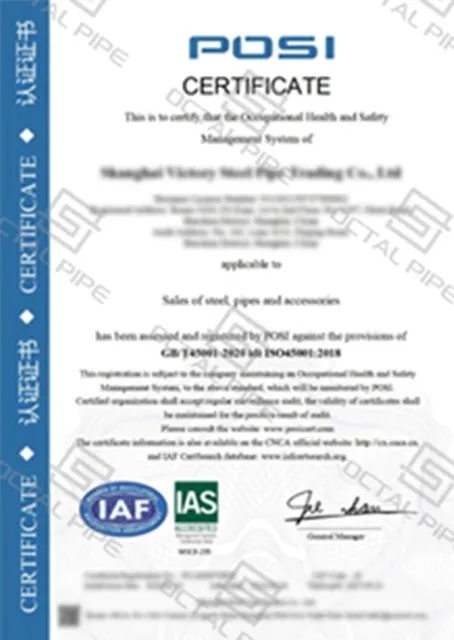
CE Certificate

ISO 9001 Certificate

API Q1 Certificate
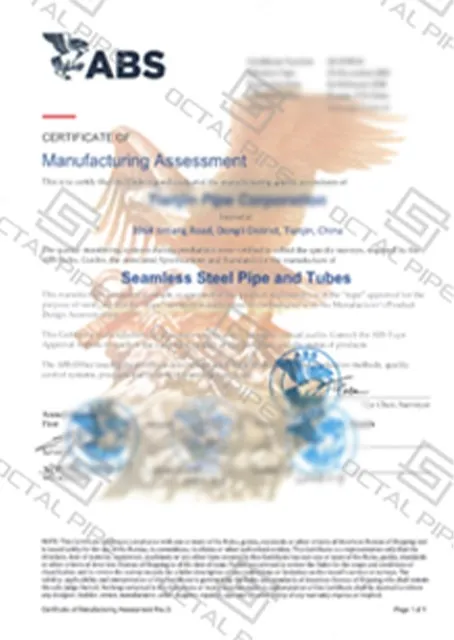
ABS Certificate
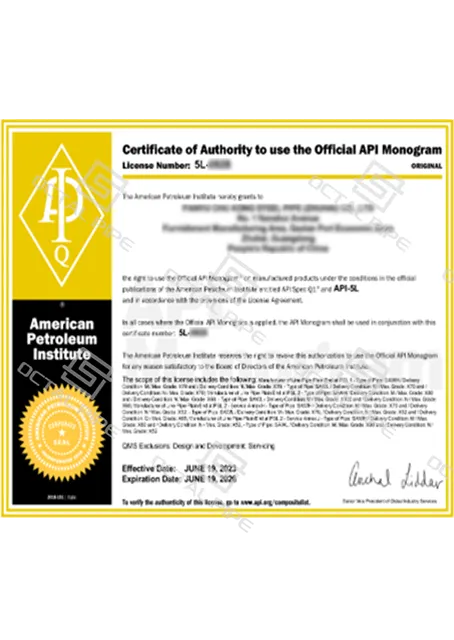
AP-5L Certificate
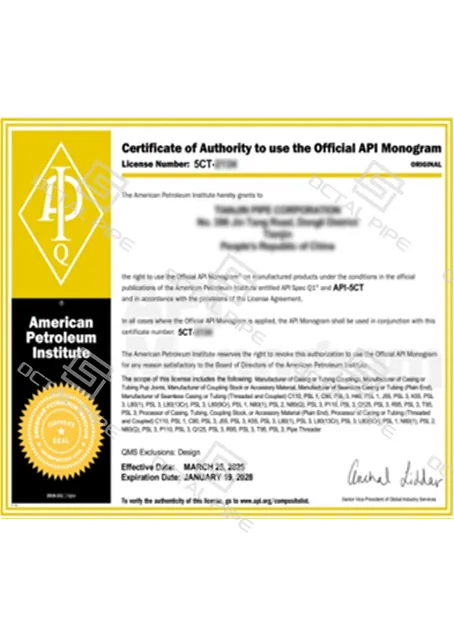
API-5CT Certificate