
What Is the Difference Between 304 and 316 Stainless Steel?
304 and 316 stainless steel are both austenitic stainless grades, but they are not interchangeable once the service environment becomes more demanding. The most important technical difference is composition: standard 304 is a chromium-nickel stainless steel, while 316 adds about 2–3% molybdenum and usually carries a higher nickel range. That molybdenum addition is the main reason 316 generally offers better resistance to pitting and crevice corrosion in chloride-bearing environments such as coastal air, salt contamination, chemical washdown, and some process services. By contrast, 304 is the more common general-purpose grade for indoor equipment, mild atmosphere duty, and fabricated parts where chloride exposure is limited.
The difference between 304 and 316 stainless steel is therefore not mainly a question of strength or appearance. In standard annealed condition, their basic mechanical levels are relatively close, and both are widely used for sheet, plate, tube, pipe, fittings, tanks, and fabricated equipment. The real separation is corrosion margin. If the service is dry, clean, and non-aggressive, 304 is often sufficient. If the surface will see chlorides, marine-adjacent exposure, or harsher cleaning chemistry, 316 usually provides the more reliable material base. That is the practical difference between 304 and 316 stainless steel in engineering use.
Material Classification of 304 and 316 Stainless Steel
304 and 316 belong to the 300-series austenitic stainless steel group. The comparison is therefore not between two completely different material classes, but between two closely related chromium-nickel stainless steels with similar forming and welding behavior, yet different corrosion performance once chlorides and harsher environments enter the picture.
This classification is also relevant across common mill product forms, including stainless steel coil, sheet, plate, pipe, and tube. In coil applications, 304 and 316 can both be supplied for fabrication, forming, and downstream processing, but they should not be treated as interchangeable once the service environment introduces chloride-bearing moisture, salt deposits, or more aggressive chemical exposure.
From an engineering point of view, this is why 304 and 316 stainless steel are often compared in the same projects. They can both satisfy many of the same fabrication routes, yet they do not respond equally to the same service environment.


Composition Differences Between 304 and 316 Stainless Steel
304 and 316 Stainless Steel the chemical gap is straightforward. Standard 304 is built around chromium and nickel. Standard 316 uses a similar base, but adds molybdenum and typically carries a higher nickel range. That is the main reason 316 is usually selected when chloride resistance becomes more important.
| Item | 304 stainless steel | 316 stainless steel | Technical reading |
|---|---|---|---|
| Common grade designation | Type 304 | Type 316 | Both are standard austenitic stainless steels in the 300 series. |
| UNS / EN designation | S30400 / 1.4301 | S31600 / 1.4401 | Useful when the article needs to look more technical and less consumer-oriented. |
| Chromium (Cr) | 18.0–20.0% | 16.0–18.0% | Both grades depend on chromium for passive-film formation and basic stainless behavior. |
| Nickel (Ni) | 8.0–10.5% | 10.0–14.0% | 316 typically carries a higher nickel range. |
| Molybdenum (Mo) | - | 2.0–3.0% | This is the main chemistry upgrade in 316 and the most important reason it performs better in chloride-bearing environments. |
| Carbon (max.) | 0.08% | 0.08% | Standard grades; low-carbon L grades are usually selected where welding and intergranular corrosion control are more critical. |
| Manganese (max.) | 2.00% | 2.00% | Similar base limit in standard chemistry. |
| Silicon (max.) | 0.75–1.00%* | 0.75–1.00%* | Minor alloying role; limit varies slightly depending on the reference used. |
| Phosphorus (max.) | 0.045% | 0.045% | Similar impurity limit. |
| Sulfur (max.) | 0.030% | 0.030% | Similar impurity limit. |
| Nitrogen (max.) | 0.10% | 0.10% | Similar standard limit, though nitrogen-modified variants exist outside the basic comparison. |
| Main composition-based distinction | Cr-Ni stainless steel | Cr-Ni-Mo stainless steel | The 304 and 316 stainless steel difference is mainly a molybdenum-driven corrosion difference, not a large mechanical-class difference. |
Download:Composition Differences Between 304 and 316 Stainless Steel
This table explains why the 304 and 316 stainless steel difference is not usually described as a strength upgrade first. It is a chemistry-driven corrosion upgrade.
Corrosion resistance is the main separation line
In many real installations, the question is not whether both materials are stainless, but whether the environment contains enough chlorides to make 304 less reliable over time. Chlorides are the point where the 304 and 316 stainless steel comparison becomes more serious. Salt spray, sea air, deicing salts, chlorine-bearing cleaners, and some process chemicals can push 304 into staining, pitting, or crevice corrosion earlier than 316.
316 does not become immune to corrosion simply because it contains molybdenum. It still has limits. But for chloride-bearing service, it generally provides a wider operating margin than 304.
| Service condition | 304 stainless steel | 316 stainless steel | More detailed technical reading |
|---|---|---|---|
| Dry indoor atmosphere | Commonly suitable | Also suitable | In dry indoor service with low contamination and no chloride-bearing deposits, the corrosion advantage of 316 is often not decisive. Surface finish, cleaning, and fabrication quality may matter more than the grade change itself. |
| Mild outdoor atmosphere away from salt | Often suitable | Also suitable | For exterior service without strong salt deposition, both grades may perform well, but tea staining, surface contamination, drainage, and finish condition still affect appearance and long-term performance. |
| Coastal atmosphere / marine-adjacent exposure | More prone to staining and pitting | Usually preferred | In marine air, 316 is commonly selected because the molybdenum addition improves resistance to chloride-driven pitting and crevice corrosion. 304 can still be used in some mild coastal situations, but the margin is narrower and maintenance becomes more important. |
| Tap water service | Often acceptable depending on water quality | Generally more tolerant | ASSDA notes that 316 works well in tap water below about 250 ppm chlorides. That does not automatically make 304 unsuitable, but it shows why 316 is often favored as chloride content rises or service reliability requirements become stricter. |
| Neutral aqueous service at ambient temperature, without crevices | May be used up to about 200 ppm chlorides | May be used up to about 1000 ppm chlorides | ASSDA's guideline for immersed neutral service gives an indicative selection line: 304/304L around 200 ppm chlorides, 316/316L around 1000 ppm chlorides. These are not universal design limits; crevices, deposits, temperature, and pH can reduce tolerance. |
| Wastewater / low-to-moderate chloride water | Marginal at about 200–1000 mg/L chlorides depending on conditions | Generally preferred in the same range | World Stainless notes that Type 304 can be only marginally satisfactory in roughly the 200–1000 mg/L chloride range, while Type 316 is the preferred choice there. This is a good example of why crevices and stagnant conditions matter as much as nominal grade. |
| Chloride-bearing washdown / food or process cleaning | May be limited depending on chloride level, contact time, and dry-down residues | Usually more resistant | For repeated washdown, the important variables are not only the cleaner chemistry but also concentration, temperature, rinse quality, and whether chlorides remain on the surface after drying. 316 usually gives a wider operating margin. |
| Acidic chloride media / more aggressive process chemistry | Often unsuitable or very limited | Better than 304 in some cases, but still medium-specific | In acidic or neutral chloride solutions, pitting and crevice corrosion are the main concern. Outokumpu notes that increasing chromium, molybdenum, and nitrogen improves resistance, but even 316 has clear limits in stronger chloride-acid service. |
For plant work, food processing, utility skids, enclosures, and fabricated assemblies, this is often the section that matters most. The chemical names are less important than what the surface will actually see in service.


Mechanical Property Comparison of 304 and 316 Stainless Steel
From a mechanical-property standpoint, 304 and 316 are closer than many simplified comparisons suggest. Under commonly cited flat-rolled product specifications, both grades share the same minimum tensile strength, yield strength, and elongation in annealed condition. That is why the grade decision in many applications is not driven first by room-temperature strength, but by corrosion environment, fabrication route, and service medium. Under the grade sheets summarized by World Stainless / Atlas for ASTM A240/A240M flat-rolled product, both 304 and 316 are listed at 515 MPa minimum tensile strength, 205 MPa minimum 0.2% proof strength, and 40% minimum elongation.
The more useful technical reading is that both grades start from a very similar structural baseline, but they are not identical in every secondary property or fabrication consideration. 316 allows a slightly higher maximum hardness in the cited flat-rolled data, while 304 and 316 both remain austenitic grades that are normally strengthened by cold work rather than heat treatment. The same source set also notes that heavy welded sections in 316 often move toward 316L where reduced carbide precipitation risk is needed, while 304L is similarly used where welding and intergranular corrosion control are more critical.
| Property / technical point | 304 stainless steel | 316 stainless steel | Technical reading |
|---|---|---|---|
| Tensile strength, min. | 515 MPa | 515 MPa | No meaningful headline difference in minimum tensile requirement under the cited flat-rolled product data. |
| Yield strength, 0.2% proof, min. | 205 MPa | 205 MPa | Base structural level is essentially the same in annealed condition. |
| Elongation in 50 mm, min. | 40% | 40% | Both grades retain high ductility and are widely used where forming is required. |
| Rockwell B hardness, max. | 92 HRB | 95 HRB | 316 is allowed a slightly higher maximum hardness in the cited grade sheet. |
| Brinell hardness, max. | 201 HB | 217 HB | Again, a small difference, but not usually the main selection driver. |
| Strengthening method | Cold-work strengthened in practice | Cold-work strengthened in practice | Neither grade is normally selected because of a heat-treatment strength advantage. |
| Low-carbon welded option | 304L commonly used where welding and intergranular corrosion control are important | 316L commonly used for the same reason in more corrosive service | The "L" grades matter more in welded fabrication than a simple 304 vs 316 label alone. |
| Dual-certified stock | 304 / 304L dual certification is common in plate, pipe, and round bar | 316 / 316L dual certification is also common in plate, pipe, and round bar | Actual delivered stock often needs to be checked against the material test certificate, not assumed from a short grade description. |
Download:304 vs 316 Stainless Steel: Mechanical Properties and Selection Logic
This is why the 304 and 316 stainless steel comparison is usually resolved by environment, not by a dramatic change in room-temperature mechanical strength.
When to Choose 304 Stainless Steel
304 is commonly selected where the service is clean, mildly corrosive, and not driven by chloride deposition or salt retention. Typical cases include:
- Indoor machinery covers, enclosures, and support parts in dry workshops, utility rooms, packaging lines, and general manufacturing spaces where the atmosphere is stable and salt contamination is not expected.
- Food-contact or kitchen-fabricated parts such as benches, sinks, splash panels, light-duty tanks, and tubing where routine cleaning is required but the cleaning chemistry is not strongly chloride-based and the equipment is not left with concentrated salt residues.
- Architectural and decorative fabrications used in sheltered exterior or interior locations, including trims, handrails, column covers, and panel assemblies in non-marine environments.
- Process and utility components such as covers, housings, instrument brackets, access panels, and light-duty tubing where the main requirement is general corrosion resistance rather than resistance to chloride attack.
- Storage and fabrication items such as cabinets, worktables, chutes, hoppers, and non-immersed tanks where moisture is intermittent, drainage is good, and deposits do not remain on the surface for long periods.
- Welded fabrications in mild service where the environment does not justify moving to a molybdenum-bearing grade, and where 304 or 304L already meets the required corrosion and fabrication performance.
When to Choose 316 Stainless Steel
316 is usually selected when the service environment introduces a more persistent chloride load, harsher washdown chemistry, or a stronger risk of pitting and crevice corrosion. Typical cases include:
- Coastal and marine-adjacent fabrications such as outdoor railings, instrument boxes, equipment frames, ladders, and access platforms exposed to salt-laden air, wind-borne deposits, or splash-contaminated surroundings.
- Washdown-heavy processing equipment in food, beverage, pharmaceutical, or chemical plants where surfaces are repeatedly exposed to cleaning solutions, disinfectants, and wet-dry cycles that leave corrosive residues behind.
- Outdoor utility and process hardware such as pipe supports, clamps, junction boxes, valve guards, and fabricated brackets installed where deicing salts, industrial fallout, or chloride-bearing deposits remain on the surface between maintenance intervals.
- Tanks, tubing, and fabricated assemblies handling media or process conditions that require a higher corrosion margin than 304 can provide, especially where crevices, gasket lines, lap joints, or low-drainage details are part of the design.
- Chemical plant and coastal-service fabrications where the environment is not severe enough to require a much higher alloy system, but is still aggressive enough that 304 would be more vulnerable to staining, pitting, or premature surface attack.
- Longer-life exterior equipment where appearance retention, reduced maintenance frequency, and better resistance to chloride-related pitting are more important than minimizing initial material cost.
FAQ

01.Is 316 always better than 304 stainless steel for outdoor use?
02.At what chloride level should 304 be upgraded to 316 stainless steel?
03.For welded fabrications, should I compare 304 vs 316 or 304L vs 316L?
04.Is 316 stainless steel suitable for seawater or hot chloride service?
Certifications
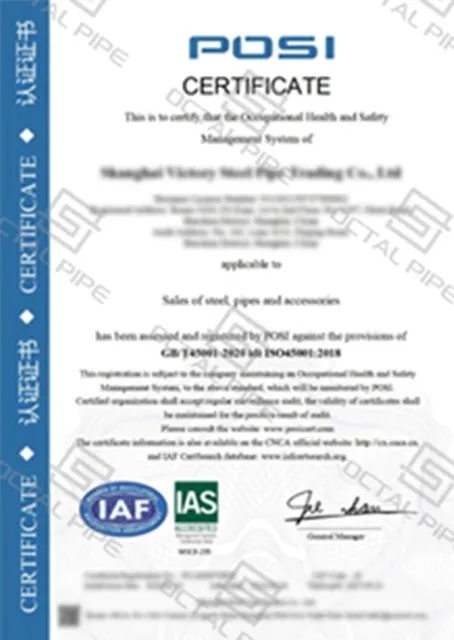
CE Certificate

ISO 9001 Certificate

API Q1 Certificate
ABS Certificate
AP-5L Certificate
API-5CT Certificate