X7Ni9 Nickel Steel is the EN 10028-4 grade 1.5663, a 9% nickel steel supplied as a flat product for pressure purposes with specified low-temperature properties. In engineering use, it is selected where a plate must combine pressure-vessel strength, verified cryogenic toughness, and stable fabrication performance in large welded equipment. Typical duties include inner tank shells for LNG storage, cryogenic pressure vessels, and other welded containment sections that must retain impact resistance at very low service temperature. Public EN data and producer literature consistently place X7Ni9 / 1.5663 in the quenched and tempered condition and associate it with cryogenic storage tanks, low-temperature pressure vessels, and LNG-related service.
The technical value of the grade does not come from nickel content alone. It comes from the combined effect of low carbon, about 9% Ni, strict impurity control, and low-temperature impact requirements under the EN pressure-vessel route. In practical fabrication, that combination matters most in welded platework where the material must pass not only room-temperature strength checks, but also cryogenic impact criteria after forming and welding. That is why X7Ni9 steel plate is treated very differently from general nickel steels or ordinary structural plate in low-temperature vessel construction.
Grade identity and standard route
The designation of X7Ni9 should be read together with its standard route and product form. In the EN system, X7Ni9 is the chemical designation, 1.5663 is the material number, and EN 10028-4 is the governing standard for flat products made of nickel-alloy steels for pressure purposes with specified low-temperature properties. Public EN-oriented data also describe 1.5663 / X7Ni9 as a low-temperature Ni-alloy steel for pressure vessel construction, which places the grade clearly in the cryogenic pressure-vessel plate category rather than in a general nickel-steel group.
In practical use, X7Ni9 is normally discussed as plate supplied in the quenched and tempered condition. That is the condition in which the grade's published strength and low-temperature impact values are typically referenced, and it is also the route associated with LNG storage tanks, cryogenic pressure vessels, and other large welded equipment designed for service down to -196°C. Public producer literature for the broader 9% nickel steel family links this material route to onshore above-ground LNG tanks, onboard fuel tanks, and transport vessels, which is why X7Ni9 steel plate is usually specified through its designation, standard, supply condition, and required low-temperature performance, not by grade name alone.
X7Ni9 chemical composition
The published X7Ni9 chemical composition is built around a 9% nickel design with low carbon and very low phosphorus and sulfur. That chemistry is what gives the grade its place in the low-temperature pressure-vessel family.
| Element | Requirement / range | Technical reading |
|---|---|---|
| C | max 0.10% | Low carbon helps protect toughness and supports fabrication and welding. |
| Si | max 0.35% | Controlled deoxidation element. |
| Mn | 0.30–0.80% | Supports strength balance and base metallurgy. |
| Ni | 8.5–10.0% | The defining alloy addition behind the 9% nickel steel route. |
| P | max 0.015% | Strictly controlled for low-temperature performance. |
| S | max 0.005% | Strictly controlled for the same reason. |
| Mo | max 0.10% | Limited residual/alloy allowance in the published EN-oriented data. |
| V | max 0.01% | Very low residual allowance. |
Download:X7Ni9 Chemical Composition Reference
These figures explain why X7Ni9 pressure vessel steel is treated as a specialist cryogenic plate rather than as a broad nickel-steel category. The metallurgy is tightly controlled for a specific service envelope.
X7Ni9 mechanical properties
For X7Ni9 mechanical properties, the EN-oriented baseline is a tensile strength of 680–820 MPa, minimum yield strength of 585 MPa up to 30 mm and 575 MPa from 30 to 50 mm, and minimum elongation of 18% in the +QT condition. Those are the values that define the grade under the public EN route.
| Property | Published EN-oriented requirement |
|---|---|
| Tensile strength Rm (+QT) | 680–820 MPa |
| Yield strength ReH (+QT), t ≤ 30 mm | 585 MPa min |
| Yield strength ReH (+QT), 30–50 mm | 575 MPa min |
| Elongation A (+QT) | 18% min |
Download:X7Ni9 Mechanical Properties and Cryogenic Toughness Reference
Materials-property databases that describe EN 1.5663 X7Ni9 in the quenched and tempered condition also publish representative values around UTS 750 MPa and yield 660 MPa. Those figures are useful for general engineering reading, but the governing requirement for project work remains the specification route and the actual mill test data. Quenching develops the high-strength microstructural basis required for X7Ni9 to reach its specified strength level in cryogenic plate service. Tempering then reduces brittleness, relieves residual stress, and restores the strength-toughness balance needed for low-temperature welded vessels, which is why the grade is commonly discussed in the quenched and tempered condition.
X7Ni9 low temperature properties
The real significance of X7Ni9 low temperature properties is not just that the steel is "strong at low temperature." The important point is that it retains impact toughness at cryogenic temperature, which is what makes it suitable for LNG tanks and other deep-cold containment equipment. Public EN-oriented data list impact energy requirements at -196°C, including 100 J longitudinal and 80 J transverse.
| Test condition | Published value |
|---|---|
| Impact energy, longitudinal at -196°C | 100 J |
| Impact energy, transverse at -196°C | 80 J |
Download:X7Ni9 Mechanical Properties and Cryogenic Toughness Reference
This is the property set that separates X7Ni9 Nickel Steel from ordinary pressure-vessel steels. A room-temperature strength level alone would not explain its use in cryogenic service. The grade is selected because the low-temperature impact requirement is built into the material route itself.
Why X7Ni9 Is Used for LNG and Cryogenic Pressure Vessels
X7Ni9 / 1.5663 is used in cryogenic vessel work because it gives a practical 9% nickel plate route for welded equipment that must retain strength, fracture resistance, and verified low-temperature toughness. In LNG and related low-temperature service, the material decision is not based on nickel content alone. It is based on whether the equipment is a welded plate structure exposed to cryogenic media and whether the project needs a pressure-vessel-grade plate that can still perform reliably after fabrication, welding, and inspection.
In real projects, this logic appears most clearly in large LNG tanks, cryogenic storage tanks, inner tank shell and bottom plates, and transport or fuel tanks for liquefied gas service. The grade is selected because these are not generic steel structures. They are fabricated containment systems where plate thickness, welded-joint behavior, and low-temperature acceptance all matter at the same time.

Download:Application Logic Table for X7Ni9
These application cases show that X7Ni9 is selected as a cryogenic pressure-vessel plate route, not as a general nickel steel label.


Plate form, dimensions, and supply ranges
Because EN 10028-4 X7Ni9 is a flat-products standard, the commercial discussion is mainly about plate, not about generic bar or tube supply. Public heavy-plate producer data for 9% nickel steels show typical published ranges of 5–60 mm thickness, 1600–3800 mm width, and up to 12,700 mm length. A separate producer page for cryogenic pressure-vessel work also notes 9% nickel steels according to EN 10028-4 in plate thickness range up to 70 mm, again confirming that this is fundamentally a heavy-plate route.
| Product-form point | Published producer data |
|---|---|
| Standard family | Flat products for pressure purposes under EN 10028-4 |
| Published 9% nickel plate thickness | 5–60 mm in one heavy-plate range |
| Published width | 1600–3800 mm |
| Published max length | 12,700 mm |
| Published cryogenic 9% Ni plate route | up to 70 mm thickness in one producer pressure-vessel segment page |
This is an important practical point for X7Ni9 steel plate. The grade is usually discussed in the context of large welded plate structures, not as a catch-all wrought product.


Fabrication and welding considerations
In fabrication, X7Ni9 Nickel Steel should be treated as a cryogenic welded-plate material rather than as ordinary plate. The main concern is not only the strength of the delivered plate, but whether the fabricated vessel or tank can still retain acceptable low-temperature performance after forming and welding. For that reason, welding review usually focuses on the following points:
- Delivery condition and welding route must match.
X7Ni9 is typically specified in the quenched and tempered condition, so the welding sequence should be assessed against the actual supplied plate condition and thickness.
- Procedure qualification is a key control point.
In cryogenic service, the procedure has to support not only weld soundness, but also acceptable joint toughness at the required service temperature.
- HAZ behavior matters.
The heat-affected zone can become a local weak point if heat input or cooling control is not appropriate for low-temperature vessel work.
- Plate thickness affects fabrication difficulty.
Thicker sections usually mean higher restraint, larger weld volume, and stricter control of joint preparation and welding parameters.
- Welded-joint location should be reviewed carefully.
Shell seams, bottom transitions, and nozzle areas do not carry the same stress level, so joint details in colder or more highly stressed regions need closer attention.
- The order should define fabrication-related requirements clearly.
For X7Ni9 pressure vessel steel, the specification should normally fix plate thickness, supply condition, test temperature, and the intended fabrication route before production starts.
Technical specification points for X7Ni9
For X7Ni9 / 1.5663, a usable technical description requires more than the grade name alone. The material should be defined through its standard route, product form, delivery condition, and the specific low-temperature performance required by the vessel or tank design. This is particularly important in cryogenic service, where acceptance depends not only on room-temperature strength, but also on the relationship between plate thickness, impact-test requirement, and the actual service temperature.
A complete specification for X7Ni9 Nickel Steel normally includes the following points:
- grade and material number: X7Ni9 / 1.5663
- standard: EN 10028-4
- product form: plate / flat product
- delivery condition: quenched and tempered
- required thickness
- required tensile and yield values
- required impact-test temperature and absorbed energy
- intended service temperature
- fabrication route, especially for large welded cryogenic equipment
- mill documentation, including mechanical-property and impact-test records
When these items are defined together, X7Ni9 becomes a technically complete material description rather than a broad grade reference. In cryogenic vessel work, that distinction is important because the final engineering judgment depends on the combined basis of designation, condition, thickness, and verified low-temperature performance.
FAQ

01.Is X7Ni9 the same as general 9% nickel steel?
02.Why is X7Ni9 used in LNG tank inner shells instead of ordinary pressure-vessel plate?
03.Does the grade name X7Ni9 define the material completely for project use?
04.What is the main engineering difference between X7Ni9 and ordinary nickel-alloy plate descriptions?
Certifications
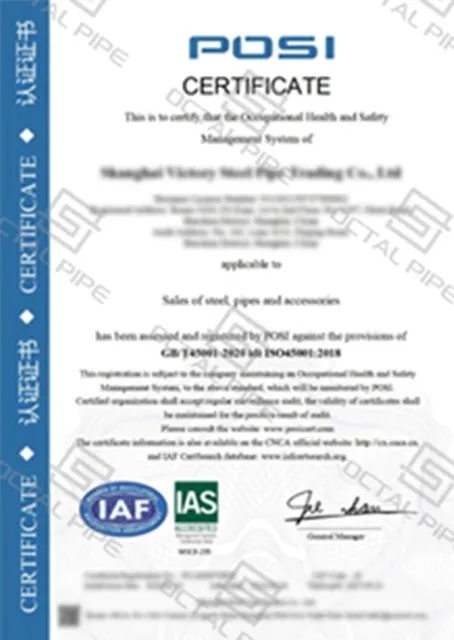
CE Certificate

ISO 9001 Certificate

API Q1 Certificate
ABS Certificate
AP-5L Certificate
API-5CT Certificate