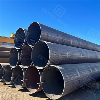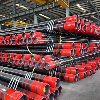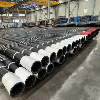
What is Collapse Pressure?
Collapse pressure is the external pressure a casing pipe can resist before it becomes ovalized, deformed, or collapsed inward. In oil and gas wells, this risk increases when formation load, mud column pressure, cementing conditions, salt creep, or reservoir pressure changes create high external pressure on the casing body.
For buyers, collapse pressure is affected by size, wall thickness, grade, yield strength, ovality, heat treatment and inspection control. This is why High Collapse Casing is selected when regular API 5CT casing may not provide enough collapse resistance. Octal Pipe supplies N80 HC, L80 HC, P110 HC and Q125 HC in 4 1/2"–20", with R2/R3 lengths and BTC, LTC, STC or premium connections.
What Collapse Pressure Means for Casing
In casing design, collapse pressure focuses on the pressure acting from the outside of the casing toward the inside. When this external load is too high, the casing body may lose roundness first, then deform inward, and finally collapse.
| Term | Buyer-Friendly Meaning | Why It Matters |
|---|---|---|
| Collapse pressure | Maximum external pressure the casing can resist before collapse risk becomes critical | Helps decide whether regular casing is enough or High Collapse Casing is needed |
| External collapse pressure | Pressure acting from formation, mud column, cementing condition, or salt creep onto the casing body | Main pressure source that may deform the casing inward |
| Collapse resistance | The casing's ability to resist external pressure without failure | Depends on grade, wall thickness, ovality, heat treatment and pipe-body control |
| Collapse rating | The rated collapse performance used for casing selection | Should be clearly specified in the RFQ or technical order |
Download:What Collapse Pressure Means for Casing
A casing order should not only state "P110 casing" or "Q125 casing." For high-risk wells, the required collapse rating should be confirmed together with OD, weight, wall thickness, connection type and inspection documents.

P110 High Collapse Casing and Q125 High Collapse Casing
P110 High Collapse Casing and Q125 High Collapse Casing are two high-strength HC casing routes used when regular API 5CT casing does not give enough collapse margin for demanding well sections. They are selected for external-pressure control, not only for higher yield strength. In a collapse-pressure review, the grade must be checked together with OD, wall thickness, D/t ratio, ovality, yield strength stability, internal pressure, axial load, temperature, connection type and inspection records. API 5C3 collapse-related calculations also show that collapse resistance is affected by combined loading conditions such as axial stress and internal pressure, not only by one grade value.
| Grade Route | Suitable Conditions | Key Difference | Buyer Checkpoint |
|---|---|---|---|
| P110 High Collapse Casing | Deep wells, high mud weight drilling, production casing, and sections where N80 HC / L80 HC is not enough. | High-strength HC route for demanding deep-well sections, but not the most severe-duty option. | Confirm collapse rating, wall thickness, ovality, heat treatment, NDT, hydrotest, drift test, MTC and heat/lot traceability. |
| Q125 High Collapse Casing | Ultra-deep wells, HPHT wells, severe high-load sections, and high external-pressure intervals. | Higher-strength route for more severe collapse loads and higher safety margin requirements. | Check pressure profile, mud weight, temperature, axial load, connection qualification, toughness and full inspection records. |
Grade selection should be based on well depth, mud weight, pressure profile, temperature, corrosion condition, connection type and required collapse rating. Choosing a higher grade without checking collapse rating, wall thickness and ovality records is not enough for safe specification.
For buyers, P110 HC is usually considered when the project needs strong collapse resistance for deep or high-pressure sections, while Q125 HC is reserved for more severe wells where the collapse load and safety margin are much higher. In both cases, grade name alone is not enough. The RFQ should clearly state the required collapse rating, OD, weight, wall thickness, connection, length range, NDT, hydrostatic test, drift test, thread inspection, MTC and heat/lot traceability.
Collapse Pressure vs Burst Pressure
Collapse pressure and burst pressure are often discussed together, but they refer to opposite load directions.
| Item | Collapse Pressure | Burst Pressure |
|---|---|---|
| Pressure direction | Outside to inside | Inside to outside |
| Main risk | Casing is compressed inward or ovalized | Casing expands outward or ruptures |
| Typical cause | High external pressure, mud weight, salt creep, reservoir depletion | High internal pressure, pressure test, production or injection pressure |
| Main control point | Wall thickness, D/t ratio, ovality, yield strength, collapse rating | Wall thickness, grade, internal pressure rating, connection sealing |
| Buyer concern | Will the casing resist external pressure? | Will the casing resist internal pressure? |
Download:Collapse Pressure vs Burst Pressure
For High Collapse Casing, the priority is collapse pressure. The product is selected when external pressure is the main risk, especially in deep wells, depleted reservoirs, salt formations, HPHT wells and high mud weight drilling sections.
What Causes Casing Collapse in Oil and Gas Wells?
Casing collapse is normally caused by a combination of external pressure and insufficient pipe-body resistance. The risk is rarely from one factor only.


Octal Pipe's High Collapse Casing page also positions HC casing for deep wells, depleted reservoirs, salt formations, HPHT wells and high mud weight drilling, where the goal is to reduce ovalization, inward deformation and collapse failure.
What Affects Casing Collapse Resistance?
Collapse resistance is not controlled by steel grade alone. A higher grade can help, but pipe geometry and manufacturing consistency are just as important.

| Factor | Effect on Collapse Resistance | What Buyers Should Check |
|---|---|---|
| OD and wall thickness | Thicker wall generally improves collapse capacity; high D/t ratio lowers resistance | Confirm OD, weight, wall thickness and dimensional records |
| Wall-thickness uniformity | Local thin-wall areas become weak points under external pressure | Ask for wall-thickness inspection records |
| Ovality and roundness | Excessive ovality makes the pipe easier to deform under pressure | Review OD, roundness and ovality control records |
| Yield strength stability | Stable yield strength makes collapse prediction more reliable | Compare mechanical test results by heat/lot |
| Heat treatment | Controls final strength, toughness and pipe-body consistency | Check heat treatment condition on MTC |
| NDT and hydrotest | Help confirm pipe-body integrity before shipment | Request NDT report and hydrostatic test record |
| Traceability | Links each joint to heat, lot, MTC and inspection records | Require heat number traceability and packing list mapping |
API's 5C3 addendum also shows that collapse calculations may consider wall thickness, OD, internal pressure and axial stress, meaning collapse resistance is a combined design issue rather than a simple grade label.
How High Collapse Casing Reduces Collapse Risk?
High Collapse Casing is designed for wells where regular casing may not provide enough resistance to external collapse pressure. Compared with regular API 5CT casing, HC casing places more emphasis on verified collapse performance, tighter pipe-body control, stable yield strength, heat treatment discipline and inspection traceability.
| Regular API 5CT Casing | High Collapse Casing |
|---|---|
| Selected mainly by size, weight, grade, length and connection | Selected by size, grade, connection and required collapse rating |
| Covers general wellbore support and zonal isolation | Focuses on higher resistance to external collapse pressure |
| Standard pipe-body control | Tighter attention to wall thickness, ovality and roundness |
| Suitable for conventional shallow or medium-depth wells | Used for deep wells, depleted reservoirs, salt formations and HPHT sections |
| Buyer checks standard MTC and inspection records | Buyer should also verify collapse rating, dimensional records, NDT and heat/lot traceability |
For example, P110 casing and P110 High Collapse Casing may share the same base grade, but they should not be treated as the same product. P110 HC should be ordered for verified collapse performance, not only for higher strength.


When Buyers Should Choose High Collapse Casing?
High Collapse Casing should be considered when the well design shows a high external-pressure risk or when the cost of casing failure is too high to accept. Typical cases include:
- deep production strings under high external pressure;
- depleted reservoirs where internal pressure support may fall over time;
- salt formation sections with long-term non-uniform loading;
- HPHT wells and high mud weight drilling programs;
- offshore or high-cost intervention wells where repair work is expensive;
- heavy-wall production casing requiring tighter dimensional and inspection control.
- The purpose is not only to buy a stronger grade. The real value is to keep the pipe body stable under external load and reduce the risk of ovalization, inward deformation and collapse failure.
Download:When Buyers Should Choose High Collapse Casing?
Practical Summary for Buyers
For a reliable order, buyers should not stop at grade name. The safer specification is to define API 5CT High Collapse Casing, required collapse rating, size, weight, grade, connection, inspection scope, MTC, NDT records, hydrostatic test, drift test, dimensional records and heat/lot traceability.
For wells requiring higher resistance to external collapse pressure, buyers can review Octal Pipe's API 5CT High Collapse Casing product range, including N80 HC, L80 HC, P110 HC and Q125 HC casing for deep wells, depleted reservoirs, salt formations and HPHT sections.
FAQ

01.Why do wall thickness and ovality affect casing collapse pressure?
02.When is Q125 High Collapse Casing required?
03.What should be written in a High Collapse Casing RFQ?
04.What documents prove High Collapse Casing performance?
Certifications

CE Certificate

ISO 9001 Certificate

API Q1 Certificate

ABS Certificate

AP-5L Certificate

API-5CT Certificate