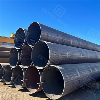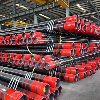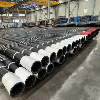

The difference between seamless pipe and LSAW pipe is mainly reflected in manufacturing route, diameter range, wall thickness feasibility, inspection scope, and document requirements. Seamless pipe is often selected where the specification is more sensitive to seam-related review or where smaller to medium diameters require heavier walls and pressure-service confidence. LSAW pipe is more commonly evaluated for larger diameters, where plate-based production, weld seam NDT, hydrotest records, and lot-based dimensional control become part of the approval and supply process.
This comparison matters because the product route affects more than pipe structure alone. It also influences inspection planning, acceptance basis, release documents, and the practical execution of the order.
Differences Between Seamless Steel Pipe and LSAW Steel Pipe
Seamless steel pipe is made from solid billet through piercing and rolling, so the pipe body has no longitudinal weld seam. LSAW steel pipe is made from steel plate that is formed into a cylindrical shape and welded along one longitudinal seam, usually followed by weld inspection, sizing or expansion, and hydrostatic testing.
That difference in starting material and production route affects more than appearance. In actual procurement, it changes available diameter range, heavy-wall feasibility, weld inspection scope, dimensional control after forming, and the type of release documents the buyer needs to review. For seamless pipe, the focus is usually on billet quality, mechanical properties, wall thickness tolerance, heat treatment, and heat-to-MTC traceability. For LSAW pipe, the review usually extends further into plate traceability, weld seam NDT, hydrotest records, dimensional checks after forming or expansion, and weld repair documentation if applicable.
For that reason, the choice is usually not made by product name alone. It is made by matching the pipe route to the service condition, size requirement, inspection basis, and project approval logic.
Seamless Pipe vs LSAW Pipe Comparison Table
For a more complete view of dimensional limits, weld inspection scope, tolerance control, and cost differences, a detailed technical comparison is available for reference.
| Item | Seamless Pipe | LSAW Pipe |
|---|---|---|
| Manufacturing Route | Solid billet piercing + hot rolling / sizing | Steel plate forming + longitudinal submerged arc welding |
| Weld Seam | No longitudinal weld seam | One longitudinal weld seam |
| Raw Material | Round bille | Steel plate |
| Typical OD Range | 33.4 mm to 426.0 mm in Nippon Steel's published seamless size chart; Tenaris line-pipe reference extends to 711 mm for large-diameter seamless line pipe | JFE SAWL / UOE production is positioned for large-diameter welded pipe project supply; this route is typically used where large OD is required. |
| Typical WT Range | 2.5 mm to 50 mm in Nippon Steel's visible seamless size table; Tenaris line-pipe reference states WT up to 60 mm. | Depends on plate thickness and mill route; heavy-wall large OD supply is one of the practical strengths of LSAW/UOE plate-based production. |
| Small-Size Availability | Cold-finished seamless chart shows 17.1 mm, 21.3 mm, 26.7 mm OD entries. | Not typically selected for small-size supply; LSAW is mainly used in larger diameters. |
| Large-Diameter Capability | Available, but large-diameter seamless is more limited by mill route and cost; Tenaris lists 407–711 mm OD as large-diameter seamless line pipe. | Stronger route for large-diameter project supply, especially for line pipe and heavy-wall plate-based orders. |
| Inspection Focus | Material chemistry, mechanical properties, wall thickness, straightness, heat treatment, hydrotest if required, and heat-to-MTC traceability. | Plate ultrasonic inspection, weld seam radiographic / ultrasonic inspection, hydrostatic testing, dimensional control, and weld-related release records. |
| Hydrotest / NDT Logic | Depends on applicable standard and PO; no seam-focused weld NDT is needed because there is no longitudinal weld seam. | Weld seam NDT and hydrostatic testing are integral parts of the LSAW / SAWL process flow. |
| Dimensional / Approval Logic | Often preferred where buyers want to reduce seam-related acceptance review. | Requires clearer approval logic for weld NDT scope, acceptance criteria, and repair records. |
| Typical Standards | API 5L, ISO 3183, DNV OS F101, and customer specifications are explicitly referenced by Tenaris for seamless line pipe. | API 5L and project pipeline specifications are common for SAWL / UOE project supply. |
| Typical Project Use | Pressure-driven service, smaller to medium diameters, applications sensitive to seam-related review. | Large-diameter transmission lines, water pipelines, piling, and project packages needing long straight pipe sections and weld-documented release. |
How Seamless Pipe Is Manufactured
Seamless pipe is produced from a solid billet that is heated, pierced, and rolled into the required diameter and wall thickness. Because the pipe body is formed without a longitudinal weld seam, the review usually stays focused on material properties, wall thickness control, heat treatment, and traceability, rather than weld seam acceptance. That is one reason seamless pipe is often preferred in orders where buyers want a simpler inspection basis for pressure service or seam-sensitive specifications.

How LSAW Pipe Is Manufactured
LSAW pipe is produced from steel plate that is formed and welded along one longitudinal seam by submerged arc welding. The pipe is then typically checked through weld seam inspection, sizing or expansion, hydrotest, and dimensional review, since LSAW acceptance depends not only on material properties, but also on weld quality and post-forming control. This route is commonly selected for larger-diameter projects where weld documentation and lot-based inspection are part of the supply package.

Seamless Pipe vs LSAW Pipe – Structural and Performance Comparison
The difference between seamless pipe and LSAW pipe is not only in the manufacturing route. It also affects inspection focus, size range, service suitability, and project execution requirements.
| Key Aspect | Seamless Pipe | LSAW Pipe |
|---|---|---|
| Weld Seam Presence | No longitudinal weld seam. Eliminates seam-related inspection and reduces one category of acceptance concern. | One longitudinal weld seam. Requires clearly defined NDT scope, acceptance criteria, and weld repair handling. |
| Diameter & Wall Thickness Economics | Becomes increasingly difficult and costly as OD and wall thickness increase, especially in larger sizes. | More practical for large-diameter supply, based on plate forming, especially in project-based procurement. |
| Pressure & Critical Service | Commonly preferred where buyers want to avoid seam-related discussion, particularly in high-pressure or critical-service conditions. | Can be used in demanding service when standards, weld inspection, hydrotest, and approvals are properly aligned. |
| Inspection Focus | Focus on material consistency, wall tolerance, heat treatment, and traceability. | Additional focus on weld seam NDT, hydrotest records, dimensional control, and repair documentation. |
| Project Supply Suitability | More suitable for pressure-driven selection, typically in small to medium diameter ranges. | Widely used in project environments requiring:• large OD• long straight sections• full inspection documentation• coordinated delivery packages |
| Procurement Consideration | Simplifies acceptance logic due to no weld seam, but still requires full inspection and documentation. | Requires more structured inspection planning, but offers advantages in size availability, cost efficiency, and project coordination. |
Seamless pipe is commonly preferred in situations such as:
- High-pressure process lines in refineries, gas plants, and chemical units, where buyers want to avoid seam-related acceptance comments and keep the approval basis focused on base material properties, wall thickness, heat treatment, and hydrotest results.
- Boiler tubes, superheater lines, and other high-temperature service, where the specification may place more attention on temperature capability, metallurgical consistency, and long-term performance under pressure and heat.
- Small to medium diameter piping systems with relatively heavy wall requirements, such as steam lines, pressure manifolds, and plant utility headers, where seamless supply is more established and easier to match with common standards.


When LSAW Pipe Is Usually the Better Choice
LSAW pipe is typically selected for:
- Large-diameter oil, gas, or water transmission lines, where the project requires larger OD, long straight pipe sections, and a practical balance between cost, dimensional control, and inspection documentation.
- Onshore cross-country pipelines, especially for long-distance line sections where diameter, transport planning, hydrotest records, and lot-based traceability all become part of the package approval.
- Water transmission and municipal trunk lines, where large diameter and project quantity matter more than avoiding a weld seam, and where buyers focus on hydrotest, coating, dimensional tolerance, and delivery consistency.
- Road crossings, river crossings, and casing installations, where larger OD and structural wall requirements make plate-based welded pipe a more practical option.
- Pipe piling and marine or land foundation work, where diameter, straightness, weld integrity, and coating condition may matter more than no-seam construction.
FAQ

01.Is seamless pipe always stronger than LSAW pipe?
Not necessarily. Strength depends on material grade, wall thickness, and standard. Seamless pipe avoids a longitudinal weld, but LSAW pipe can meet demanding requirements when welding and inspection are properly controlled.
02.What is the main difference between seamless pipe and LSAW pipe?
The main difference is the manufacturing method. Seamless pipe is made from solid billet without a weld seam, while LSAW pipe is made from plate and includes a longitudinal weld.
03.When should LSAW pipe be used instead of seamless pipe?
LSAW pipe is usually preferred for large-diameter applications, such as pipelines, water transmission, and piling, where cost and size availability are key factors.
04.What should be included in a purchase order for these pipes?
A complete PO should define standard, grade, OD, wall thickness, length, inspection scope, testing requirements, coating, and required documentation such as MTC and inspection reports.
Certifications
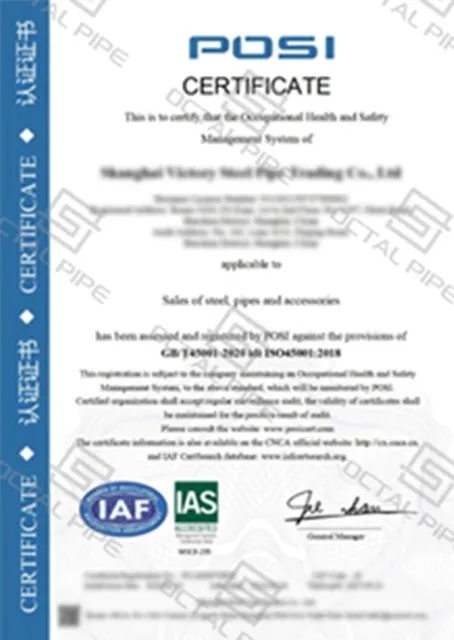
CE Certificate

ISO 9001 Certificate

API Q1 Certificate
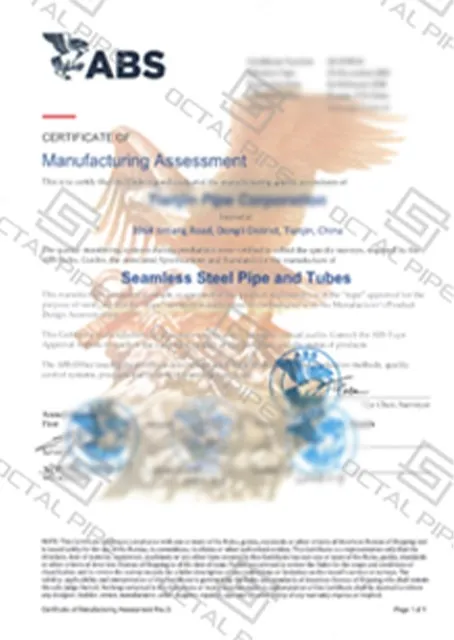
ABS Certificate
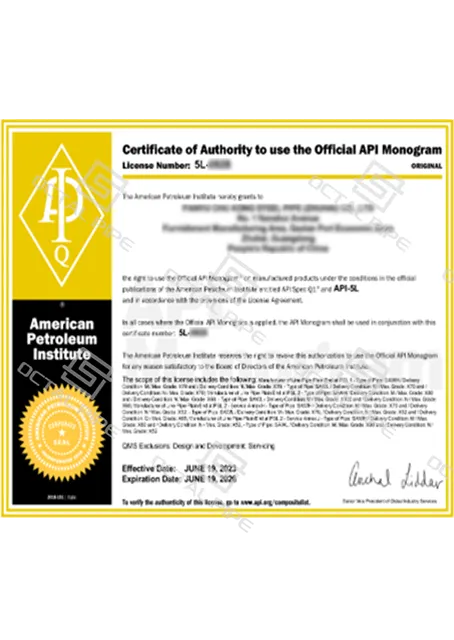
AP-5L Certificate
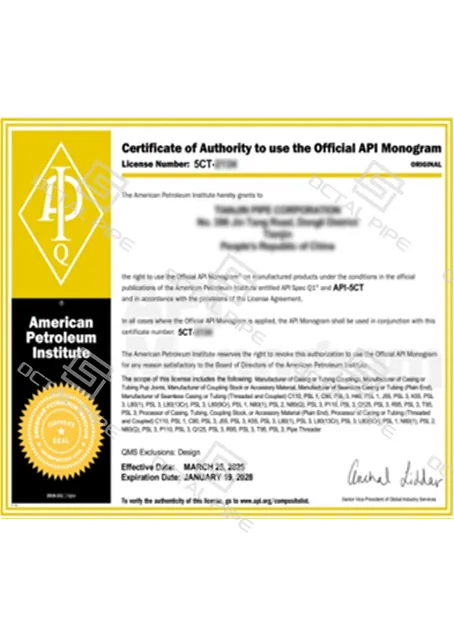
API-5CT Certificate