
With the return of export licenses, steel exports are shifting to a new routine: check the certificate first, then the cargo.
The most easily overlooked yet most operationally disruptive line in the new rules is straightforward: for certain steel products, exporters must apply for an export license, and the application must include the export contract and a product quality inspection conformity certificate issued by the manufacturer. The policy takes effect on January 1, 2026.
It may read like a process upgrade, but for the steel industry it pushes exports from "getting cargo on the vessel" toward "submitting complete evidence" much earlier in the chain.
Why everyone is suddenly watching quality inspection certificates
In the past, many orders followed a familiar rhythm: cargo moves first, documents follow. Now the sequence changes. The quality inspection conformity certificate is placed much earlier, and the most common bottleneck will shift accordingly-not because the product can't be made, but because the certificate may not be issued fast enough, complete enough, or with fully matching fields.
This is also where exporters begin to feel the difference between "a file that exists" and "a file that can be checked immediately." In project-type deliveries, Octal Pipe has already been running a stricter internal rhythm: packaging is not released until the core fields in the document set (grade/standard/spec/heat reference) match the shipment labels and packing list line items, so the certificate workflow doesn't become an afterthought at the end of loading.
From the publicly stated responses, this round of management leans more toward monitoring statistics and tracking export product quality, while emphasizing compliance with WTO rules and stating it is not aimed at restricting export volume.
Where certificates get "stuck": not missing, but present yet mismatched
In project procurement and site acceptance, the most painful document problem is not a missing page-it's key fields that don't match. The most common sticking points usually fall into three "detail-work" categories:
First: inconsistent identity information
The contract's standard/grade/spec does not align with what appears in the quality certificate, packing marks, or pipe/body marking; reviewers then require item-by-item clarification, consuming time.
Second: broken traceability links
Heat number / furnace batch, production batch, inspection batch, and sampling batch are not clearly connected; once a specific pipe or batch is spot-checked, it can become difficult to map one report cleanly to the shipped goods.
Third: unclear issuance responsibility
When "who issued the certificate, under which standard, who signed it, and whether third-party witnessing is required" are not explicit, the credibility of the certificate drops sharply.
These are not technical challenges, but they impose heavy cross-department coordination costs. In practice, what often saves time is having a "single reference line" that stays consistent-Octal Pipe typically keeps the packing list as that anchor, then makes sure heat/batch references and markings can be traced back in one direction without reformatting or re-explaining during review.

Documents become a data package, not "a few papers shipped with the goods"
Many project orders have long outgrown a single MTC or one inspection report. More often, suppliers organize material, inspection, marking, and batch mapping into a structured document package-often referred to as a Data Book / MDR / QA Dossier.
In delivery practice, this "data package" approach typically separates content clearly:
Material: chemical composition, mechanical properties, and clearly defined issuance responsibility (project requirements vary for 3.1 / 3.2 and third-party witnessing, so wording and scope become more specific)
Dimensional & visual: dimensional inspection records, appearance/surface condition checks
Tests & inspection: NDT reports, pressure test records (if applicable), heat treatment records (if applicable)
Consistency & mapping: contract/spec comparison list, heat/batch mapping table, marking and packing explanation
For Octal Pipe, this is not a "nice-to-have" appendix-it is part of how deliveries are kept predictable. A practical example from routine export preparation is that the heat/batch mapping is compiled while the shipment is being staged, not after the container is sealed, so any mismatch is found when it is still easy to correct.

Supply-chain impact: document capability starts determining delivery certainty
Once the policy makes a manufacturer-issued quality inspection conformity certificate a condition for license application, the supply chain will split more visibly into two rhythms:
Cargo and certificates move in sync: clear batches, consistent fields, closed evidence chain-license and clearance become more predictable.
Cargo can be assembled, documents are patched later: every review point triggers backtracking for missing items or explanations-work becomes more chaotic under pressure.
In project deliveries, the "sync" rhythm usually comes from running documents like production: fixed checkpoints, fixed naming, fixed mapping logic. Octal Pipe's internal approach is closer to that model-inspection status, packing status, and document pack are closed together, so the export process is less likely to stall at the "certificate gate" even when schedules are tight.
In the end, this is not "one more document"-it's a shift to a more stable rule set
Moving quality certificates earlier in the export chain is a system-level reminder: exports are not only about price and speed, but also about whether evidence is complete, responsibility is clear, and traceability is closed-loop.
For buyers, clearer documents mean easier acceptance; for engineers, stronger traceability supports long-term operation and audits; for suppliers, the ability to deliver cargo + evidence reliably becomes a defining advantage in volatile cycles. Under the new "certificate first" rhythm, the companies that treat documentation as part of delivery-rather than as paperwork that follows later-will find it easier to keep shipments moving on schedule.
FAQ

01.What documents are required to apply for a steel export license starting January 1, 2026?
02.What is the most common reason a "quality certificate" delays shipment even when the product is ready?
03.How can buyers reduce receiving inspection risk under the "certificate first" export workflow?
04.What should procurement teams verify before cargo is loaded to avoid export paperwork rework?
Confirm that the contract key fields, packing list line items, heat/batch traceability, and the manufacturer-issued conformity certificate are consistent-so the shipment can pass review without last-minute corrections or missing evidence.
Certifications
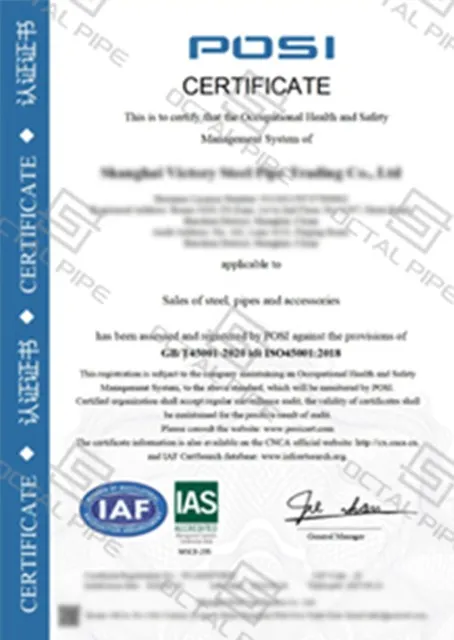
CE Certificate
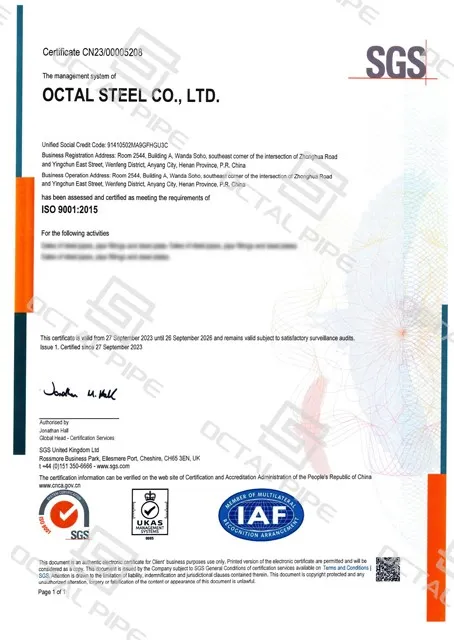
ISO 9001 Certificate
API Q1 Certificate
ABS Certificate
AP-5L Certificate
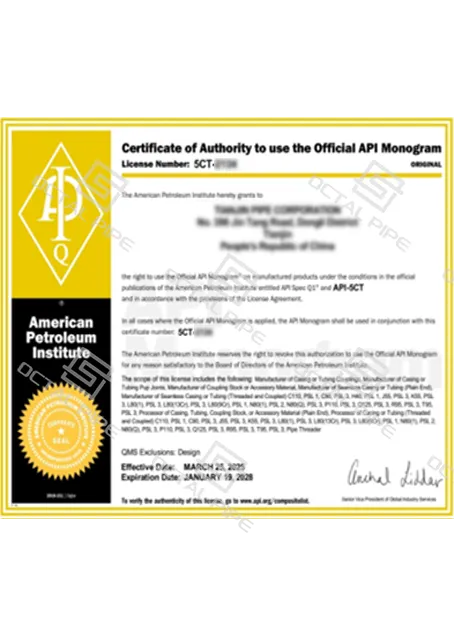
API-5CT Certificate