
"Sanitary" isn't a label-it's an acceptance outcome. ASTM A270 sanitary tubing shows up when a project cares about cleanability, repeatable surface finish, and inspection-ready documentation. Buyers might search a270 sanitary stainless steel pipes or a270 stainless steel sanitary tubing, but the purchase logic is the same: specify the few details that actually prevent rework, rejection, and "why doesn't this clamp fit?" moments.
Below is a practical, non-fluffy way to specify a270 sanitary tubing so it arrives fabrication-ready and acceptance-friendly.
Where ASTM A270 Fits
ASTM A270 is written for sanitary (hygienic) stainless tubing used in dairy/food, bio-processing, and other services that require special surface finish and controlled tolerances. It covers seamless, welded, and heavily cold worked welded tubing, including ERW/EFW welded routes.
If the project is "hygienic but not sterile," a standard sanitary spec is often enough. If it's "validation-driven" (higher purity or pharma language), the spec typically tightens on chemistry, tolerances, and test expectations.


ASTM A270 Chemistry and Mechanical Requirements

View here for about information about ASTM A270 Standard Specification.
Test Items and Supplementary Requirements
A270 references mechanical and quality checks such as flattening-related tests and either hydrostatic testing or nondestructive electric testing depending on how the order is written.
When corrosion assurance is part of acceptance, A270 allows supplementary corrosion requirements:
- Intergranular corrosion testing for austenitic stainless (A262 practice referenced)
- Duplex phase-related checks for duplex grades (A923 method referenced)
Procurement tip: if the project calls out corrosion tests or passivation, don't assume it's "standard." Put it in the PO-then require the report in the document pack.
Marking, Packaging, and Receiving
Sanitary tubing is often rejected for paperwork and handling damage-not for chemistry.
A270 marking can be ordered to include manufacturing route (SML/WLD/HCW) and marking requirements are tied to general marking practice references. Packaging is typically bundled and protected; boxed packing can be requested for higher-finish products.
Procurement tip: for polished/EP tubing, add:
- End caps
- Clean packing method (to reduce contamination/scratch risk)
- A simple "piece-to-heat/lot" traceability list if the project is audit-heavy


How to Write an RFQ/PO That Clears QA and Helps Ranking
If the goal is faster quoting and fewer revisions, a good RFQ for a270 sanitary tubing should read like a checklist-not a guessing game.
Use a structure like:
- Standard: ASTM A270
- Grade: 304/304L or 316/316L (confirm exact grade)
- Route: SML / WLD / HCW
- Size: OD × WT (or sanitary inch OD conventions)
- Length: fixed / random / custom
- Finish: mill / No. 180 / No. 240 / electropolish
- Roughness requirement: max Ra (ID/OD/both) and measurement method
- Testing: hydrostatic or NDE electric test; weld NDE if HCW or project requires
- Marking & traceability: heat/lot, route code, document pack
- Supplementary requirements: pharma quality / corrosion tests / passivation requirement
Quick note on a common keyword mismatch: some RFQs contain wording like a270 304I sanitary stainless tubing. If that appears, it's worth confirming whether the intent is 304L (common sanitary grade) or a project-specific internal code-one character can turn into one rejected batch.
Summary
If the application is hygienic service, ASTM A270 sanitary tubing gives a clean framework to specify what matters most: surface finish + roughness control, dimensional tolerances, route selection (SML/WLD/HCW), heat treatment, marking, and test options. Written correctly in the PO, a270 stainless steel sanitary tubing arrives ready for fabrication and acceptance-without surprises at receiving or during validation.
FAQ

01.How should an RFQ be written for ASTM A270 sanitary tubing to avoid "wrong finish / wrong tolerance" disputes?
02.What surface finish details matter most for sanitary acceptance and cleaning validation?
03.Seamless vs welded vs HCW - which ASTM A270 route should be selected for hygienic service?
04.What test and inspection items should be requested for A270 stainless steel sanitary tubing?
05.What packaging and traceability requirements reduce receiving damage and speed up QA release?
Request end caps, scratch-protected packing (boxed if needed for polished/EP), clear marking with heat/lot ID and route (SML/WLD/HCW), plus a packing list with piece-to-heat mapping and 3.1 MTC for quick receiving clearance.
Certifications
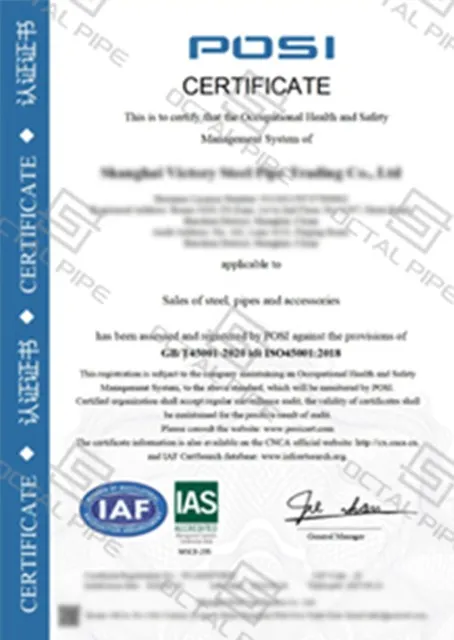
CE Certificate
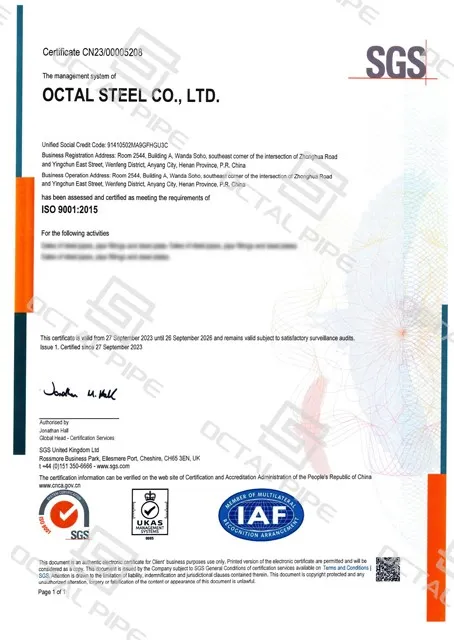
ISO 9001 Certificate
API Q1 Certificate
ABS Certificate
AP-5L Certificate
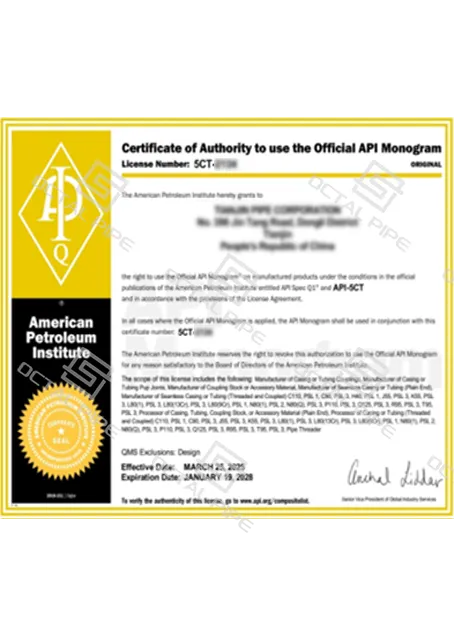
API-5CT Certificate