Engineering Overview
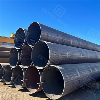
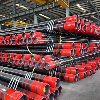
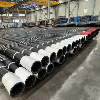
ASTM A252 Grade 3 pipe piles are structural steel pipes designed to transfer axial and lateral loads into soil or rock layers, forming reliable deep foundation systems. These piles provide stiffness, capacity, and long-term performance for major civil and marine works including bridges, ports, retaining walls, and industrial facilities.
Their main advantages:
- High drivability in challenging soil profiles
- Large-section stiffness for bending resistance
- Excellent load transfer via skin friction and end bearing


Chemical Composition
|
Element |
Grade 3 Requirement (wt%) |
Engineering Significance |
|
Carbon (C) |
≤ 0.26 |
Balanced strength & weldability |
|
Manganese (Mn) |
≤ 0.95 |
Toughness improvement |
|
Phosphorus (P) |
≤ 0.050 |
Prevents brittle fracture |
|
Sulfur (S) |
≤ 0.060 |
Improves weld soundness |
Low carbon chemistry supports good weldability during field splicing.

Mechanical Properties
|
Property |
Grade 3 Requirement |
Foundation Performance Benefit |
|
Tensile Strength |
60–85 ksi (415–585 MPa) |
Driving impact resistance |
|
Yield Strength |
≥ 45 ksi (310 MPa) |
Load-bearing reliability |
|
Elongation |
≥ 20% |
Crack resistance during driving |
|
Structural ductility |
Required |
Absorbs dynamic stresses |
Grade 3 offers the highest strength level under ASTM A252 - ideal for heavy-duty piling.
Manufacturing Methods and Structural Integrity Control
ASTM A252 Grade 3 pipe piles are manufactured using several production routes based on pile size, structural demands, and project specifications:
- ERW (Electric Resistance Welded):
Suitable for standard piling dimensions with reliable seam strength and cost-effective supply for land-based foundation work.
- LSAW (Longitudinal Submerged Arc Welded):
Provides excellent straightness, thicker walls, and high weld integrity, ideal for critical structures such as bridge piers or offshore jacket foundations.
- SSAW / Spiral Welded:
Enables large diameter piles with optimized stiffness and load transfer capability in deep marine and port construction projects.
End Construction Options
To match diverse sediment and driving conditions, piles may be delivered as:
- Open-end piles
Allowing soil plugging or rock socket installation where friction resistance contributes significantly to capacity
- Closed-end piles with welded pile shoe
Enhancing penetration into dense soils, improving end-bearing performance, and minimizing pile damage during driving
These manufacturing options ensure pile integrity under driving stresses while enabling efficient load transfer throughout the pile's service life.
Dimensional Range
|
Parameter |
Typical Range |
|
Outside Diameter |
8" – 72" (219 – 1828 mm) |
|
Wall Thickness |
6 – 50 mm |
|
Length |
Up to 30 m per single piece, extended by field welding |
Large diameter options provide increased lateral stiffness for ports and bridge piers.
Welding, Splicing & Joint Control
Field splicing via butt-weld joints
Weld alignment directly influences structural performance
Internal reinforcement collars optional for driving continuity
Ultrasonic or radiographic testing as specified
Surface Protection & Coating Options
Depending on site corrosivity:
- Coal-tar epoxy
- Fusion-bonded epoxy (FBE)
- Metallized zinc/aluminum spray
- Cathodic protection for submerged piles
These measures extend pile service life in marine or aggressive industrial soils.
Installation & Field Considerations

Typical methods:
- Impact hammer driving
- Hydraulic/vibratory driving
- Jetting in sandy seabeds
Performance benefits:
- Fast installation with minimal excavation
- Strong compatibility with concrete infill & reinforcement cages
- Stable support under wind, wave, or seismic loading
Ideal for:
- Offshore and marine piling
- Port and quay walls
- Bridge foundations
- Large industrial structures
Summary
ASTM A252 Grade 3 steel pipe piles deliver superior drivability, structural durability, and long-term foundation performance in demanding civil and marine construction environments.
Full traceability, end preparation, pile shoes, splicing support, complete MTC documentation, and BV / ABS witnessed inspection available - supplied by Octal Pipe.
FAQ

Q1: What is ASTM A252 Grade 3 pipe pile used for?
Q2: What's the difference between ASTM A252 Grade 2 and Grade 3?
Q3: Does ASTM A252 require a hydrostatic test?
Q4: What tolerances apply to ASTM A252 pipe piles?
Certifications
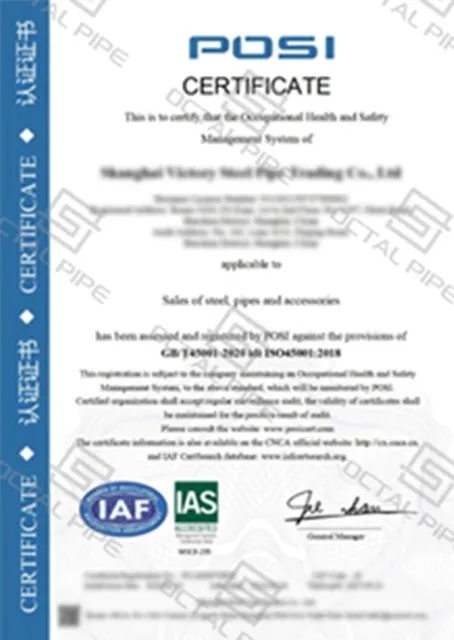
CE Certificate

ISO 9001 Certificate

API Q1 Certificate
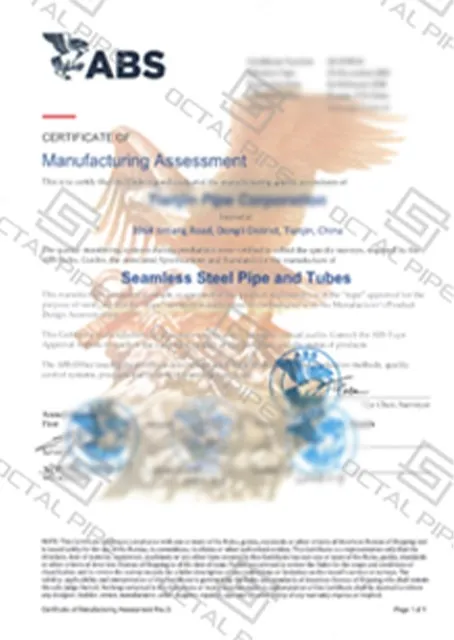
ABS Certificate
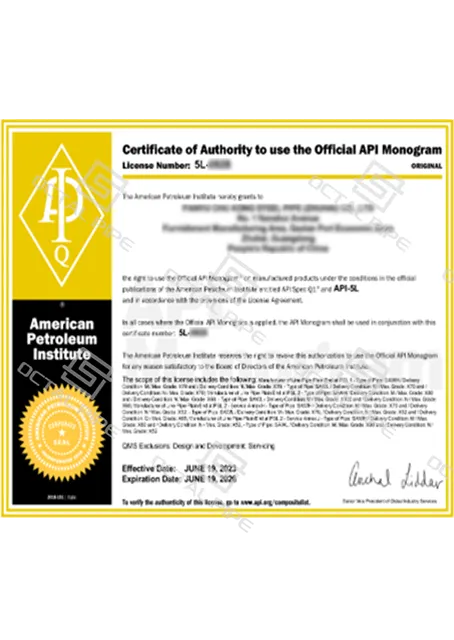
AP-5L Certificate
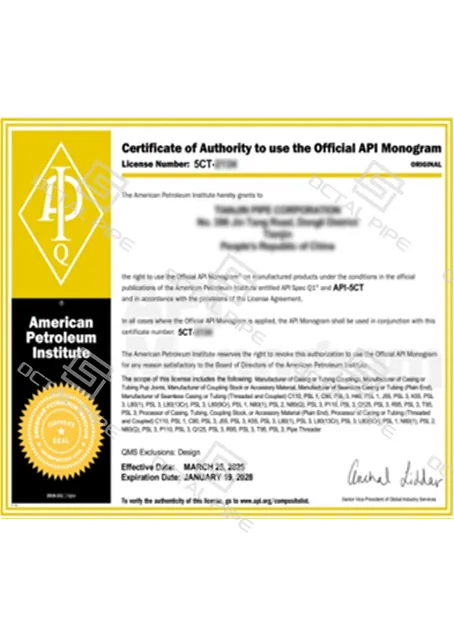
API-5CT Certificate